
Lewis Pugh swims active war zone to expose generational ecological damage in Strait of Hormuz
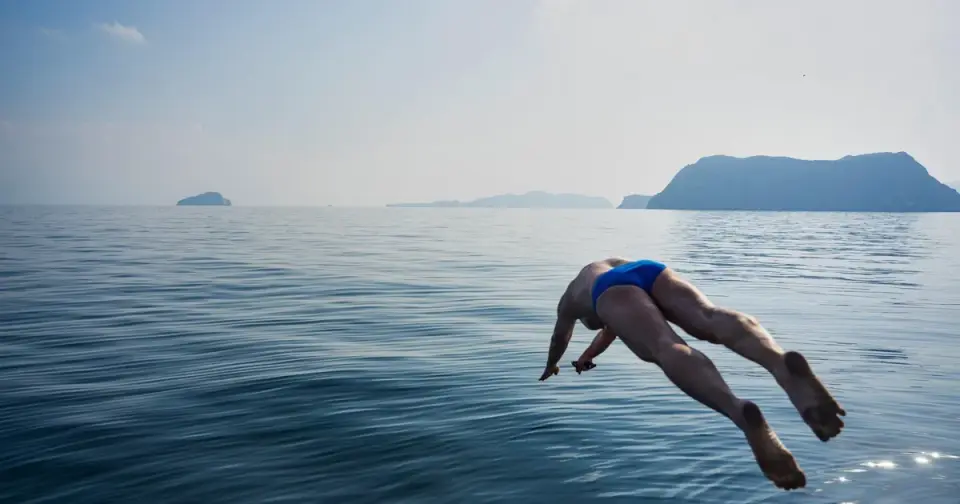
British endurance swimmer Lewis Pugh completed a 15-kilometer crossing of the Strait of Hormuz over three days to highlight the environmental devastation caused by the ongoing conflict between the United States and Iran. Pugh, a UN Patron of the Oceans, swam from the Musandam Peninsula to the Cape of Hormuz while witnessing active attacks on oil tankers and gas carriers. He described hearing explosions and seeing vessels burn, emphasizing that the war poses a severe threat to the region’s marine biodiversity. Pugh called for an end to the fighting, the reopening of the strait, and immediate cleanup efforts, warning that oil pollution could damage coral reefs and mangrove forests for decades.
Key points
- Lewis Pugh, 56, swam approximately 9.3 miles (15 km) in the Strait of Hormuz over three days, starting from the Musandam Peninsula and ending at the Cape of Hormuz.
- Pugh witnessed active combat during the swim, including an oil tanker explosion within minutes of entering the water and a burning liquefied petroleum gas carrier on the second day.
- The swimmer stated that the strait is a critical habitat for dolphins, sea turtles, and dugongs, but is now under severe threat from oil spills and chemical pollution.
- Pugh called for the war to stop, the strait to be reopened, and the resulting pollution to be cleaned up, noting that recovery could take decades.
- The conflict, which began in February 2026, has resulted in over 133 attacks on oil tankers and more than 500 oil spills, according to Greenpeace.
Background
The Strait of Hormuz is a critical global shipping route, carrying a significant share of oil traded before the conflict began. The war between the United States and Iran started on February 28, 2026, leading to a naval blockade and increased attacks on vessels. Prior to the conflict, the strait was recognized for its rich marine ecosystem, including coral reefs and mangrove forests. Lewis Pugh has previously undertaken high-profile swims in Antarctica, the North Pole, and the Red Sea to advocate for marine conservation, a strategy often referred to as 'Speedo diplomacy' for its ability to open political dialogue.
How outlets are covering it
CBS News and BBC focus on Pugh’s personal experience and the immediate dangers he faced, such as hearing explosions and seeing burning vessels. BBC emphasizes the 'environmental cost of war' and Pugh’s call for nature to be recognized as a casualty. Yahoo highlights Pugh’s message that the environmental consequences will last for generations. Mother Jones provides broader context, citing Greenpeace data that estimates cumulative oil spills cover an area the size of Wales, and notes that experts warn oil trapped in sediments could damage marine food chains for decades. While all sources agree on the severity of the environmental damage, Mother Jones and CBS provide more detailed data on the scale of pollution and the long-term ecological impact, whereas BBC and Yahoo focus more on Pugh’s advocacy and the immediate visual evidence of destruction.
Why it matters
The conflict in the Strait of Hormuz has created a significant environmental crisis, with oil spills threatening marine ecosystems that could take decades to recover. Pugh’s swim draws attention to the often-overlooked environmental cost of war, highlighting the need for international action to protect marine biodiversity and address the long-term consequences of oil pollution. The incident underscores the intersection of military conflict and environmental disaster, with potential implications for global oil supplies and marine life.
What to watch
Pugh is expected to continue his advocacy for marine conservation and call for an end to the war. Environmental organizations are continuing to analyze satellite imagery to assess the full extent of the damage, though ground investigations remain difficult due to the naval blockade. The long-term impact on marine ecosystems, including coral reefs and mangrove forests, will likely be monitored over the coming years, with experts warning that recovery could take decades.
- Athlete swims Strait of Hormuz to raise awareness of Iran war's toll on wildlife CBS News
- Strait of Hormuz swim highlights environmental cost of war BBC
- UK man swims in Strait of Hormuz to highlight environmental damage Yahoo
- Who Swims Strait of Hormuz as Tankers Get Attacked? This Guy Newser
- Trump’s War Poses a “Generational Threat” to Wildlife in the Persian Gulf Mother Jones
Want the full story? Read the original reporting
Read on CBS News