
Romanian archaeologists unseal 1,800-year-old sarcophagus containing preserved toddler remains and toys
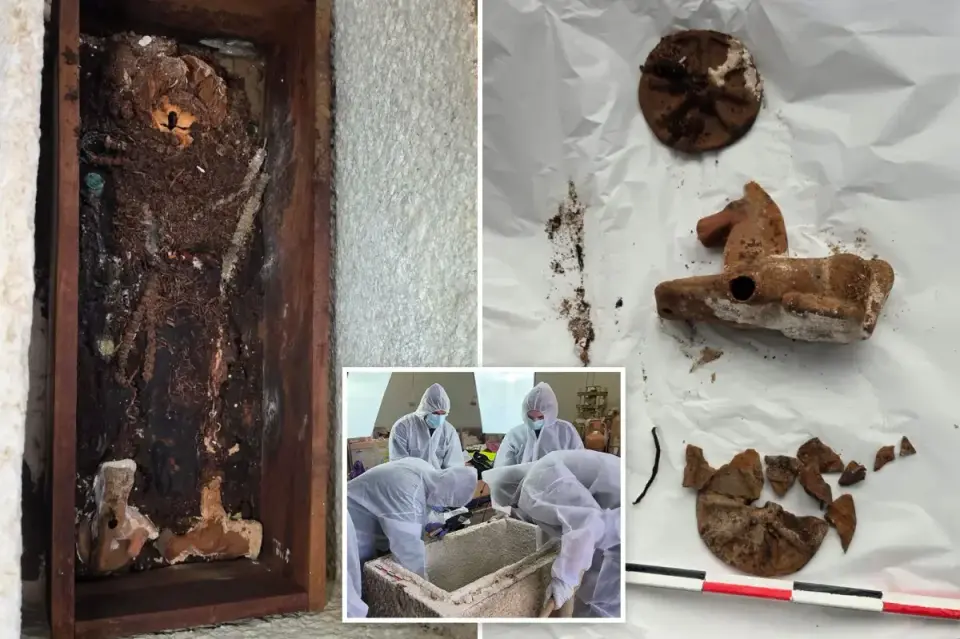
Archaeologists in Constața, Romania, have unsealed an intact 1,800-year-old Roman sarcophagus containing the remains of a toddler, along with preserved toys, amulets, and textiles. The discovery, made during excavations for a private residential building, offers rare insight into Roman-era funerary practices and childhood rituals in the ancient city of Tomis.
Key points
- The sarcophagus was discovered on October 22 in the Flămânda area of Constața, Romania, during archaeological digs preceding the construction of a private residential building.
- Conservators and specialists from the Museum of National History and Archaeology Constața (MINAC) opened the stone sarcophagus on October 27, revealing a nail-free wooden coffin inside.
- The burial dates to the second or third century A.D. and was located near an ancient road on the northern edge of the Tomis necropolis.
- The child, estimated to be between one and three years old, had a skeleton approximately 63 centimeters long, with preserved hair and textiles that officials compared to mummification.
- The sealed limestone lid, secured with lead clamps and waterproof mortar, contributed to the exceptional preservation of organic materials and artifacts.
- Recovered items include a clay rooster, a wheeled clay horse with paint traces, flower garlands, bronze bracelets, a bone button, and gold foil with magical symbols.
Background
This discovery follows earlier reports in October 2026 regarding the unsealing of the sarcophagus, which highlighted the preservation of toys and protective amulets. The find aligns with broader archaeological efforts in Romania to document Roman-era funerary practices in the Tomis necropolis, a site of significant historical importance. The exceptional preservation of organic materials, such as textiles and plant stems, is attributed to the sealed nature of the sarcophagus, which protected the contents from degradation over 1,800 years.
Why it matters
The discovery provides rare, tangible evidence of Roman-era childhood and funerary rituals in the ancient city of Tomis. The preserved toys, amulets, and textiles offer insights into how Roman families prepared for the death of a child, reflecting cultural beliefs about protection and the afterlife. The intact state of the sarcophagus and its contents allows for detailed analysis of burial practices, materials, and social customs, contributing to a deeper understanding of daily life in the Roman Empire.
What to watch
MINAC and specialized restoration labs in Bucovina and Iași will work to preserve the fragile textiles and wooden coffin. Further testing may reveal more about the burial rituals and materials used, though the child’s identity and cause of death are likely to remain unknown. The discovery will be documented and potentially exhibited, offering public insight into Roman-era funerary practices.
Want the full story? Read the original reporting
Read on New York Post