
Papua's 'Eternal Snow' on Puncak Jaya Faces Imminent Extinction
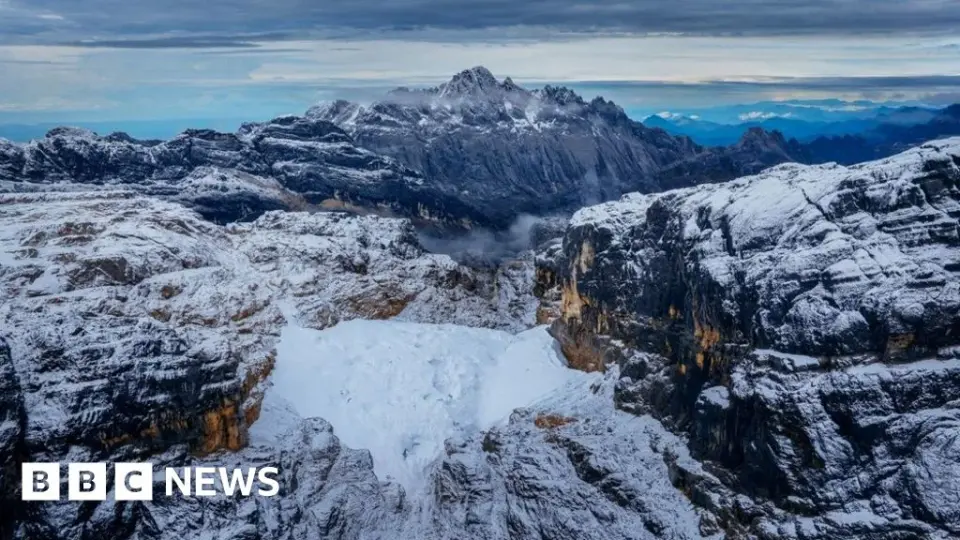
The last remaining tropical glaciers in Papua, Indonesia, are expected to vanish within two years. Glacier cover on Puncak Jaya has shrunk from 1,900 hectares in the 19th century to just 16 hectares today, driven by global warming and shifting precipitation patterns. This loss threatens a vital climate archive and the spiritual foundations of Indigenous communities who view the mountain as a sacred moral anchor.
Key points
- Glacier coverage on Puncak Jaya (Carstensz Pyramid) has declined by 95% since the early 2000s, leaving only small patches of snow.
- Scientists predict the remaining ice will disappear entirely within one to two years due to rising temperatures and increased rainfall.
- The Sudirman Range, located 450km south of the equator, holds the last tropical ice between the Andes and Himalayas.
- Ice cores from the region provide critical data on atmospheric history and Pacific Ocean warming, but this archive is rapidly vanishing.
- Indigenous groups, including the Amungme and Moni, view the mountain as a spiritual center symbolizing purity and moral integrity.
Background
This development follows broader global trends of glacial retreat but is distinct due to the tropical location of the Sudirman Range. While previous archive entries focused on unrelated topics such as video game updates and New Zealand legal inquiries, this story highlights the specific vulnerability of equatorial ice systems. The loss of these glaciers represents a unique climatic event, as no other tropical glaciers exist between the major polar and mountain ranges of the Northern Hemisphere.
Why it matters
The disappearance of Papua's glaciers serves as a tangible indicator of long-term global warming, demonstrating how even high-altitude equatorial regions are unable to sustain permanent ice. Beyond the scientific loss of climate data, the event signifies a profound cultural shift for Indigenous populations who rely on these landscapes for spiritual identity and social cohesion. The rapid pace of this change underscores the urgency of climate impacts in the Global South.
What to watch
Researchers, including Danish expert Klaus Thymann, are using drones and 3D mapping to document the remaining ice before it disappears. Scientists hope to extract final ice cores to preserve the climate record. Meanwhile, local communities face ongoing challenges from mining operations, such as those by Freeport, which have already altered the landscape and social fabric of the region.
Want the full story? Read the original reporting
Read on BBC