
Record-Breaking Wildfires Grip France and Spain Amid Historic Heat
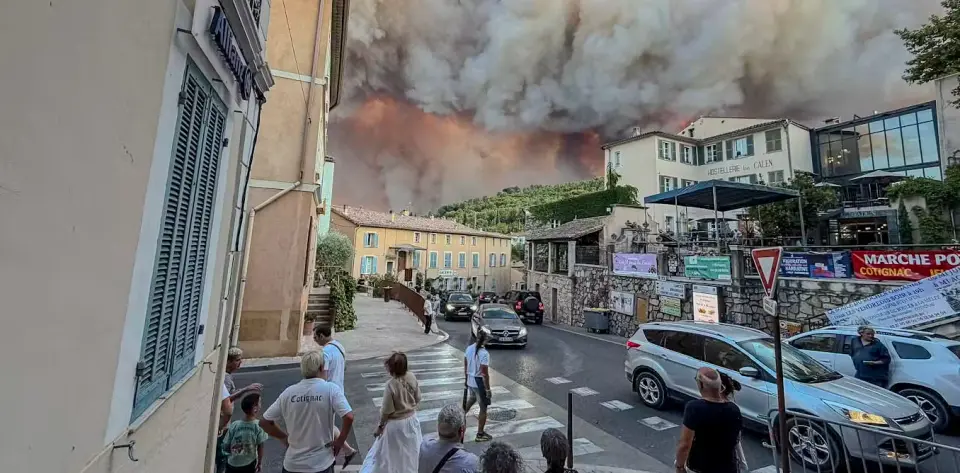
Wildfires in southwestern France and central Spain have reached record-breaking scales, forcing over 300,000 evacuations and causing at least three deaths. Driven by extreme heat and drought, these blazes are the largest in modern history for both nations, with France’s burned area already 40% larger than its previous record. Authorities face a critical challenge as new heatwaves threaten to reignite or expand the fires, while experts warn that climate change is making such 'inextinguishable' megafires increasingly common.
Key points
- Over 300,000 people have been evacuated across France and Spain, with 250,000 in France and 100,000 in Spain.
- At least 80,000 hectares have burned in Spain and 42,000 in France, with 240 homes destroyed near Bordeaux.
- France’s fire energy output is double its previous July record, and the burned area is 40% larger than the all-time record.
- A pyrocumulonimbus (fire thunderstorm) formed over French fires for the first time in recorded history, intensifying the blaze.
- Another heatwave is forecast for the week, with temperatures in Bordeaux expected to reach 42°C (107°F).
Background
Europe has warmed twice as fast as the global average over the past 30 years, creating conditions for longer and more intense fire seasons. Previous archive coverage noted that 2026 was already on track to be an outlier for extreme heat in western Europe, with earlier reports highlighting the disruption to tourism and the strain on firefighting resources. The current crisis represents a escalation of these trends, with fires appearing in unexpected humid coastal areas like the Atlantic coast of France.
How outlets are covering it
The Conversation emphasizes the statistical anomaly, noting that three of the 15 largest EU wildfires in 20 years have occurred in the past month. CNN highlights the physical intensity, quoting experts who describe the fires as 'inextinguishable' and comparable to 'atomic bombs' in energy output. Euronews focuses on the human and political response, detailing the EU’s deployment of 770 firefighters and the arrest of 110 suspected arsonists in France. Vox frames the event within the broader context of Europe’s rapid warming, noting that while 96% of wildfires are human-caused, the climate is making them far more destructive. There is slight variation in evacuation numbers across outlets, with CNN and Vox citing higher figures than Euronews, likely due to different reporting times.
Why it matters
These fires demonstrate the tangible impact of climate change on Europe, threatening major cities like Bordeaux and Madrid and disrupting global supply chains, including the wine industry. The emergence of fire thunderstorms and the sheer scale of the burns indicate a shift in baseline risk, requiring new adaptation strategies such as prescribed burning and urban green firebreaks. The crisis also highlights the limits of current firefighting capabilities against climate-driven megafires.
What to watch
Authorities are bracing for a new heatwave later this week, which could reignite contained fires or cause new ignitions. The EU is coordinating further resource sharing, while local officials focus on containment and smoke mitigation. Long-term, the event will likely accelerate policy discussions on forest management and climate adaptation in vulnerable regions.
- ‘The fire has such power’: why the wildfires gripping France and Spain are off the charts The Conversation
- Live updates: France and Spain braced for extreme temperatures as wildfires leave areas looking like a ‘warzone’ CNN
- Europe’s fires are just the start The Economist
- Europe is burning: How bad could this wildfire crisis get? Euronews.com
- Why Europe is warming twice as fast as the global average vox.com
Want the full story? Read the original reporting
Read on The Conversation