
Record El Niño Rains Trigger Historic Bloom in Chile's Atacama Desert
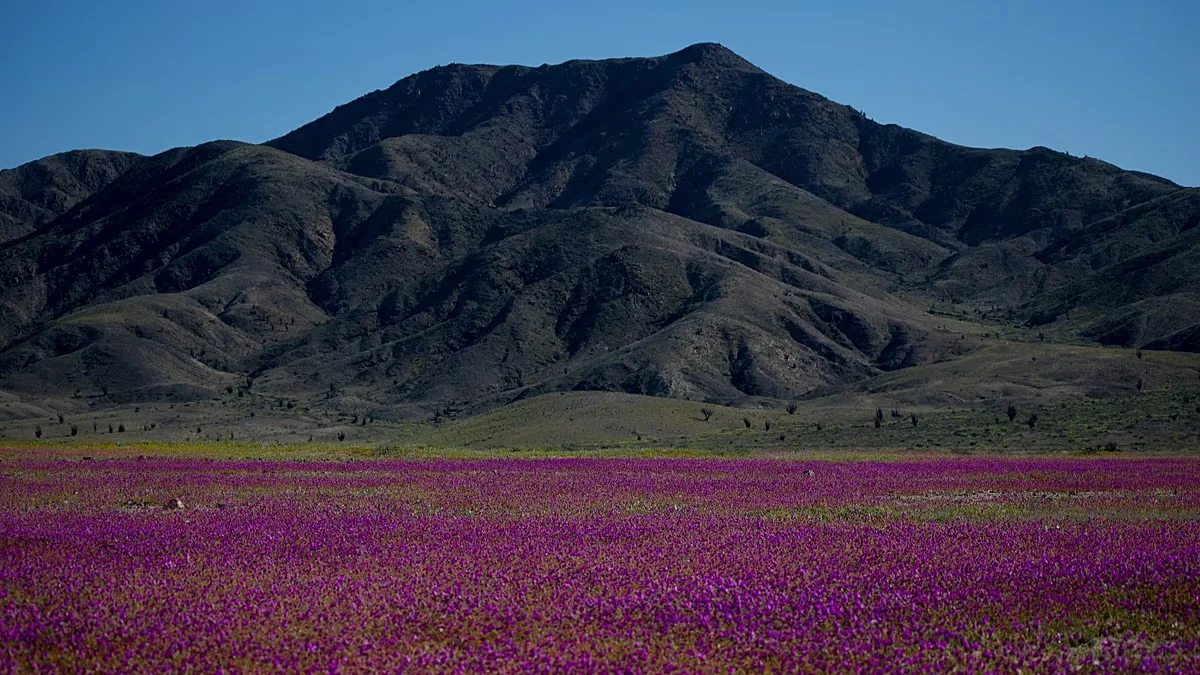
Unprecedented rainfall linked to a record-strength El Niño has triggered a massive 'flowering desert' phenomenon in Chile's Atacama, with up to 15,000 hectares of dormant seeds blooming after months of heavy precipitation.
Key points
- Heavy rains exceeding 180mm in some areas have awakened dormant seeds of over 200 species in the Atacama Desert.
- Chile's National Forestry Corporation (Conaf) estimates the bloom will cover 15,000 hectares, peaking in October 2026.
- The current El Niño episode is potentially the most intense in four decades, causing both the bloom and severe flooding earlier in the year.
- The event draws large numbers of tourists to the region, particularly near Copiapó, to view the violet and white blossoms.
Background
This bloom follows a series of extreme weather events in 2026 linked to a strengthening El Niño. In August 2026, unprecedented snow and rain blanketed the Atacama, disrupting operations and causing mudflows. Global forecasts indicated this El Niño could be the strongest on record, driving significant climate shifts worldwide, including droughts in Indonesia and stormier winters in the U.S. The current bloom is a direct result of these anomalous precipitation patterns in northern Chile.
How outlets are covering it
Euronews and AFP emphasize the scale of the bloom, noting that rainfall levels of 180mm are historically unprecedented for the region. The Times of India highlights the rarity of the event, noting it typically occurs only every 5-10 years and requires specific cold and wet conditions. While Euronews focuses on the visual spectacle and tourism, The Atlantic provides photographic evidence of the transformation, capturing the contrast between the barren landscape and the new floral coverage. All sources agree that the El Niño phenomenon is the primary driver, though Euronews also notes the severe human cost of the same rains, including 13 deaths and 4,000 damaged homes in July.
Why it matters
The Atacama bloom serves as a visible indicator of the extreme weather volatility caused by a record-strength El Niño. While the bloom is a natural spectacle, it underscores the broader climate instability affecting the region, which has simultaneously caused destructive flooding and droughts elsewhere. The event highlights how climate patterns can rapidly alter hyper-arid environments, impacting both biodiversity and local infrastructure.
What to watch
The bloom is expected to reach its peak in October 2026, according to Conaf forecasts. Authorities anticipate continued high visitor numbers as the flowers reach full maturity. Long-term monitoring will assess the impact of the El Niño on local ecosystems and whether the extreme rainfall patterns persist into the spring.
- El Niño transforms Atacama desert as thousands of hectares burst into bloom Euronews.com
- Photos: Wildflowers Bloom in the Atacama Desert The Atlantic
- Atacama, the 'blooming desert', gets painted in a sea of colourful flowers following the rare phenomenon that happens once every 10 years The Times of India
- El Nino rain transforms Chile’s Atacama Desert into vast carpet of flowers after record downpour Malay Mail
- El Niño transforms Chile's Atacama Desert as thousands of hectares bloom Inbox.eu
Want the full story? Read the original reporting
Read on Euronews.com