Tag

Atacama Desert

All articles tagged with #atacama desert

Rainless Fog Feeds Life and Water on Chile's Atacama Cliffs
environment9 days ago

Rainless Fog Feeds Life and Water on Chile's Atacama Cliffs

In northern Chile’s hyperarid Atacama, rain gauges sit idle for generations while a daily marine fog called camanchaca drenches coastal cliffs, sustaining lichens, cacti and a fishing village that relies on the mist for moisture. Scientists have developed fog collectors to harvest this water, turning a natural phenomenon into a local resource, while researchers study how the fog also shapes unique ecosystems on the cliff faces and soils in one of the driest places on Earth.

Desert that mirrors Mars: Atacama as Earth’s doorway to life beyond
space17 days ago

Desert that mirrors Mars: Atacama as Earth’s doorway to life beyond

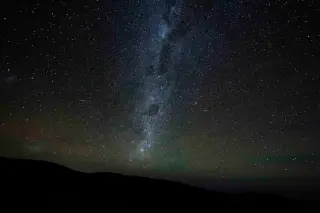
The Atacama Desert in northern Chile—arguably Earth’s driest non-polar region—serves as a Mars-like laboratory with salt flats, near-lifeless soils, and some of the clearest, darkest skies, helping scientists study life beyond Earth and test how we search for it on other worlds, while looming light pollution threatens to erase this crucial astronomical window.

NASA rehearses Mars-style rover life-detection in Chile’s hyperarid Atacama
space28 days ago

NASA rehearses Mars-style rover life-detection in Chile’s hyperarid Atacama

NASA spent four field seasons in Chile’s hyperarid Atacama Desert to rehearse a Mars rover mission, testing autonomous drilling and life-detection hardware (SOLID, PISCES, LITMS) and studying how extreme dryness can preserve life while fooling detectors, with sites like Yungay illustrating the challenges of translating Earth analogs to Martian missions and informing the design of future life-detection payloads.

Bond-Style Desert Lair Now a Hub for World-Class Astronomy
science2 months ago

Bond-Style Desert Lair Now a Hub for World-Class Astronomy

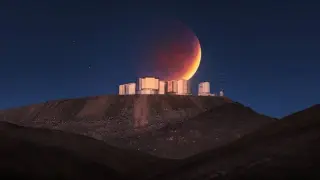
In Chile’s Atacama Desert, the Residencia is a desert-blending, climate-controlled lodging for astronomers near ESO’s Paranal Observatory and the VLT. It’s famously film-friendly (a Quantum of Solace finale was shot there) but functions as a serious research hub with strict light-pollution controls, high-altitude living (no alcohol), and a cycle of night/day shifts as engineers work on the ELT nearby.

Atacama's Dark Skies Under Threat as Light Pollution Creeps In
science2 months ago

Atacama's Dark Skies Under Threat as Light Pollution Creeps In

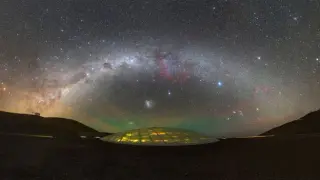
In Chile’s Atacama Desert, home to ESO’s Paranal Observatory, some of Earth’s darkest skies are increasingly affected by artificial light from nearby cities, mining and growing satellite traffic. A proposed nearby megaproject, Inna, could have raised light levels at the observatory by as much as 50% and introduced air turbulence, prompting scientists to push for tighter regulations beyond a 10% threshold. Although AES Andes canceled Inna in 2026, enforcement of light-pollution rules remains weak, and the International Astronomical Union’s 2025 guidelines call for lower limits and a possible secondary norm to empower government action to dim lights if needed. The issue underscores a global struggle: preserving dark skies is crucial for astronomy and our understanding of the universe, even as technology and industry encroach.

Threat to Atacama's Dark Skies as Light Pollution Spreads
science4 months ago

Threat to Atacama's Dark Skies as Light Pollution Spreads

The Atacama Desert, a premier astronomy hub hosting the ELT and major observatories, faces rising light pollution from mining, energy projects, and urban development. Scientists warn that even small increases in artificial light can degrade decades of data and hinder the search for Earth-like planets, spurring calls for stricter protections and regulatory updates after a near-miss green-energy project near Paranal highlighted governance gaps.

Chile’s Atacama Desert: Dark Skies at Risk from Modern Development
science4 months ago

Chile’s Atacama Desert: Dark Skies at Risk from Modern Development

The Atacama Desert in Chile hosts some of the world’s most powerful astronomical facilities thanks to exceptionally dark skies, but growing urban expansion, mining, wind farms, and a canceled nearby green-energy project have spotlighted how light pollution and regulations threaten these observatories and their ability to study the universe—spurring calls for stricter sky-preservation rules to safeguard projects like the ELT and the search for Earth‑like planets.

Nematodes thrive in the Atacama Desert, reshaping ideas about life in extreme dryness
science5 months ago

Nematodes thrive in the Atacama Desert, reshaping ideas about life in extreme dryness

A University of Cologne–led study published in Nature Communications finds a diverse nematode community in soils across six sites in the Atacama Desert, the world's driest non-polar desert, with 21 families and 36 genera; higher precipitation correlates with greater biodiversity, and asexual reproduction appears to aid survival in high-altitude areas, though some regions show simplified food webs, offering insights into life’s resilience in extreme aridity amid climate-change context.

Hidden Nematodes: a thriving soil web discovered in the Atacama
science5 months ago

Hidden Nematodes: a thriving soil web discovered in the Atacama

A Nature Communications study finds diverse nematode communities in the Atacama Desert’s soils across six sites (dunes, altiplano, saline lakes, river valleys, fog oases), with 21 families and 36 genera. Genus richness correlates with moisture, elevation, and climate gradients, and reproduction modes shift with altitude (asexual at higher altitudes, sexual at lower). The work shows stable soil life even in hyper-arid cores and underscores implications for predicting soil resilience as global aridity increases and climate change progresses.

Chile’s 80-meter dome gears up to house the Extremely Large Telescope
astronomy6 months ago

Chile’s 80-meter dome gears up to house the Extremely Large Telescope

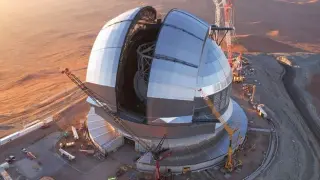
Space agency ESO released imagery of the ELT’s enormous 80-meter outer dome at Cerro Armazones in Chile. The dome will shelter a 39-meter primary mirror, protect optics from desert heat, and feature earthquake-resilient shock absorbers; the upper section will rotate to give the telescope full access to dark skies. The project is slated for completion in 2027, with first light planned for early 2029 and initial science observations in 2030.

Nematodes Survive and Adapt in the Atacama’s Ultra-Dry Soils
science7 months ago

Nematodes Survive and Adapt in the Atacama’s Ultra-Dry Soils

An international study across six Atacama sites finds diverse nematode communities persisting in ultra-dry soils; higher elevations favor parthenogenetic (asexually reproducing) species, while more water boosts biodiversity. The findings reveal resilient soil ecosystems in extreme deserts and warn that simplified food webs in some regions may be more vulnerable to climate change.