
Williston Lake's Forested Island Reappears 30km Away After Vanishing
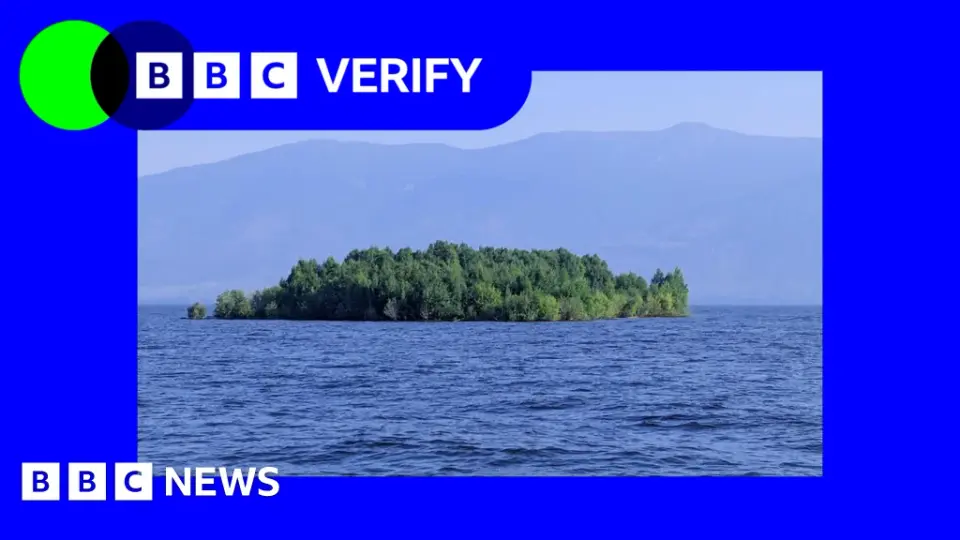
A forested floating island in British Columbia's Williston Reservoir has been located approximately 30 kilometers from its last known position after seemingly vanishing in July. B.C. Hydro confirmed the discovery via satellite imagery, noting the island is currently resting on the shoreline. While the mass poses no immediate threat to infrastructure, officials warn it is unstable and advise against physical contact.
Key points
- B.C. Hydro confirmed the island's new location in the Ospika Arm using satellite imagery dated August 15.
- The island, estimated at 9,800 square meters, drifted roughly 30 kilometers northwest from its initial sighting.
- Officials attribute the movement to strong winds and record-high water levels rather than current flow.
- The island appears intact but is considered unstable, prompting warnings against boaters attempting to climb on it.
- Scientists suggest the formation is a rare, endangered landform likely composed of driftwood and vegetation.
Background
This development follows earlier reports in September 2026 where the island first appeared, vanished, and was rediscovered. Previous coverage established that the reservoir, created in 1968, is prone to strong winds and erosion. The current update confirms the island's persistence and specific location, moving beyond initial speculation about its existence.
How outlets are covering it
B.C. Hydro emphasizes the logistical aspect, confirming the island's location and warning of its instability, while noting it does not threaten the W.A.C. Bennett Dam. National Geographic focuses on the ecological rarity, with experts describing such forested floating islands as 'endangered landforms' that were once more common before industrial damming and logging reduced driftwood accumulation. CBC highlights the public intrigue and the technical confirmation via satellite data, noting that the island's movement was driven by wind rather than water current, a detail that contrasts with the slower flow of the reservoir.
Why it matters
The event highlights the impact of changing water levels and wind patterns on natural landforms in managed reservoirs. It also serves as a case study for the rarity of large, forested floating islands in the modern era, offering insights into historical ecological processes that have been altered by human activity.
What to watch
B.C. Hydro will continue to monitor the island to determine if it breaks apart or remains intact. Researchers may attempt to date the trees to understand the island's age and formation process. There is no immediate plan for intervention unless the island poses a risk to navigation or infrastructure.
- Why did this Canadian 'island' seemingly vanish and reappear miles away? BBC
- How a Phantom Island in a Canadian Lake Appeared, Vanished, Then Reappeared The New York Times
- Canada Has a New Forested Floating Island. Scientists Think It Used to Have Many More. National Geographic
- Lost island in northern B.C. lake — that appeared then disappeared — located, says B.C. Hydro CBC
- B.C. boaters warned to avoid mysterious floating island CTV News
Want the full story? Read the original reporting
Read on BBC