
Southeast Asia’s Decade-Worst Haze Sparks Student Protests and Diplomatic Friction
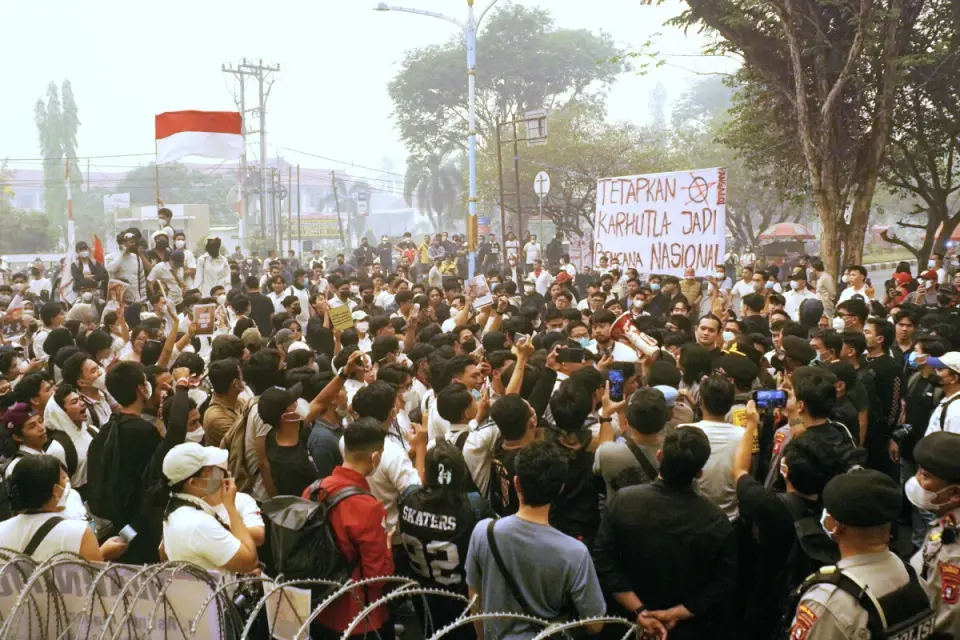
Toxic haze from Indonesian wildfires has blanketed Southeast Asia, causing over 333,000 respiratory cases and triggering student protests. The crisis, the worst in a decade, is driven by peatland fires, a strong El Niño, and slash-and-burn agriculture. Singapore is suing Indonesian companies, while residents in cities like Palembang and Palangkaraya face severe health risks and normalised danger.
Key points
- More than 333,470 residents in seven Indonesian provinces have suffered acute respiratory illnesses since mid-August, with over 62,000 cases among children under five.
- Wildfires have burned approximately 1.9 million hectares of land in Indonesia since the start of the year, an area comparable to the US state of New Jersey.
- Student protests have spread across more than half a dozen Indonesian cities, demanding that President Prabowo Subianto declare a national disaster emergency and hold officials accountable.
- Singapore has initiated legal action against seven Indonesian companies blamed for the fires, while air quality in Singapore and Kuala Lumpur ranked among the world's worst this month.
- Firefighters report that peatland fires are extremely difficult to extinguish due to water scarcity and deep underground smouldering, with some volunteers suffering from exhaustion and respiratory issues.
Background
This crisis follows a series of escalating wildfire events in Indonesia throughout 2026. Earlier reports in September indicated 175,000 respiratory cases and 895,000 hectares burned, driven by a 'Godzilla' El Niño. By October, the situation worsened, with four firefighters dying in a national park and the government testing dry ice dispersal to combat the smoke. The current escalation marks a significant intensification of the regional haze problem, which has historically peaked in 1997, 2015, and 2019.
How outlets are covering it
AP News emphasizes the political dimension, highlighting student protests and demands for a national emergency declaration, while noting the merging of environmental grievances with economic discontent. BBC focuses on the human toll, detailing the health impacts on children and the exhaustion of frontline firefighters, and attributes the severity to a 'Super El Niño' and climate change. The Straits Times highlights the social normalization of the hazard, noting that residents in Palembang continue daily activities without masks despite 'dangerous' air quality levels, contrasting this with the acute health risks reported by medical officials. While AP and BBC agree on the scale of the crisis, The Straits Times offers a critical view of public apathy, suggesting that the danger has become routine for many locals.
Why it matters
The haze crisis represents a severe public health emergency and a test of regional diplomatic relations. The high number of respiratory cases, particularly among children, underscores the immediate human cost. The diplomatic friction, including Singapore's legal action against Indonesian companies, highlights the transboundary nature of the problem. Furthermore, the normalization of hazardous air quality by local populations indicates a potential long-term public health risk and a challenge for government enforcement of environmental regulations.
What to watch
Authorities are hoping for heavy rain to extinguish the fires, as water scarcity continues to hinder firefighting efforts. The Indonesian government has deployed over 60,000 personnel for land operations, claiming an 80% success rate in extinguishing new fires, but the crisis persists. Singapore's legal proceedings against Indonesian companies may set a precedent for holding corporations accountable for transboundary environmental damage. Student protests are expected to continue as long as the government does not declare a national emergency or implement stricter controls on slash-and-burn agriculture.
- Southeast Asia’s worst haze in over a decade sparks student protests AP News
- Protests in Indonesia Demand Action to Stop Rainforest Fires The New York Times
- Indonesia's fire hotspots ease but rain still not enough, official says Reuters
- Borneo burning: Life on the frontline of South East Asia's toxic haze BBC
- Record haze, no masks: Where living dangerously is the new norm The Straits Times
Want the full story? Read the original reporting
Read on AP News