
Nepal's Glacial Floods Expose India's Shared Himalayan Vulnerability
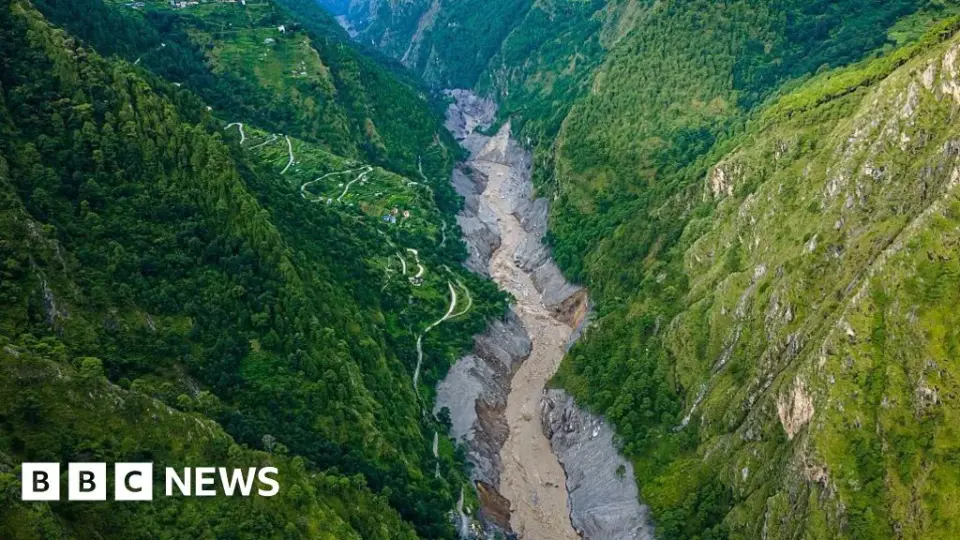
Nepal's recent glacial collapse and subsequent floods, which killed over 1,000 people, have highlighted the transboundary risks India faces from shared Himalayan river systems. While Nepal's rainfall determines peak flow at the border, the severity of flooding in Indian states like Bihar and Uttar Pradesh depends heavily on local infrastructure, embankment integrity, and drainage conditions. Experts warn that climate change is intensifying these events, turning conventional floods into destructive debris-laden surges that require better cross-border data sharing and early-warning systems.
Key points
- Nepal's death toll from recent floods has exceeded 1,000, with thousands still missing, driven by glacial collapse and intense monsoon rains.
- Seven to nine major rivers flow from Nepal into India, with the Kosi, Gandak, and Ghaghara being the most significant for Indian flood risk.
- Bihar is the most exposed Indian state, with roughly 75% of north Bihar classified as flood-prone, followed by eastern Uttar Pradesh.
- The 2008 Kosi disaster in Bihar was caused by embankment failure, not exceptional water volume, illustrating that Indian infrastructure determines disaster severity.
- India and Nepal share real-time rainfall data, but gaps remain in monitoring fast-flowing Chure rivers and sharing embankment condition data.
- Climate change is intensifying extreme rainfall and glacial instability, creating high-energy debris flows that are harder to predict than conventional floods.
Background
This event follows a series of major Himalayan disasters, including the 2021 Chamoli glacier collapse in India and the 2025 Dharali flash flood in Uttarakhand. In August 2026, a glacial debris avalanche near Langtang triggered a 100-kilometer inland flood surge across Nepal and into India, killing hundreds and leaving hundreds of Indian pilgrims missing. These events underscore a growing pattern of high-mountain hazards in the region.
How outlets are covering it
BBC and AP News emphasize the technical complexity of transboundary flooding, noting that while Nepal's rainfall dictates peak flow, Indian infrastructure and local conditions determine the final impact. They highlight the need for better data sharing and debunk the myth that Nepal 'releases' water, clarifying that Nepal lacks large reservoirs for such control. The Guardian, via Michael Mann, frames the event as a direct consequence of climate change, linking the glacial collapse to global warming and positioning it as part of a broader 'summer of extremes' that includes heatwaves and wildfires in Europe and the US. While BBC and AP focus on hydrological mechanics and bilateral cooperation, The Guardian stresses the urgent need for climate action to prevent such structural failures in the future.
Why it matters
The Nepal floods serve as a critical warning for India, demonstrating that Himalayan instability poses a direct threat to densely populated Indian plains. The event underscores the limitations of current early-warning systems and the vulnerability of aging infrastructure in flood-prone regions. As climate change intensifies extreme weather and glacial melt, India must prioritize cross-border cooperation, improved monitoring, and resilient infrastructure to mitigate the growing risk of catastrophic, debris-laden floods in the coming decades.
What to watch
India and Nepal are expected to enhance cooperation on real-time data sharing and early-warning systems, particularly for fast-flowing Chure rivers. India may review and upgrade embankments and barrages in Bihar and Uttar Pradesh to withstand higher-energy debris flows. Climate scientists will continue to study the attribution of such events to global warming, potentially influencing future policy and infrastructure planning in the Himalayan region.
- Why Nepal floods should worry India BBC
- Asia Bulletin newsletter: Lessons from the flash flood in Nepal The Economist
- Nepal’s glacial collapse foreshadowed a future of climate disaster | Michael Mann The Guardian
- As climate change warms the Himalayas, disasters like the Nepal floods are becoming more frequent AP News
- Disaster in Nepal Shows Mountains Are Becoming Less Stable Bloomberg.com
Want the full story? Read the original reporting
Read on BBC