
BRICS Summit in Delhi: Unity on Tariffs, Silence on War
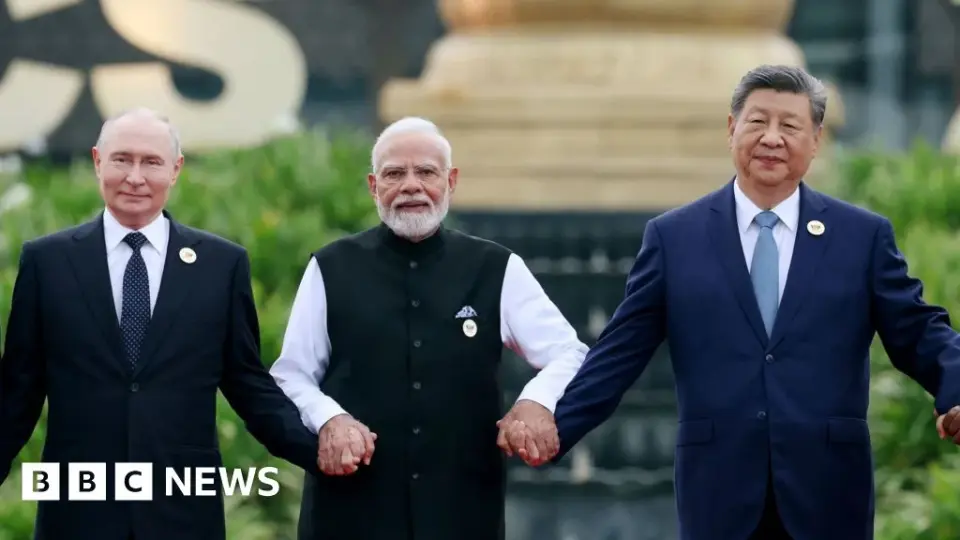
The 2026 BRICS summit in New Delhi produced a joint declaration despite deep divisions between member states Iran and the UAE, who are currently at war. While leaders agreed on opposing unilateral tariffs and supporting a two-state solution in Palestine, the declaration avoided naming specific aggressors in the Middle East conflict or addressing Russia's war in Ukraine. The event highlighted India's diplomatic efforts to maintain strategic autonomy and prevent the bloc from becoming an anti-Western coalition, even as internal rivalries over energy security and trade limits the group's geopolitical cohesion.
Key points
- The 'New Delhi Declaration' was adopted after two previous failed attempts to reach consensus earlier in 2026, marking a diplomatic success for India's chairmanship.
- The declaration urged 'maximum restraint' in the Middle East and condemned attacks on civilian infrastructure but did not assign blame to the US or Israel, nor did it mention Russia's war in Ukraine.
- Iran and the UAE, both BRICS members, held high-level talks in Delhi, the first face-to-face meeting since the conflict began, though Abu Dhabi had suspended trade and closed its embassy in Iran in August.
- China's President Xi Jinping visited India for the first time in seven years, agreeing to strengthen business ties, though he skipped the gala dinner and stayed less than 24 hours.
- India pushed for linking central bank digital currencies, a move previously criticized by US President Donald Trump as 'anti-American', while Brazil advocated for a unified currency to challenge US dollar dominance.
Background
The summit follows a period of intense geopolitical strain, including the US-Israeli military campaign against Iran starting in late February 2026 and the subsequent disruption of the Strait of Hormuz. Previous BRICS meetings in May and later in the year failed to produce joint statements due to these same divisions. The group has expanded to include Egypt, Ethiopia, Saudi Arabia, and Indonesia, increasing its representational breadth but also importing regional rivalries into its decision-making structure.
How outlets are covering it
BBC emphasizes India's diplomatic feat in gathering rivals and its stance against becoming an anti-Western bloc, noting the declaration's careful ambiguity. NDTV argues that the Iran-UAE conflict exposes the structural limits of BRICS' consensus model, suggesting the group is fracturing into three distinct strategic constituencies with little room for compromise on active wars. EnterpriseAM highlights the economic dimensions, noting that while consensus on political issues is elusive, there is progress on financial integration like digital currency links, and points out that members like Egypt and Indonesia have diverged from others on issues like the Ukraine war and US tariffs.
Why it matters
The summit demonstrates that BRICS can serve as a platform for dialogue between adversaries, but its inability to issue unified political stances on major conflicts limits its influence as a global power. The focus on economic cooperation and digital currencies suggests a shift toward pragmatic collaboration over ideological alignment, potentially reshaping global financial systems despite ongoing geopolitical tensions.
What to watch
Observers will watch whether the economic initiatives, such as digital currency links and the New Development Bank, gain traction despite political divisions. The long-term impact of the Iran-UAE rift on BRICS cohesion remains uncertain, as does the group's ability to maintain unity in the face of US trade threats and ongoing regional conflicts.
- Brics summit 2026 Delhi: Iran war reshapes ties but exposes divides BBC
- Iran crisis drives new diplomacy from BRICS to Oman jpost.com
- Next BRICS summit can get an Iran ceasefire Al Jazeera
- Opinion | The Iran-UAE Rivalry, And Why Our BRICS Expectations Need To Be Realistic NDTV
- Brics leaders facing their widest divisions yet in New Delhi this week, as UAE and Iran back peace call EnterpriseAM
Want the full story? Read the original reporting
Read on BBC