
Hamburg trial begins for Ukrainian soldier accused of leading Nord Stream sabotage
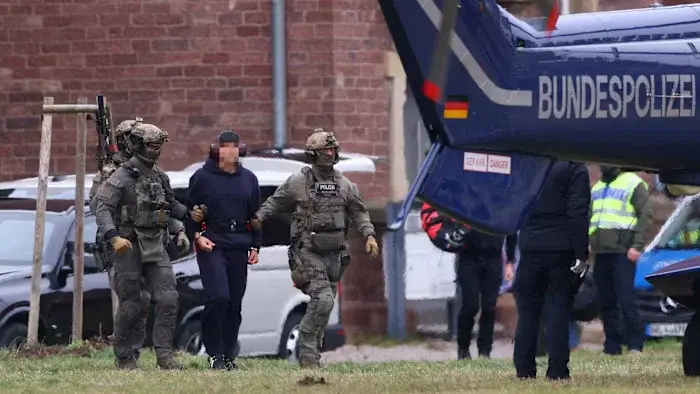
A German court has begun the trial of Serhii Kuznetsov, a former Ukrainian special forces officer accused of leading a team of divers to destroy the Nord Stream gas pipelines in 2022. Prosecutors allege the attack was ordered by Ukrainian state authorities to cut off Russian gas revenue. Kuznetsov denies involvement, and the case has sparked diplomatic tension between Berlin and Kyiv, with Ukraine maintaining it had no role in the blasts.
Key points
- Serhii Kuznetsov, 50, faces charges of war crimes and sabotage for allegedly detonating explosives on the Nord Stream 1 and 2 pipelines near Bornholm on September 26, 2022.
- German prosecutors claim Kuznetsov led a team of six, including divers and an explosives expert, using a rented yacht to place devices at a depth of 80 meters.
- Kuznetsov was arrested in Italy in August 2025 and extradited to Germany in November 2025 after legal challenges failed.
- A second suspect, Volodymyr Zhuravlyov, is fighting extradition from Croatia, where a Polish court previously ruled the attack was justified during wartime.
- The trial is expected to last 16 days, concluding in December 2026, with further hearings potentially in January 2027.
Background
The Nord Stream pipelines, which carried Russian gas to Germany, were damaged by explosions in September 2022, shortly after Russia's full-scale invasion of Ukraine. The attacks exposed Europe's dependence on Russian energy and led to a transition away from Russian gas. Prior to the trial, German prosecutors had accused Ukrainian state authorities of ordering the attack to prevent Russia from financing its war effort.
How outlets are covering it
The Financial Times could not be accessed due to a paywall, but its headline indicates German prosecutors are accusing Ukraine of the sabotage. The Guardian and BBC report that Kuznetsov denies the charges, with his lawyers arguing the trial is illegitimate and that the pipelines were a 'weapon' rather than civilian infrastructure. The BBC notes that while Germany has tried to depoliticize the case, Ukraine's Foreign Affairs Committee chair calls the German account 'one of the versions' and emphasizes the pipelines' role in Russian war preparation. CNN's content was inaccessible due to technical errors, but the story highlights the diplomatic strain between Berlin and Kyiv, with Ukraine maintaining it had 'nothing to do with' the blasts.
Why it matters
The trial tests the limits of international law and diplomatic relations between Germany and Ukraine, a key wartime ally. It could influence European energy policy and perceptions of state-sponsored sabotage, while also impacting Germany's domestic politics, with far-right parties using the case to argue against aid for Ukraine and for reinstating the pipelines.
What to watch
The trial will resume on October 27, 2026, with 16 days of hearings scheduled through December 17, 2026. Further hearings may occur in January 2027. The outcome could determine whether Kuznetsov is convicted of war crimes and may influence the extradition of the second suspect, Zhuravlyov, from Croatia.
- German prosecutors accuse Ukraine of Nord Stream sabotage Financial Times
- Ukrainian soldier led team of divers to blow up Nord Stream gas pipelines, court hears The Guardian
- Germany puts Ukrainian on trial accused of blowing up Nord Stream pipelines BBC
- A trial over one of the biggest acts of sabotage in decades is getting underway. Here’s a refresher CNN
- Germany's Wadephul on Nord Stream trial: 'Will deal with any outcome' Yahoo
Want the full story? Read the original reporting
Read on Financial Times