
Mecca Pact Marks Shift in Middle East Security Architecture
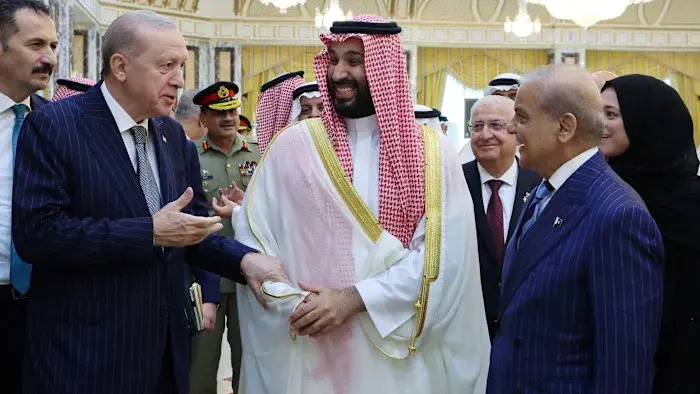
Saudi Arabia, Turkey, and Pakistan signed a mutual defense pact in Mecca, signaling a shift away from US security reliance following the US-Israeli conflict with Iran. The agreement, modeled on NATO Article 5, aims to bolster regional deterrence against Iran and Israel, though analysts debate its practical military value. Trump welcomed the pact, framing it as regional self-reliance, while critics argue it reflects US unpredictability and the erosion of the US-led regional order.
Key points
- The pact, signed on August 7, 2026, includes a clause stating an attack on one signatory is an attack on all, similar to NATO Article 5.
- The agreement was signed by Saudi Crown Prince Mohammed bin Salman, Turkish President Tayyip Erdoğan, and Pakistani Prime Minister Shehbaz Sharif in Mecca.
- The pact follows the US-Israeli conflict with Iran, which began in February 2026 and lasted nearly six months, leaving Iran intact and emboldened.
- Gulf states are reassessing their reliance on the US as a security guarantor after Iran struck military bases and infrastructure across the region.
- The pact is seen as a symbolic shift in regional alliances, with some analysts viewing it as a counterweight to Israel and the Abraham Accords.
Background
The Mecca Pact follows a series of US-Iran tensions, including Trump's threat to bomb Oman over Hormuz talks and the expiration of a peace memorandum. The pact also comes after the US-Israeli conflict with Iran, which began in February 2026 and lasted nearly six months, leaving Iran intact and emboldened. The agreement is part of a broader trend of regional realignment, with Gulf states seeking to diversify their security partnerships and reduce dependence on the US.
How outlets are covering it
The Financial Times views the pact as a symbolic shift in regional alliances, reflecting a growing distrust of US reliability. Al Jazeera highlights Trump's welcome of the pact, framing it as regional self-reliance, while noting that the US remains the principal defense partner for Arab states. The Council on Foreign Relations argues that the pact marks the end of the US-led Middle East order, with regional powers now shaping their own security architecture. Geopolitical Futures raises concerns about the potential for conflict between Israel and Pakistan, given the pact's implications for regional security.
Why it matters
The Mecca Pact signals a shift in the Middle East's security architecture, with regional powers seeking to diversify their security partnerships and reduce dependence on the US. The agreement could reshape regional alliances, with some analysts viewing it as a counterweight to Israel and the Abraham Accords. The pact also raises questions about the practical value of the agreement, with some analysts arguing that it is more symbolic than substantive.
What to watch
The pact's practical value will be tested in the coming months, with analysts watching for any incidents that could trigger the mutual defense clause. The agreement could also reshape regional alliances, with some states potentially joining the pact or forming new alliances. The US may also adjust its strategy in the region, with some analysts arguing that the pact could lead to a gradual retrenchment of US military presence.
- The realignment of the Middle East Financial Times
- Trump hails Mecca pact: Can it replace the region’s US security umbrella? Al Jazeera
- The U.S.-Led Middle East Order Is Over. The Mecca Agreement Proves It. Council on Foreign Relations
- George Answers Your Questions: The Broader Impact of a New Alliance in the Middle East Geopolitical Futures
- Trump cheers defense pact between Saudis, Turkey and Pakistan: ‘The Mideast is coming together’ The Times of Israel
Want the full story? Read the original reporting
Read on Financial Times