
Iraq's September 30 Disarmament Deadline Collides with US Troop Withdrawal Amid Regional War
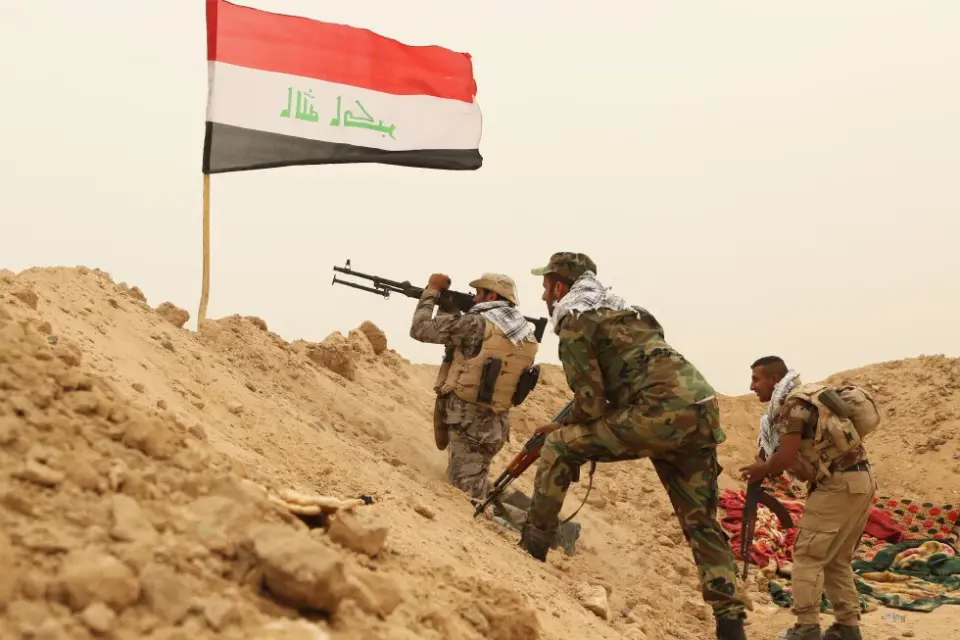
Iraq faces a critical September 30 deadline to disarm Iran-backed militias, coinciding with the US military withdrawal. Recent attacks on Saudi infrastructure and a widening US-Iran war have emboldened these groups, making disarmament unlikely. Baghdad is struggling to balance US pressure with Iranian influence, risking further regional instability and internal conflict.
Key points
- US forces are set to withdraw from Iraq by October 1, removing a key target for Iranian-backed militias.
- Iraqi PM Ali al-Zaidi set a September 30 deadline for militias to surrender weapons, but major groups like Kataib Hezbollah have rejected this.
- A recent drone attack on Saudi Arabia's East-West pipeline, allegedly launched from Iraq, has intensified Baghdad's investigation into militia activities.
- The ongoing US-Iran war has emboldened Iraqi militias, increasing attacks on US and Gulf targets, complicating disarmament efforts.
- Kurdish regions fear increased vulnerability to attacks after the US withdrawal, despite promises of new air defense systems from Baghdad.
Background
Iraq has long struggled with the influence of Iran-backed militias, which gained power after the 2003 US-led invasion and the 2014-2018 war against ISIS. These groups, integrated into the Popular Mobilization Forces, have become powerful political and military actors. The current crisis is part of a broader US-Iran conflict that began in February 2026, with Iraq serving as a key theater for proxy attacks.
How outlets are covering it
AP News emphasizes the dual deadlines of US withdrawal and militia disarmament, highlighting the US military's concerns about militia capabilities and the Iraqi government's strategy to bring armed factions under state control. The Financial Times focuses on the Saudi pipeline attack as a catalyst for Baghdad's investigation and the challenge of countering Iranian influence, noting the emboldening of militias due to the US-Iran war. Shafaq News highlights Iraq's vulnerability as a bystander in the US-Iran war, with the September 30 deadline serving as a test of Baghdad's ability to manage competing pressures from Washington and Tehran.
Why it matters
The outcome of the September 30 deadline will determine whether Iraq can stabilize its security landscape or face further escalation. Failure to disarm militias could lead to increased attacks on US and Gulf targets, potentially drawing Iraq into a broader regional conflict. The US withdrawal also raises concerns about security vacuums, particularly in Kurdish regions, and the potential for internal strife if disarmament is forced.
What to watch
Baghdad is expected to continue negotiations with militias, possibly focusing on 'dynamic weapons' and integration into the Popular Mobilization Forces. The US may impose further sanctions or take military action in response to militia attacks. The Kurdish region is awaiting new air defense systems to mitigate security risks post-withdrawal.
- As the last US troops pack up in Iraq, militias signal their weapons will stay AP News
- Saudi pipeline attack exposes potent Iraqi militia threat Financial Times
- U.S. Warns Iraq: Disarm Militias by Sept. 30 or Dollar Transfers Stop Kurdistan24
- Ten questions (and expert answers) on the final withdrawal of US troops from Iraq atlanticcouncil.org
- Shafaq News..Iraq caught between US-Iran war and September 30 deadline شفق نيوز
Want the full story? Read the original reporting
Read on AP News