
Mecca Pact Activated: Saudi Arabia, Pakistan, and Turkey Deploy Forces Against Houthi Threats
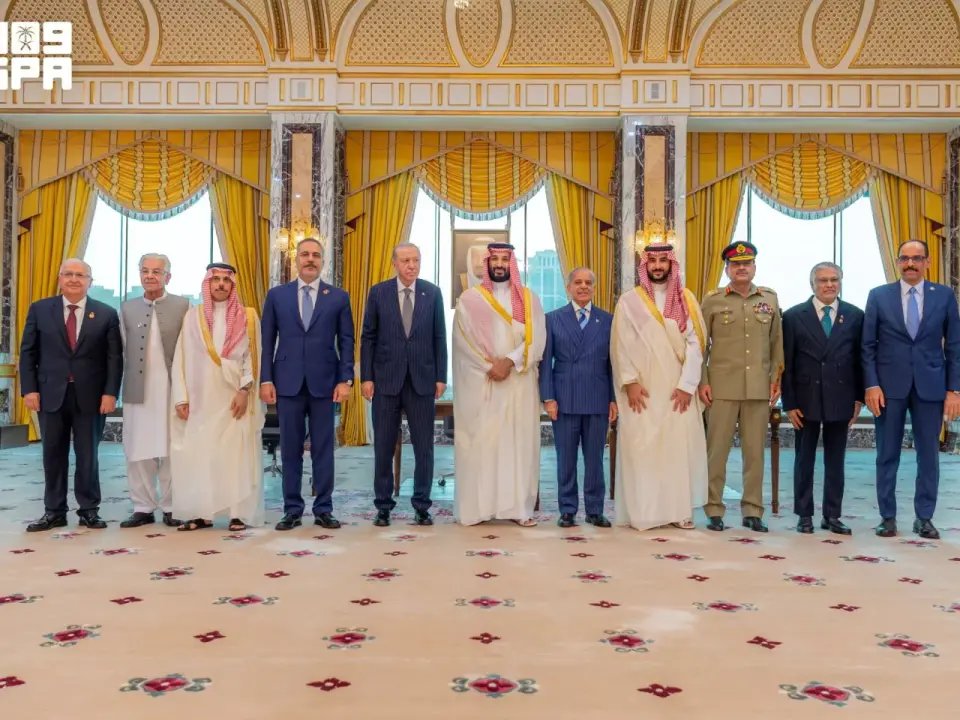
Saudi Arabia, Pakistan, and Türkiye activated their August-signed Mecca defence pact for the first time, agreeing to deploy military forces to Saudi Arabia in response to Houthi attacks. While Pakistan confirmed its involvement in reconnaissance and defence, Türkiye’s ground troop deployment remains blocked by parliamentary ratification requirements. The move signals a shift from diplomatic mediation to collective deterrence, though analysts debate whether the alliance will remain strictly defensive or expand into offensive operations in Yemen.
Key points
- The Mecca pact’s top committee met in Riyadh on Monday to agree on the 'rapid deployment' of Pakistani and Turkish forces to Saudi Arabia, marking the first activation since the pact was signed in August.
- Pakistan’s Defence Minister Khawaja Asif confirmed that Pakistani forces are already involved in reconnaissance and supporting roles, while Saudi Arabia’s own forces conduct the primary combat operations to retake territory from the Houthis.
- Türkiye’s participation is limited by its constitution, which requires parliamentary ratification for troop deployment; Ankara has not yet ratified the pact, suggesting its contribution will focus on intelligence, air defence, and electronic warfare rather than ground troops.
- Saudi Arabia’s Defence Minister Khalid bin Salman stated that the committee agreed to activate 'collective deterrence measures' against 'all those responsible' for the attacks, a phrase analysts interpret as a warning to external sponsors like Iran.
- The deployment follows recent Houthi attacks on Saudi airports and oil facilities, including the East-West Pipeline, and coincides with Saudi-backed Yemeni forces recapturing key areas near the Bab al-Mandeb Strait.
Background
The Mecca pact was signed in August 2026, establishing a mutual defence agreement between Saudi Arabia, Pakistan, and Türkiye. Prior to this activation, Pakistan had walked back earlier warnings about military action, emphasizing the pact’s defensive nature and its role in balancing ties with Iran. In September, Pakistan’s army chief urged Iran to curb Houthi attacks, while Islamabad maintained that the pact did not automatically oblige military intervention. The current activation marks a significant shift from diplomatic mediation to collective deterrence, as Houthi attacks on Saudi targets intensified.
How outlets are covering it
Al Jazeera emphasizes the ambiguity of the pact’s scope, noting that while Pakistan and Türkiye are in defensive roles, the question remains how long they can avoid direct combat. Analysts cited by Al Jazeera suggest that Saudi Arabia aims to turn the pact into a deterrent, but Pakistan’s officials stress that the agreement has no offensive agenda. Financial Times highlights the legal constraints on Türkiye’s participation, noting that parliamentary ratification is required for ground troops, and points out that interoperability between the three nations’ forces is 'difficult, especially in the middle of a war.' Both outlets agree that the deployment is a response to Houthi attacks, but they differ on the likelihood of the alliance expanding into offensive operations in Yemen.
Why it matters
The activation of the Mecca pact signals a shift in regional security dynamics, as Saudi Arabia seeks to deter Houthi attacks through collective defence rather than unilateral action. The involvement of Pakistan and Türkiye, despite their limited roles, demonstrates the pact’s potential to influence the balance of power in the Arabian Peninsula. However, the ambiguity of the pact’s scope and the legal constraints on Türkiye’s participation raise questions about its long-term effectiveness. The move also tests Pakistan’s ability to balance its ties with Saudi Arabia and Iran, as Tehran views the Houthis as part of its strategic depth in the region.
What to watch
The next steps will depend on the outcome of the Saudi-led counteroffensive in Yemen and the Houthis’ response to the collective deterrence measures. If the campaign remains limited to securing Saudi territory and Bab al-Mandeb, the deployment may be short-lived. However, if Saudi-backed forces aim to retake Sanaa, the capital held by the Houthis since 2014, the conflict could escalate into a longer war. Türkiye’s parliamentary ratification of the pact will also be a key factor in determining the scope of its involvement. Pakistan’s ability to maintain its defensive role while avoiding direct combat will be crucial to preserving its ties with Iran and the Gulf states.
- Pakistan, Turkiye and Saudi deterrence against Houthis: What that means Al Jazeera
- Saudi Arabia, Pakistan and Turkey trigger mutual defence pact Financial Times
- Turkey says Mecca pact committee to meet in Riyadh on October 5 Reuters
- Pakistan Says Mecca Pact Is Supporting Saudi Arabia With Houthis Bloomberg.com
- World in Brief: Turkey and Pakistan come to Saudi Arabia’s aid; Spain’s snap election The Economist
Want the full story? Read the original reporting
Read on Al Jazeera