
Merz Visits Kyiv as Russia Escalates Air Strikes Ahead of Winter
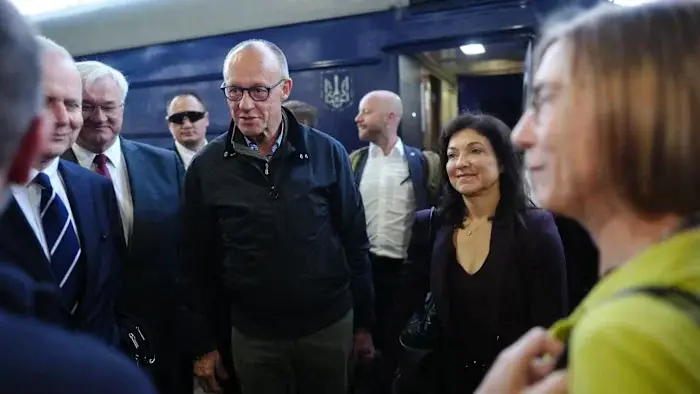
German Chancellor Friedrich Merz visited Kyiv with a business delegation to reaffirm support as Russia intensified air strikes on Ukrainian cities. The visit coincided with a Russian attack on Kyiv’s North Bridge, highlighting the escalating security risks for Western leaders. Berlin is positioning itself as the primary military donor to Ukraine, shifting focus from the US, while facing domestic political opposition to continued aid.
Key points
- Chancellor Friedrich Merz arrived in Kyiv on Sunday with Economy Minister Katherina Reiche and corporate leaders to demonstrate Germany’s commitment to Ukraine.
- A Russian air strike hit Kyiv’s North Bridge shortly after Merz’s arrival, causing smoke and damage, following drone attacks on the South Bridge earlier in the week.
- Germany has become the largest donor of military aid to Ukraine since Merz took office in May 2025, replacing the US, which has scaled back support.
- Merz announced funding for tens of thousands of interceptor drones produced by a joint venture between Germany’s Quantum Systems and Ukraine’s WIY Drones.
- Russia’s foreign ministry warned foreign nationals against traveling to Ukraine hours before Merz’s arrival, citing security risks.
- President Volodymyr Zelenskyy stated that Russia is preparing to intensify air attacks on major cities to isolate them as winter approaches.
Background
Recent months have seen a significant escalation in Russian attacks on Kyiv, including strikes on the SBU headquarters and airports during diplomatic visits. In late September, Kyiv braced for winter with intelligence indicating Russia planned escalated energy strikes. The current situation reflects a broader trend of Russia expanding its air war and hybrid attacks on European soil, such as the foiled drone attack at Leipzig airport in August.
Why it matters
The visit underscores the shifting dynamics of Western support for Ukraine, with Germany stepping up as the primary military donor amid US retrenchment. It highlights the increasing risks for Western leaders visiting Ukraine and the strategic importance of securing defense technologies like interceptor drones. Domestically, Merz faces pressure to justify the cost of aid due to low approval ratings and rising support for anti-Ukraine parties in Germany.
What to watch
Germany is expected to continue funding defense projects and military aid to Ukraine, potentially increasing annual support to €10bn. Russia may further escalate air strikes on Ukrainian cities and infrastructure as winter approaches. European leaders and intelligence services will likely monitor hybrid attacks on European soil, such as drone incidents at airports, for signs of broader Russian aggression.
Want the full story? Read the original reporting
Read on Financial Times