
Pakistan-Afghan Border Crisis Escalates with New Cross-Fire and Airstrikes
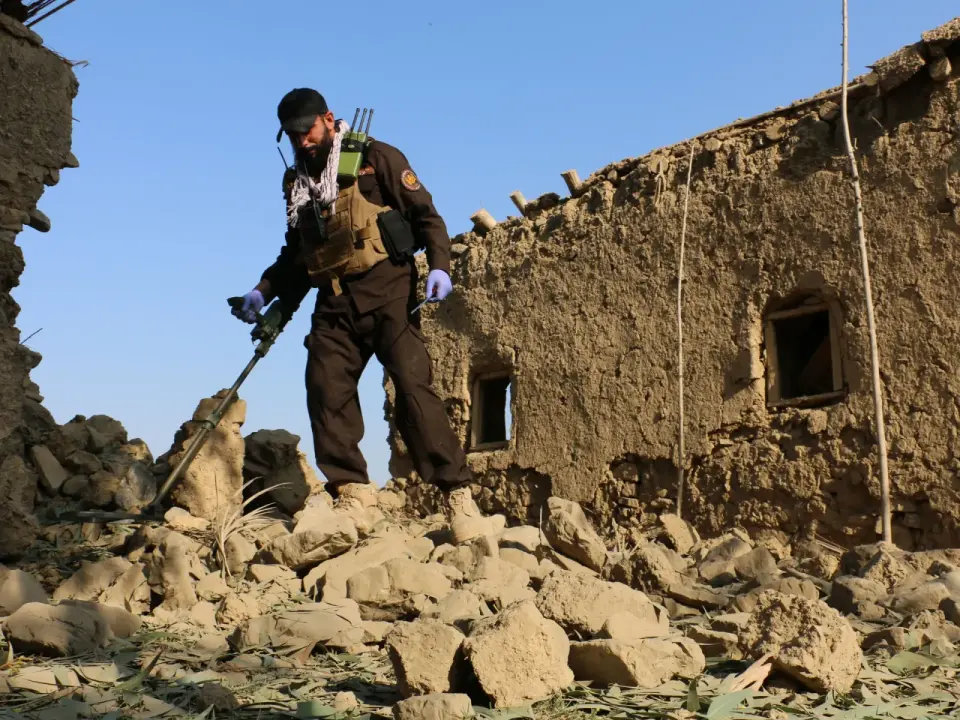
Pakistani security forces reported killing Afghan Taliban fighters in ongoing cross-border fire on September 25, following a second wave of airstrikes in Afghanistan within a week. Islamabad claims the strikes targeted military infrastructure linked to drone incursions, while Kabul condemns the attacks as reckless and vows a response. The escalation threatens recent mediation efforts by regional powers and follows a deadly bombing in Pakistan that reignited tensions between the two neighbors.
Key points
- Pakistani forces reported killing several Afghan Taliban members in intermittent fire at the Gulistan border area on September 25.
- Pakistan launched a second wave of airstrikes in Afghanistan within a week, targeting 10 locations in Kandahar, Paktia, and Khost provinces.
- The Taliban government reported four civilian deaths from the latest strikes, while Pakistan insists the attacks were limited to military objectives.
- Islamabad justified the strikes as a response to drone incursions from Afghanistan, which Kabul denied.
- The escalation follows a deadly attack on a police compound in Pakistan on September 18 that killed at least 31 people.
Background
This latest escalation follows a period of relative calm that ended in February 2026, when the two countries experienced their worst fighting in years. Previous archive coverage from September 21 noted that Afghanistan summoned Pakistan’s envoy to protest earlier strikes in Kunar and Paktika that killed three people. The current crisis is part of a broader pattern of cross-border violence that UN reports indicate has killed hundreds of civilians since October 2025. The conflict is driven by Islamabad’s accusation that Kabul harbors Tehrik-e-Taliban Pakistan (TTP) fighters, a claim the Taliban government consistently denies, labeling militancy as an internal Pakistani issue.
How outlets are covering it
Al Jazeera emphasizes the ongoing ground confrontation, reporting that Pakistani forces killed Taliban fighters in the Gulistan area and framing the event as a foiled 'attempted Afghan aggression.' In contrast, BBC focuses on the civilian impact of the aerial strikes, highlighting that four civilians were killed in Kandahar, Paktia, and Khost, and quoting Taliban officials who described the attacks as 'reckless' and 'hostile.' While Al Jazeera notes the lack of official confirmation from either side regarding the ground fire, BBC provides specific details on the destruction of the 203 Mansouri Corps in Paktia and civilian homes in Khost. Both sources agree that the strikes were a response to drone incursions, but they differ in emphasis: Al Jazeera highlights the immediate border skirmish, while BBC contextualizes the strikes within the broader week-long escalation and the failure of previous mediation efforts.
Why it matters
The continued violence threatens to collapse diplomatic mediation efforts led by China, Turkiye, Qatar, and Saudi Arabia. With the UN reporting nearly 500 civilian deaths in cross-border violence since October 2025, the current escalation risks a wider regional conflict. The inability to resolve the dispute over TTP sanctuaries suggests that the ceasefire agreed in March 2026 is unsustainable, potentially leading to further instability in South Asia and Central Asia.
What to watch
Analysts expect the Taliban government to implement its promised 'appropriate response' to the latest airstrikes. Pakistan has warned that any further 'provocative act' will be met with force. Diplomatic channels may attempt to restart mediation, but the immediate military escalation suggests a high risk of further cross-border incidents in the coming days.
- Pakistani forces kill Afghan Taliban fighters in border escalation Al Jazeera
- Four civilians killed in Pakistani strikes in Afghanistan, Taliban says BBC
- Pakistani airstrikes target Afghanistan after Islamabad accuses Kabul of drone attacks AP News
- Explainer: What has turned the Afghan Taliban and Pakistan from partners to foes? Reuters
- Dangerous border Dawn
Want the full story? Read the original reporting
Read on Al Jazeera