
Pakistan’s Financial Ties to Riyadh Force Entry into Houthi Conflict
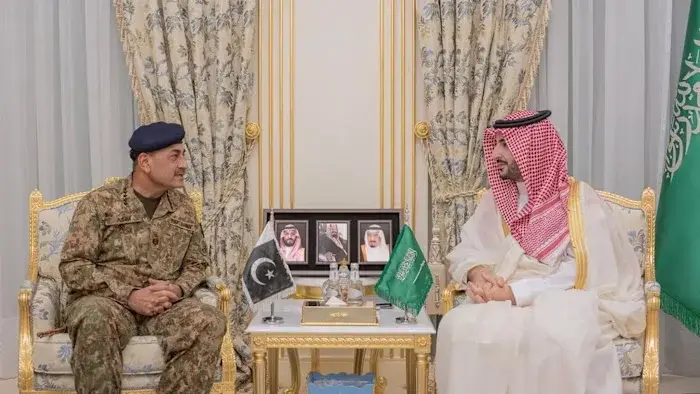
Pakistan is being drawn into the Yemen conflict due to a mutual defense pact with Saudi Arabia, activated after Houthi missile strikes on Riyadh. Despite domestic opposition and diplomatic efforts to mediate with Iran, Islamabad’s financial reliance on Saudi aid and remittances limits its ability to remain neutral. Recent Houthi gains in Yemen, including control of the Bab al-Mandeb Strait, have triggered a joint military response involving Saudi, Turkish, and Pakistani forces, though the extent of Pakistan’s direct combat role remains ambiguous.
Key points
- Saudi Arabia activated a mutual defense pact with Pakistan and Turkey after Houthi missiles struck King Khalid International Airport in Riyadh, killing 13 people and injuring hundreds.
- Pakistan’s Prime Minister Shehbaz Sharif reaffirmed commitment to Saudi sovereignty, while Field Marshal Asim Munir coordinated military support, including fighter jets and drones.
- Pakistan faces a dilemma: it relies on Saudi financial aid (including a $3bn bailout and $5bn deposit extension) but faces domestic opposition to fighting against Iran-backed Houthis.
- The Mecca Defense Alliance, signed in August 2026, includes a clause similar to NATO’s Article 5, though its full terms remain unpublicized and unratified by Pakistan’s parliament.
- Houthis have seized control of the Bab al-Mandeb Strait and parts of the Red Sea coast, prompting Saudi-led 'Operation Yemen Dawn' to retake territory, with Pakistan and Turkey providing logistical and reconnaissance support.
Background
In early 2026, Pakistan faced a severe financial crisis, with Saudi Arabia providing a $3bn emergency bailout and extending a $5bn deposit, totaling 38% of Pakistan’s reserves. This financial dependency coincided with the signing of the Mecca Joint Defense Agreement in August 2026, which linked Pakistan, Saudi Arabia, and Turkey. Prior to the recent escalation, Pakistan had attempted to mediate between Iran and the US, hoping to avoid direct involvement in the Yemen conflict. However, Houthi attacks on Saudi infrastructure in September and October 2026 triggered the pact’s activation, forcing Pakistan to balance its financial ties with Riyadh against domestic public sentiment favoring Iran.
How outlets are covering it
The Financial Times emphasizes Pakistan’s financial dependence on Saudi Arabia as the primary driver of its involvement, noting that domestic opposition and diplomatic efforts to mediate with Iran have failed. It highlights the ambiguity of Pakistan’s military role, with officials confirming 'support' but denying direct combat participation. NDTV focuses on Pakistan’s dual messaging strategy, sending signals to Iran to restrain the Houthis while simultaneously committing to Saudi defense obligations. It notes that Iran tolerates defensive actions but views offensive operations against the Houthis as a red line. The Middle East Institute analyzes the Mecca Defense Alliance as a potential shift away from US security guarantees, questioning the scope of the pact’s Article 5-like clause and the absence of Egypt as a member. It raises concerns about the alliance’s impact on US-Middle East relations and the definition of 'attack' under the agreement.
Why it matters
Pakistan’s involvement in the Yemen conflict marks a significant shift in Middle Eastern security dynamics, testing the limits of the new Mecca Defense Alliance. It highlights the tension between financial dependency and domestic political sentiment in Pakistan, as well as the potential for regional realignment away from US-led security frameworks. The conflict also underscores the strategic importance of the Red Sea and Bab al-Mandeb Strait for global oil exports, with Houthi actions threatening maritime trade routes. For Pakistan, the conflict risks deepening domestic discontent and undermining its role as a mediator between Iran and the West, while for Saudi Arabia, it represents a test of its new regional defense partnerships.
What to watch
The extent of Pakistan’s military involvement in the Yemen conflict remains uncertain, with officials confirming logistical and reconnaissance support but denying direct combat participation. The Mecca Defense Alliance’s full terms remain unpublicized, and its activation may face further scrutiny as the conflict evolves. Iran’s response to the alliance’s activation will be critical, as it may escalate tensions with Saudi Arabia and its allies. Domestically, Pakistan may face increased public opposition to its involvement, particularly among Shia communities and those sympathetic to Iran. The conflict’s resolution will depend on the success of 'Operation Yemen Dawn' in retaking Houthi-held territory and the ability of diplomatic efforts to de-escalate tensions between Iran and Saudi Arabia.
- Pakistan’s hard choice on Saudi Arabia’s war in Yemen Financial Times
- The Mecca Defense Alliance and the Potential for a New Regional Security Framework Middle East Institute
- Could Pakistan’s Chinese-made weapons help protect Saudi Arabia from Houthi attacks? South China Morning Post
- Pakistan's Dual Messaging To Iran And Saudi Amid Escalating Houthi Attacks NDTV
- Commentary: How far will Pakistan go in defending Saudi Arabia against Houthi attacks? CNA
Want the full story? Read the original reporting
Read on Financial Times