
Post-War Economic Collapse Threatens Iran's Regime Stability
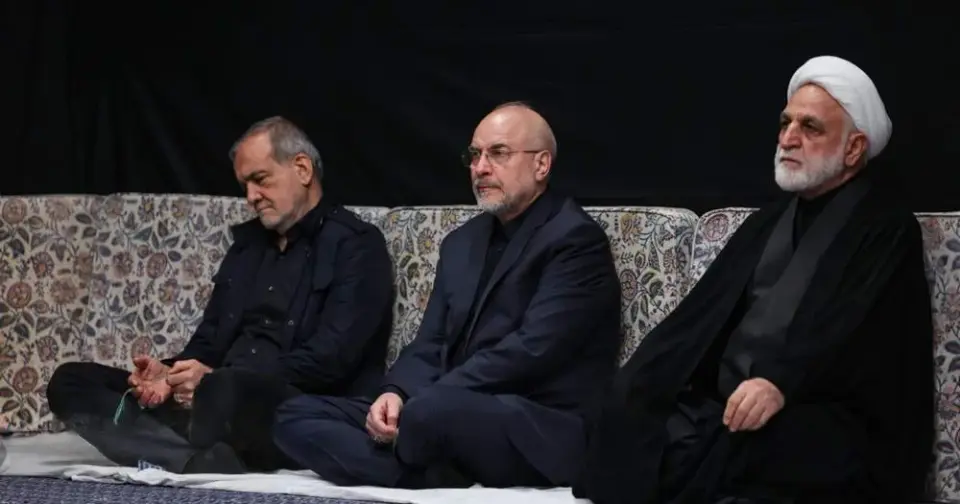
Experts warn that ending the US-Iran war may expose the Islamic Republic to its greatest vulnerability yet: a crippled economy. With food inflation exceeding 130% and currency values collapsing, the regime faces a potential 'tipping point' where it can no longer afford to pay the security forces that maintain its rule.
Key points
- Former US Treasury official Miad Maleki argues that peace will force Tehran to confront accumulated economic damage, including soaring reconstruction costs and inflation, potentially breaking the regime's ability to pay salaries.
- Iran's Statistical Center reports food and beverage prices rose 134% year-over-year in June, with oils and fats up 278% and meat up 172%, eroding purchasing power for both civilians and security forces.
- Counterterrorism specialist Roger Macmillan suggests policymakers should target Iran's 'financial center of gravity,' including military-linked foundations (bonyads), to disrupt the payroll networks that sustain the Basij and IRGC.
- US officials report progress in talks over the Strait of Hormuz, with Treasury Secretary Scott Bessent suggesting a 30-to-60-day ceasefire could be reached soon, potentially lifting the naval blockade.
- President Masoud Pezeshkian acknowledged 'difficulties and problems' but blamed foreign pressure for economic woes, while analysts note the regime's most dangerous historical moments have been economic, not ideological.
Background
This crisis follows months of conflict between the US/Israel and Iran, which began with strikes on Iranian leadership and escalated into a broader war. A June Memorandum of Understanding aimed to end hostilities but was suspended in July after Iran accused Washington of abandoning its obligations. The economic strain is compounded by a naval blockade and currency depreciation, with the US dollar reaching 1.94 million rials in July. Previous archive coverage noted that US policymakers miscalculated Iran's resilience, and that domestic repression, including the detention of thousands of protesters, has intensified alongside the economic crisis.
How outlets are covering it
Iran International and Fox News emphasize the internal fragility of the regime, citing Miad Maleki's view that the 'tipping point' is economic, not military. They highlight anecdotal reports of grocery theft and data showing that even middle-class families are becoming 'wealthy poor' as salaries fail to cover basic needs. Al Jazeera focuses on the human impact, detailing how daily price hikes have forced families to abandon staple foods like red meat and rice, with shop owners describing a 'clinical death' of market activity. While all sources agree on the severity of inflation, they differ on the immediate threat: Maleki warns that peace will accelerate the collapse by removing the war's economic suppression, whereas Al Jazeera notes that despite the crisis, the economy has not yet fully collapsed due to decades of self-sufficiency policies. Fox News also notes that while economic desperation could trigger protests, the IRGC and Basij have historically suppressed unrest, making the situation complex.
Why it matters
The stability of the Iranian regime is increasingly tied to its ability to finance its security apparatus. If inflation continues to erode wages, the loyalty of the Basij and IRGC, who are drawn from the same society as the general population, may fracture. This could lead to internal instability or a shift in the regime's negotiating posture, potentially affecting the outcome of the ongoing conflict and the future of the Strait of Hormuz, a critical global energy chokepoint.
What to watch
Watch for the outcome of the US-Iran talks regarding the Strait of Hormuz, which could lead to a ceasefire and the lifting of the naval blockade. Monitor Iranian inflation data and currency exchange rates for signs of further collapse. Observe any changes in the behavior of security forces or signs of unrest among the Basij and IRGC, which could indicate a shift in the regime's internal cohesion. Also, track the US response to the 'financial center of gravity' strategy, including potential new sanctions targeting military-linked foundations.
- Ending Iran war could expose regime to its greatest threat yet, experts say Iran International
- ‘The wealthy poor’: Soaring food prices hurt Iranian families Al Jazeera
- Deep Dive: Iran’s economy of depletion Amwaj.media
- Iran’s president blames foreign pressure as expert warns regime's economy nears breaking point Fox News
- Bombs won’t break Iran’s regime, but money might Foundation for Defense of Democracies
Want the full story? Read the original reporting
Read on Iran International