
Putin's 'Military Secret' Response to UK Threats Signals Escalating Grey-Zone Warfare
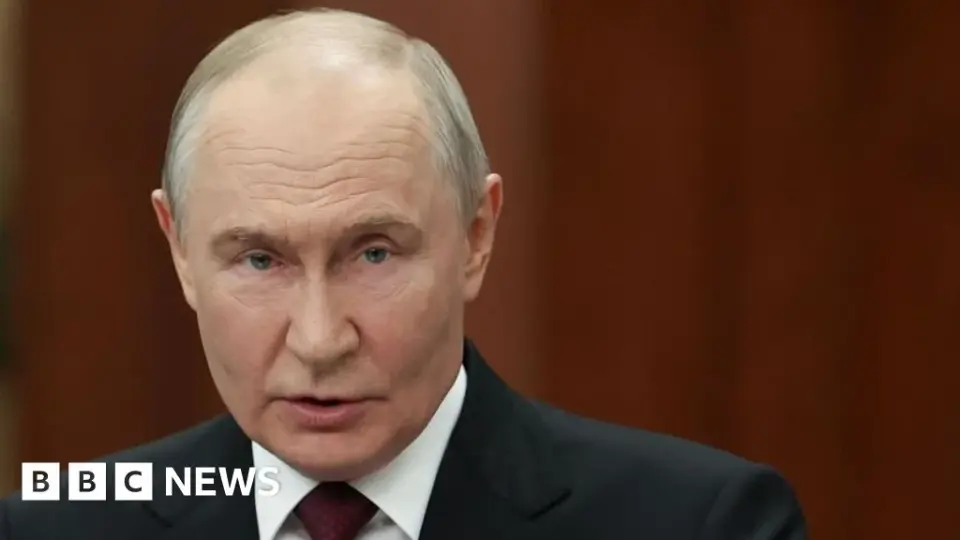
Vladimir Putin refused to rule out strikes on UK military sites, calling it a 'military secret' during a press conference in Kyrgyzstan. This follows UK Prime Minister Andy Burnham's decision to share Storm Shadow missile blueprints with Ukraine. While BBC analysis suggests the threat is psychological pressure, LBC and Suffolk News highlight concrete risks to UK drone factories and undersea cables, prompting calls for increased defence spending.
Key points
- Putin responded to questions about potential strikes on UK military facilities by stating it is a 'military secret,' a response BBC editor Steve Rosenberg interprets as psychological pressure rather than a direct threat.
- The tensions escalated after UK Prime Minister Andy Burnham agreed to declassify blueprints for British-made Storm Shadow missiles, allowing Ukraine to produce them domestically.
- LBC reports that former Army intelligence Colonel Philip Ingram warns of increasing 'grey zone' attacks, including cyber operations and targeting of undersea cables, as Russia avoids direct conventional conflict.
- Suffolk News highlights that the Ukrspecsystems drone factory in Mildenhall, which produces 1,000 drones monthly, is now a potential target, prompting MP Nick Timothy to call for urgent increases in defence spending.
- Putin expressed openness to negotiations with US envoys Jared Kushner and Steve Witkoff but insisted any peace must be on Russia's terms, while dismissing a recent visit by CIA director John Ratcliffe.
Background
This development follows a series of escalating tensions in late August and early September 2026. In August, a bombing in Sevastopol disrupted Putin's public outreach tour, highlighting security vulnerabilities. Simultaneously, Ukraine expanded its drone campaign inside Russia, targeting logistics hubs. On September 1, Putin signaled support for Iran, tightening the Moscow-Tehran alliance. The current 'military secret' remark builds on earlier Kremlin warnings that Britain is 'involved' in the war, marking a shift from diplomatic rhetoric to explicit threats against UK infrastructure.
How outlets are covering it
BBC's Steve Rosenberg frames Putin's 'military secret' comment as a calculated psychological tactic to keep Britain guessing, noting that Putin appeared combative and confident despite battlefield losses. In contrast, LBC emphasizes the tangible threat, citing Colonel Philip Ingram's warning that Russia is actively targeting UK undersea cables and cyber infrastructure in a 'grey zone' strategy. Suffolk News focuses on the local economic impact, highlighting the Ukrspecsystems drone factory in Mildenhall as a specific target and using the threat to argue for immediate increases in defence spending to 3% of GDP. The outlets differ in their assessment of immediate physical danger versus the broader strategic and economic implications of the threat.
Why it matters
The incident marks a significant escalation in Russia's hybrid warfare strategy against NATO members. By threatening UK soil and infrastructure, Moscow aims to deter Western military support for Ukraine without triggering a direct Article 5 response. The potential targeting of UK drone factories and the call for increased defence spending indicate that the conflict is spilling over into European domestic security and economic policy, forcing the UK to balance diplomatic support for Ukraine with the need to harden its own infrastructure against sub-threshold attacks.
What to watch
Analysts expect continued 'grey zone' operations, including cyber attacks and sabotage of undersea cables, as Russia seeks to pressure the UK without crossing the threshold of conventional war. The UK government is likely to accelerate defence spending plans and enhance security around key defence manufacturers like Ukrspecsystems. Diplomatic channels may open with US envoys Kushner and Witkoff, but Putin's insistence on 'Russia's terms' suggests limited progress in peace negotiations. The situation will likely remain tense as the UK balances its support for Ukraine with the need to protect its own territory from escalating hybrid threats.
- Rosenberg: Putin's veiled threat to UK part of Russia's campaign against West BBC
- Putin issues new threat over Russian attacks on UK sites The Independent
- Smirking Putin says it's a 'military secret' whether Russia will launch attacks on British soil lbc.co.uk
- Braw in Daily Mail on Russia’s preparations to attack UK Atlantic Council
- Russian threats to drone factory near RAF base prompt urgent calls for defence spending increase Suffolk News
Want the full story? Read the original reporting
Read on BBC