
Record Hormuz Attacks Spark Oil Spike Amid US-Iran Control Dispute
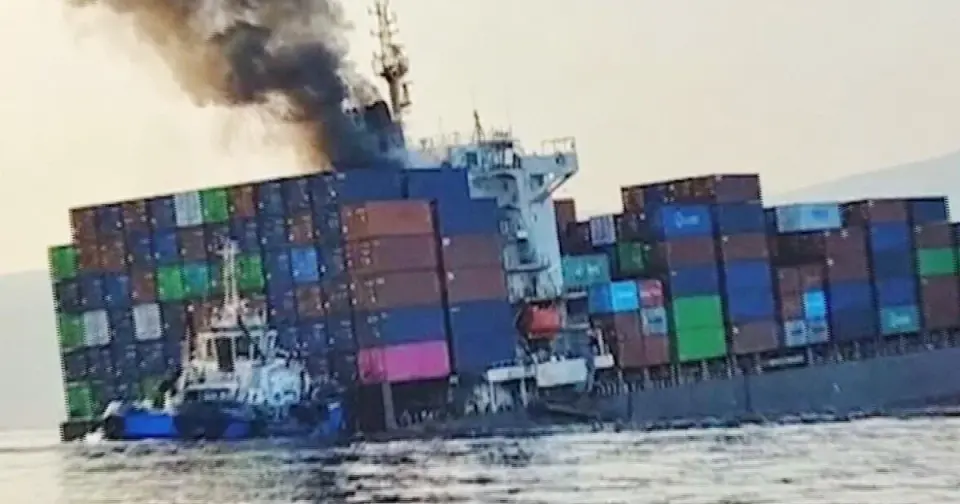
Ship attacks in the Strait of Hormuz have reached record levels, with at least 12 vessels targeted in the week ending October 16. While the US claims control of the waterway, Iran asserts dominance through naval mines and projectiles. Oil flows have dropped to 68% of pre-war levels, pushing Brent crude to $110 per barrel, though commercial shipping continues due to high energy demand.
Key points
- At least 12 ships were attacked in the week ending October 16, according to the UK Maritime Trade Operations (UKMTO), though the true number may be higher as many vessels do not report incidents.
- The container ship GFS Pride sank after being struck, while a supertanker carrying over two million barrels of oil caught fire after hitting a mine, according to the IRGC.
- Oil transits through the Strait dropped to 11.6 million barrels per day, roughly 68% of the pre-war baseline, causing Brent crude to reach $110 per barrel.
- US Central Command claims 400 ships and 100 million barrels of oil moved through the Strait in the past week, asserting US control over the waterway.
- Iran’s acting Defense Minister stated that Iranian missiles, not US bombs, will determine the war’s outcome, signaling continued escalation despite diplomatic efforts.
Background
The current surge in attacks follows a broader US-Iran conflict that began in late February 2026. Previous escalations included US strikes on Iranian oil tankers in September and Iranian retaliatory attacks on US Navy vessels. The recent sinking of the GFS Pride and Cape Dao in mid-October marked a sharp increase in Iranian aggression, aimed at disrupting oil flows ahead of the US midterm elections.
How outlets are covering it
Outlets highlight a stark divergence in narratives regarding control of the Strait. Al Jazeera and Euronews emphasize Iran’s claims of dominance, citing IRGC statements that the Strait is closed to unauthorized routes and that vessels are hitting mines. Conversely, NBC News and CNBC focus on the US perspective, with CENTCOM asserting that the waterway remains open and controlled by the US and its partners. CNBC notes that despite the risks, commercial shipping continues due to high energy demand, while Al Jazeera points to the lack of verified data from UKMTO as a complicating factor in assessing the true scale of the conflict.
Why it matters
The escalation in attacks threatens global energy supplies and could further drive up oil prices, impacting economies worldwide. The dispute over control of the Strait also raises the risk of broader military confrontation, particularly if the US escalates its response after the November 3 midterm elections.
What to watch
Diplomatic talks mediated by Pakistan and Qatar continue but have not yielded breakthroughs. The US has reportedly prepared for larger attacks post-election, potentially including the use of the GBU-43/B bomb, while Iran signals it will continue its naval campaign. Monitoring for further escalations in the Gulf of Oman is critical, as disruptions there could sever supply lines to key ports like Khorfakkan and Sohar.
- Hormuz ship attacks hit record high as Iran escalates strikes with little U.S. response NBC News
- US and Iran both claim control of Strait of Hormuz amid attacks on vessels Al Jazeera
- One Singapore ship was sunk, but here's why others are still transiting the Strait of Hormuz CNBC
- Iran shifting tactics to step up attacks on shipping before US vote, officials say Reuters
- Super tanker ablaze after striking mine in Strait of Hormuz, IRGC says Euronews.com
Want the full story? Read the original reporting
Read on NBC News