
Retired Admiral Warns US Ignored Ukraine Drone Lessons, Fueling Adversary Coordination
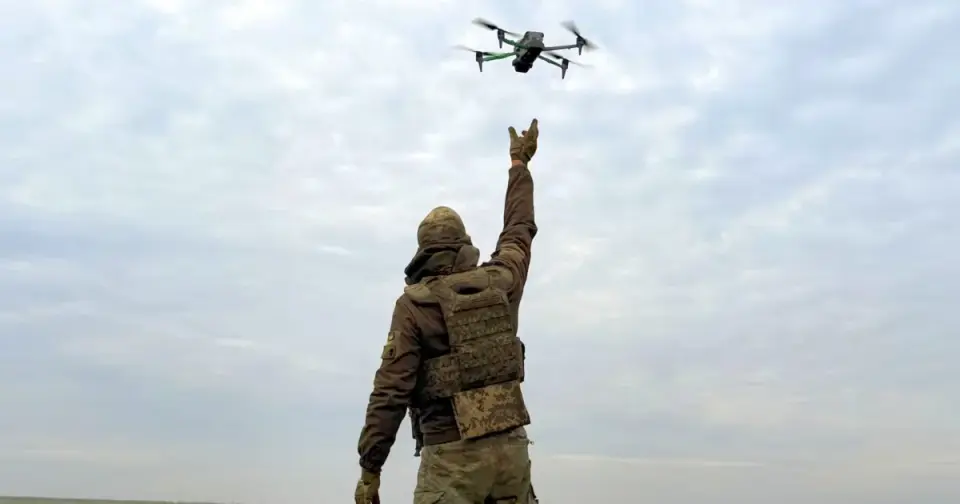
Retired US Rear Admiral Mark Montgomery argues that Washington failed to adopt Ukrainian counter-drone technologies, leading to significant damage in the Gulf and a prolonged air campaign against Iran. He warns that Russia, China, Iran, and North Korea are coordinating military and economic resources, creating a unified 'Axis of Aggressors' that challenges Western security across multiple theaters.
Key points
- Montgomery states that the US ignored Ukrainian ground-based drone interceptors, which Zelenskyy offered in summer 2025, resulting in unmitigated drone attacks on Gulf states like Bahrain and Qatar.
- He claims the inability to counter short-range drone threats forced the US to halt its air campaign against Iran after 40 days, despite the operation imposing significant costs on Tehran.
- Montgomery cites at least 700 instances of cooperation among Russia, China, Iran, and North Korea, including Iran supplying Shahed drones and North Korea providing troops and artillery to Russia.
- He asserts that Starshield throttling by the US government is intended to pressure Ukraine into territorial concessions, while Russia exploits this uncertainty to launch hybrid attacks on Eastern European NATO members.
- Montgomery notes that China and North Korea have received advanced military technology from Russia, including submarine-quieting tech and intercontinental ballistic missile capabilities, in exchange for their support.
Background
Recent developments show Germany becoming the first partner to access Ukraine’s DELTA battlefield system, signaling a shift toward integrating Ukrainian-tested technologies into Western defense. Meanwhile, Ukrainian firms are rapidly deploying AI-powered drones, and the US has maintained a naval blockade on Iran since a cease-fire in late June, focusing on economic strangulation rather than regime change.
Why it matters
The failure to adopt proven counter-drone technologies has exposed Western allies to significant infrastructure damage, potentially shortening the effectiveness of military campaigns. The deepening coordination among Russia, China, Iran, and North Korea threatens to create a unified adversary network that challenges US dominance in both the European and Middle Eastern theaters, undermining NATO credibility and regional stability.
What to watch
Montgomery predicts that Iran’s Revolutionary Guards will likely launch strikes against US Arab partners to force Washington to alter its economic strangulation strategy. The US is expected to maintain its naval blockade and sanctions while continuing to address the drone threat in the Gulf, potentially leading to further escalation if Iran’s economy collapses or it seeks a negotiated agreement on US terms.
Want the full story? Read the original reporting
Read on Radio Free Europe/Radio Liberty