
SCO Leaders Condemn US-Israel War on Iran and Defend Nuclear Rights in Bishkek Declaration
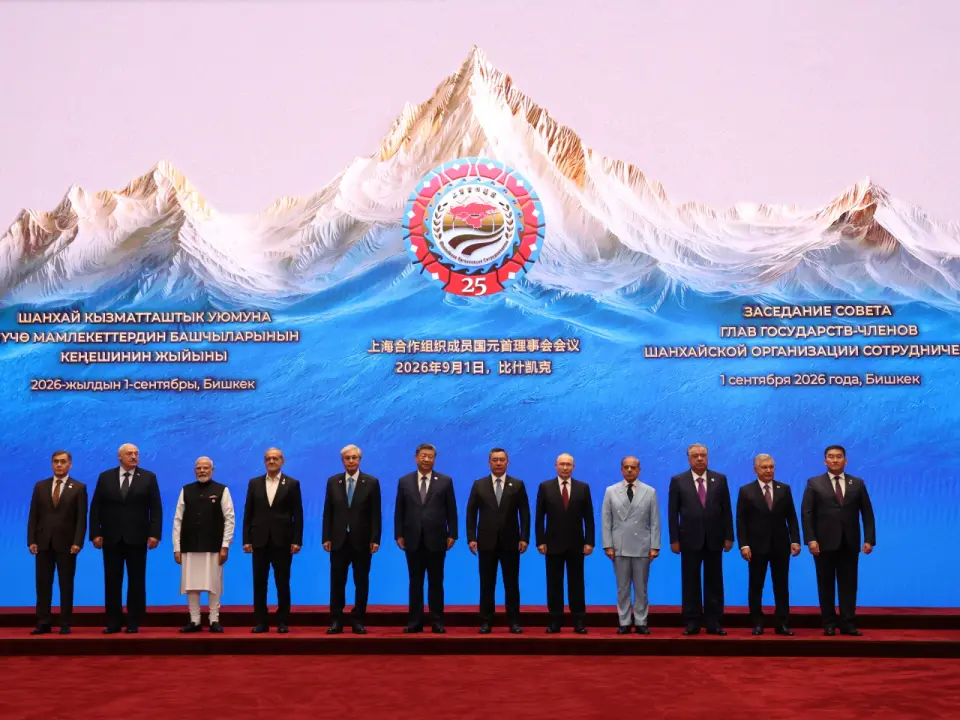
Leaders of the Shanghai Cooperation Organisation (SCO) issued the Bishkek Declaration, condemning US and Israeli military strikes on Iran and opposing Western sanctions. The bloc affirmed Iran's right to peaceful nuclear energy under the Non-Proliferation Treaty and pledged to strengthen economic cooperation to mitigate supply chain disruptions caused by the conflict.
Key points
- The SCO signed the Bishkek Declaration, condemning US and Israeli attacks on Iran that caused civilian casualties and economic damage, labeling them violations of international law.
- Members expressed condolences for the death of Iranian Supreme Leader Seyyed Ali Khamenei and reaffirmed support for Iran's sovereignty and territorial integrity.
- The declaration upheld Iran's inalienable right to develop peaceful nuclear programs, rejecting US demands for Iran to surrender its enrichment capabilities.
- SCO members opposed unilateral coercive measures and Western sanctions, citing negative impacts on the global economy and violations of UN and WTO rules.
- Leaders committed to implementing the SCO Economic Development and Energy Cooperation Strategies through 2030 to address trade disruptions in the Strait of Hormuz.
- India and Pakistan clashed over terrorism accusations, with PM Modi criticizing double standards while PM Sharif emphasized Pakistan's role as a victim of terrorism.
Background
The SCO, established in 1996, represents 43% of the world's population and 23% of the global economy. Recent summits have focused on advancing China's Belt and Road Initiative and positioning the bloc as a counterweight to Western influence. Previous discussions highlighted the potential for a SCO Development Bank and new transport corridors, though analysts noted that earlier meetings often prioritized signaling over immediate policy breakthroughs. The current summit follows a period of heightened tensions, including US military actions against Iran in 2025 and a broader conflict in 2026.
Why it matters
The Bishkek Declaration signals a unified front among major powers, including China, Russia, and India, against Western-led military and economic pressure. By defending Iran's nuclear rights and opposing sanctions, the SCO reinforces its role as a platform for Global South cooperation and challenges the existing international order. The focus on economic and energy strategies aims to mitigate the global fallout from the Iran conflict, potentially reshaping trade routes and financial architectures in the coming decade.
What to watch
SCO members will implement the Economic Development and Energy Cooperation Strategies through 2030, focusing on financial cooperation and alternative trade routes. Diplomatic efforts to resolve the Iran conflict through political means will continue, while India and Pakistan may further engage in disputes over terrorism at future multilateral platforms. The bloc may also explore new mechanisms for economic integration to reduce dependence on Western-dominated systems.
Want the full story? Read the original reporting
Read on Al Jazeera