
Seoul demands apology after North Korean landmines injure three troops in DMZ
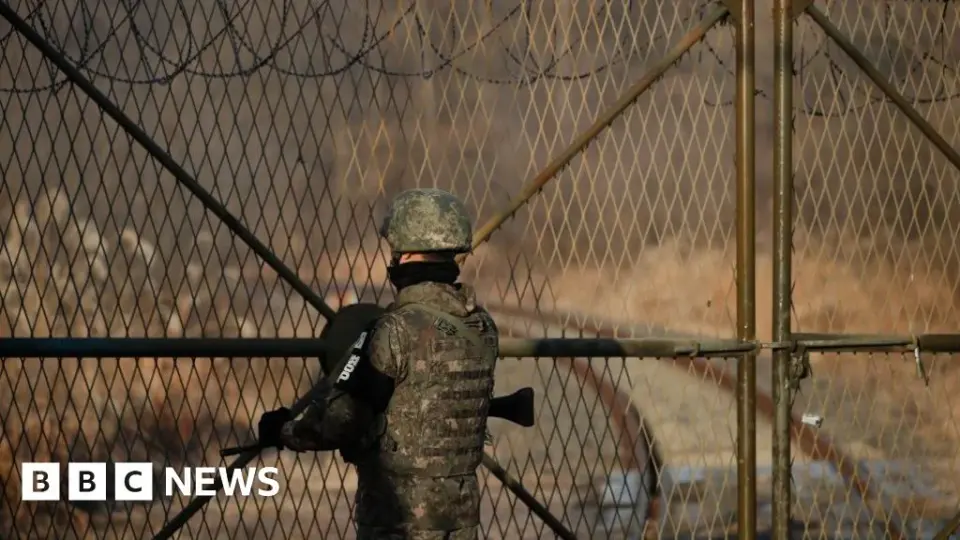
South Korea has formally demanded an apology from North Korea after three soldiers were injured by landmine blasts in the Demilitarised Zone (DMZ) on September 21. Seoul’s military concluded that the explosions were caused by North Korean mines, labeling the incident a clear violation of the 1953 armistice. Pyongyang has denied responsibility, calling the accusations a 'farce' and a deliberate attempt to escalate tensions. The incident has intensified a 'war of words' between the two nations, with Seoul threatening 'corresponding measures' while North Korea warns of consequences for Seoul's 'provocations.'
Key points
- Three South Korean soldiers were injured in two consecutive landmine explosions on September 21 within the DMZ, with one soldier losing a foot.
- South Korea’s Joint Chiefs of Staff and Defense Minister Kang Shin-chul stated there is a 'very high possibility' the mines were North Korean, citing forensic analysis and the absence of South Korean mine records in the area.
- North Korea denied responsibility, with Kim Yo Jong, sister of leader Kim Jong Un, accusing Seoul of 'cooking up' claims for political and military provocation.
- Seoul declared the blasts a violation of the 1953 armistice and vowed to take 'corresponding measures,' while the UN Command stated it would handle the issue through established armistice mechanisms.
- The incident occurred during a patrol operation to assess terrain changes, with South Korean officials noting that dense vegetation hampered mine detection efforts.
Background
This incident follows a period of deteriorating relations between the two Koreas since 2015, when a similar landmine blast injured two South Korean soldiers. In recent months, North Korea has intensified border fortifications, including laying mines and building anti-tank barriers, after designating South Korea as its 'principal enemy' in 2024. The current crisis also occurs amid broader diplomatic efforts by South Korea’s liberal government to revive dialogue with Pyongyang and Washington, though North Korea has rebuffed U.S. outreach, demanding the end of 'hostile policies' and joint military exercises.
How outlets are covering it
BBC and AP News emphasize South Korea’s firm stance, highlighting the military’s conclusion that North Korean mines caused the blasts and the demand for an apology. AP News notes the forensic evidence, including TNT traces and the absence of South Korean mine records, supporting Seoul’s claims. Euronews focuses on the armistice violation aspect and the potential for 'corresponding measures' by Seoul. In contrast, North Korea’s perspective, as reported by BBC, is one of denial and accusation, with Kim Yo Jong framing the incident as a 'farce' and a deliberate provocation by Seoul. The UN Command’s perspective, as reported by BBC, is more neutral, emphasizing the use of established armistice mechanisms to handle the violation and maintain stability. Overall, the sources present a clear divide between Seoul’s attribution of blame and Pyongyang’s denial, with the UN Command attempting to de-escalate through diplomatic channels.
Why it matters
The landmine incident has the potential to escalate tensions on the Korean Peninsula, which remains technically at war. The incident could lead to a cycle of retaliation and counter-retaliation, increasing the risk of accidental escalation. It also highlights the fragility of the current diplomatic efforts to reduce tensions, as North Korea’s hard-line stance and border fortifications continue to challenge South Korea’s attempts to revive dialogue. The incident may also impact U.S.-South Korea relations, as Washington seeks to balance its support for Seoul with its efforts to engage Pyongyang.
What to watch
South Korea is expected to implement 'corresponding measures' in response to the incident, though the specific actions have not been detailed. North Korea may continue to deny responsibility and could escalate its rhetoric or military activities in response. The UN Command will likely continue to monitor the situation and engage in diplomatic efforts to prevent escalation. The incident may also prompt further discussions between South Korea and the U.S. on how to respond to North Korean provocations and maintain stability on the Korean Peninsula.
- S Korea demands apology from Pyongyang over landmine blast BBC
- North Korea calls DMZ mine blast a 'farce' as UN Command says armistice breach occurred Reuters
- North Korea denies planting mines that injured 3 South Korean soldiers, accuses Seoul of conspiracy AP News
- South Korea says border blasts that injured 3 officers was likely caused by North Korean mines ABC News - Breaking News, Latest News and Videos
- North Korean landmine blasts in DMZ a 'violation of armistice,' Seoul says Euronews.com
Want the full story? Read the original reporting
Read on BBC