
South Korea Blames North for DMZ Mine Blast That Injured Three Troops
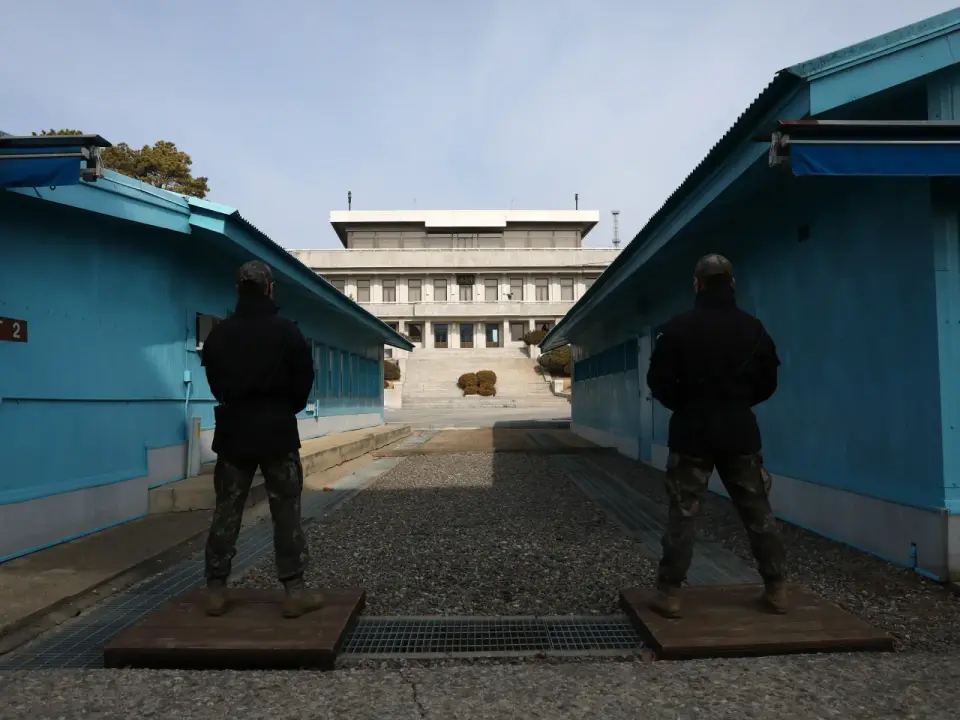
South Korean military officials concluded that recent explosions in the Demilitarized Zone (DMZ) were likely caused by North Korean landmines, resulting in severe injuries to three officers. Defense Minister Kang Shin-chul labeled the incident a clear violation of the 1953 armistice, while Seoul prepares potential retaliatory measures. The incident heightens tensions between the two Koreas, which remain technically at war, amid ongoing diplomatic efforts to reduce regional friction.
Key points
- On September 21, three South Korean military officers were severely injured in two consecutive explosions in the western sector of the DMZ, approximately 10 meters south of the Military Demarcation Line.
- The Joint Chiefs of Staff stated that forensic analysis of debris and blast patterns indicates a 'very high possibility' that the explosives were North Korean mines, as no South Korean or allied forces had recently laid mines in the area.
- Defense Minister Kang Shin-chul declared the incident a 'clear violation' of the armistice agreement and warned that Seoul would take 'corresponding measures' if the investigation confirms Pyongyang's responsibility.
- The explosions occurred during a patrol operation intended to establish a new route for future inspections, following South Korea's detection of terrain changes last year that suggested North Korean mine-laying activities.
- North Korea has not yet responded to the allegations, though it has historically denied responsibility for similar border incidents and characterized them as plots to stir anti-Pyongyang sentiment.
Background
This incident occurs against a backdrop of deteriorating relations between the two Koreas. In August 2026, South Korean President Lee Jae-myung proposed formal talks to end the Korean War, but Pyongyang has maintained a hard-line stance, declaring Seoul a 'principal enemy' and intensifying border fortifications. Recent diplomatic efforts, including U.S. President Donald Trump's scaling back of joint military exercises to encourage dialogue, have been rebuffed by North Korea, which insists on the abandonment of 'hostile policies' before negotiations can resume. The current blast follows a pattern of periodic mine-related incidents in the DMZ, with a notable previous incident in 2015 that nearly escalated into a broader conflict.
How outlets are covering it
Al Jazeera and ABC News emphasize the technical evidence supporting the attribution of the blast to North Korea, highlighting the forensic analysis of TNT and the absence of South Korean mine records. Yonhap News Agency focuses on the political and legal implications, with Defense Minister Kang Shin-chul explicitly framing the event as a breach of the armistice. While all sources agree on the likelihood of North Korean involvement, they differ in emphasis: Al Jazeera and ABC News detail the operational context and injury severity, whereas Yonhap highlights the potential for diplomatic fallout and the formal violation of international agreements. North Korea's perspective is not directly represented in the sources but is noted as historically dismissive of such allegations.
Why it matters
The incident threatens to escalate tensions on the Korean Peninsula, potentially undermining recent diplomatic efforts to reduce friction. If confirmed, the blast could lead to retaliatory measures by South Korea, increasing the risk of a broader conflict. It also highlights the ongoing challenges in managing the DMZ, a heavily fortified border with an estimated 2 million mines, and underscores the fragility of the armistice that has held since 1953. The event may also influence regional security dynamics, particularly as North Korea continues to expand its nuclear program and fortify its borders.
What to watch
South Korea is expected to complete its investigation and potentially announce retaliatory measures if the findings confirm North Korean responsibility. Diplomatic channels may be activated to address the incident, though North Korea's current stance suggests a low likelihood of immediate engagement. The situation could lead to increased military activity along the DMZ, including enhanced patrols and fortifications. International observers, including the United Nations Command, may monitor the situation closely to prevent escalation. The incident may also prompt renewed discussions on the formal end of the Korean War, though progress remains uncertain given the current political climate.
- South Korea suspects North Korean mines behind DMZ blast Al Jazeera
- North Korea Land Mines ‘Highly Likely’ Behind DMZ Explosion, Seoul Says WSJ
- Defense chief says DMZ blast 'clear' violation of armistice agreement Yonhap News Agency
- South Korea says border blasts that injured 3 officers was likely caused by North Korean mines ABC News - Breaking News, Latest News and Videos
- South Korean military: 'Highly likely' North Korean mine injured soldiers in DMZ Reuters
Want the full story? Read the original reporting
Read on Al Jazeera