
Stubb Urges Putin to Negotiate, Citing Ukraine’s Military Resilience and Energy Ceasefire
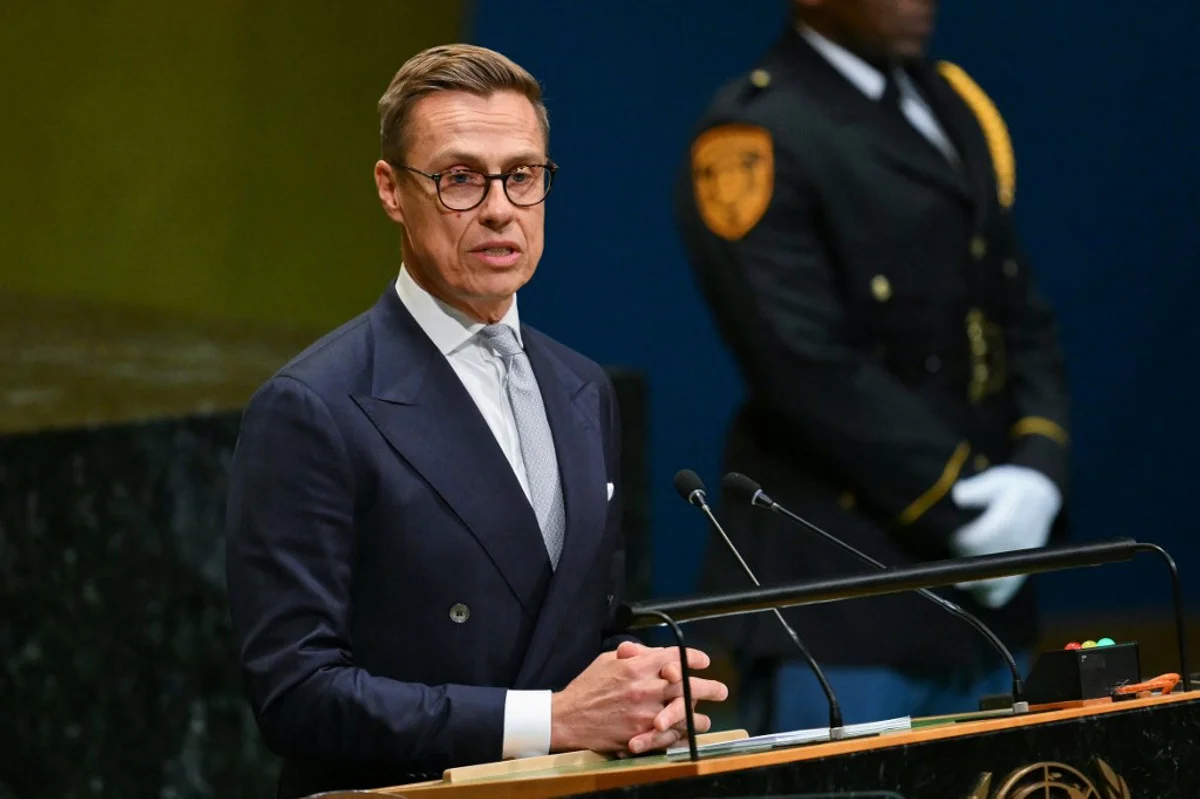
Finnish President Alexander Stubb stated that Ukraine holds a stronger military and financial position than a year ago, arguing that Russia is not winning the war. He called for Vladimir Putin to join peace talks, supported by recent diplomatic movements from US envoys. Stubb advocated for a reciprocal energy ceasefire before winter and highlighted Ukraine’s urgent needs for air defense, energy infrastructure, and financial aid.
Key points
- Stubb asserts Ukraine is militarily and financially stronger than in 2025, with Russia failing to achieve decisive territorial gains despite ongoing offensives.
- He cited a 'killing ratio' of one Ukrainian soldier to five Russian soldiers and noted that Ukraine has reclaimed 800 km of land lost to Russia this year.
- Stubb supported a mutual ceasefire on energy infrastructure strikes, emphasizing that if Ukraine halts attacks on Russian refineries, Russia must stop targeting Ukrainian power grids.
- He identified air defense, winter energy support, and financial assistance as Ukraine’s three primary immediate needs, noting Finland recently provided a €300 million aid package focused on air defense.
- Stubb suggested US President Donald Trump may take a stronger role in negotiations, as his envoys Jared Kushner and Steve Witkoff have resumed diplomatic activity in Moscow and Kyiv.
Background
Recent diplomatic efforts have intensified, with US envoys traveling between Moscow and Kyiv following a constructive phone call between Trump and Putin in early September. While some Baltic nations like Estonia have accused Putin of using these talks to stall the conflict, Stubb’s comments reflect a broader Western push for a negotiated resolution before winter. This follows earlier analyses suggesting that battlefield breakthroughs alone may not lead to peace, reinforcing the need for diplomatic engagement alongside continued military support.
Why it matters
Stubb’s stance underscores a shift in Western strategy toward leveraging Ukraine’s improved military resilience to force Russia to the negotiating table. The emphasis on a reciprocal energy ceasefire is critical as winter approaches, aiming to prevent humanitarian crises and economic collapse in Ukraine while pressuring Russia to halt its offensive. This diplomatic momentum, driven by US involvement, could determine whether the conflict moves toward a frozen state or a negotiated settlement, impacting global energy markets and NATO’s strategic posture.
What to watch
The next phase will likely involve intensified diplomatic efforts by US envoys to secure a partial ceasefire before winter. Ukraine’s ability to sustain its defense and energy infrastructure will depend on continued Western financial and military aid, particularly for air defense systems like Patriots. If negotiations stall, Russia may escalate strikes on energy targets, while Ukraine could resume attacks on Russian refineries, potentially derailing the peace process.
Want the full story? Read the original reporting
Read on Kyiv Post