
Trump slashes US-South Korea drills to five days amid Iran and Kim Jong Un tensions
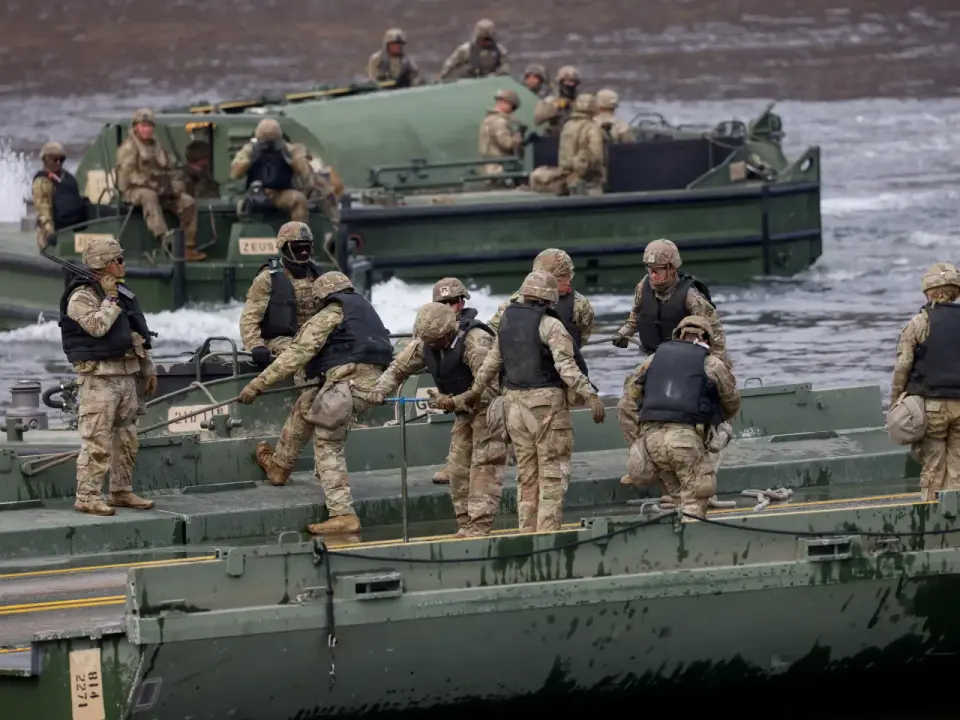
The US and South Korea have cut the annual Ulchi Freedom Shield military drills from 11 days to five, ending on August 21. President Trump ordered the reduction, citing his relationship with North Korean leader Kim Jong Un and Seoul’s refusal to assist in the Iran war. While the Pentagon claims training objectives remain intact, South Korean officials were not informed in advance, and regional allies are alarmed by the shift in US security commitments.
Key points
- The Ulchi Freedom Shield exercise was shortened from 11 days to five, with some live training converted to simulations.
- Trump cited his 'very good relationship' with Kim Jong Un and South Korea's lack of support for the US in the Iran war as reasons for the cut.
- South Korean Foreign Minister Cho Hyun stated that neither Seoul nor Washington officials were informed of the order in advance.
- The Pentagon stated that essential readiness and training objectives would not be degraded by the changes.
- Trump has pushed for an in-person meeting with Kim Jong Un, potentially during a November trip to Shenzhen, China.
Background
This development follows a series of announcements in mid-August 2026 where Trump directed Defense Secretary Pete Hegseth to scale back joint exercises. Previous coverage noted that Trump criticized the cost of the drills and linked the decision to broader geopolitical pressures, including the Iran conflict and North Korean nuclear capabilities.
How outlets are covering it
Al Jazeera and CNN report that the drill reduction was a direct result of Trump’s order, with CNN noting that South Korean President Lee Jae Myung framed the move as a step toward peace. The New York Times provides a critical perspective, suggesting Trump’s focus on North Korea may be a distraction from the failed effort to disarm Iran’s nuclear program. Politico argues that while the security impact may be limited due to existing troop levels, the move signals a transactional approach to alliances, particularly regarding South Korea’s $350 billion investment pledge. Al Jazeera highlights that South Korean officials were blindsided by the decision, while CNN notes that North Korea had already denounced the drills before the cuts were announced.
Why it matters
The scaling back of the Ulchi Freedom Shield drills signals a potential shift in US security commitments in East Asia. It raises concerns among allies like Japan and Australia about the reliability of US defense guarantees, particularly as North Korea continues to expand its nuclear arsenal. The move also highlights the tension between Trump’s transactional foreign policy and traditional alliance structures, potentially affecting regional stability and deterrence against North Korea.
What to watch
The US and South Korea are expected to discuss measures to maintain combined defense posture despite the reduced drills. Trump may pursue a meeting with Kim Jong Un, potentially during a November trip to Asia. Congress is expected to review restrictions on reducing US troop levels in South Korea in the 2027 National Defense Authorization Act.
- South Korea, US scale back annual military drills after Trump’s order Al Jazeera
- Military drills between US and South Korea cut short at Washington’s request CNN
- Facing Quagmire in Iran, Trump Turns to a Familiar Face: North Korea’s Kim Jong-un The New York Times
- Trump’s threats to Seoul may be worse than their bite Politico
- Opinion | Trump inverts his own foreign policy mantra The Washington Post
Want the full story? Read the original reporting
Read on Al Jazeera