
Ukraine's Foreign Minister Tells Putin to End War to Stop Refinery Strikes
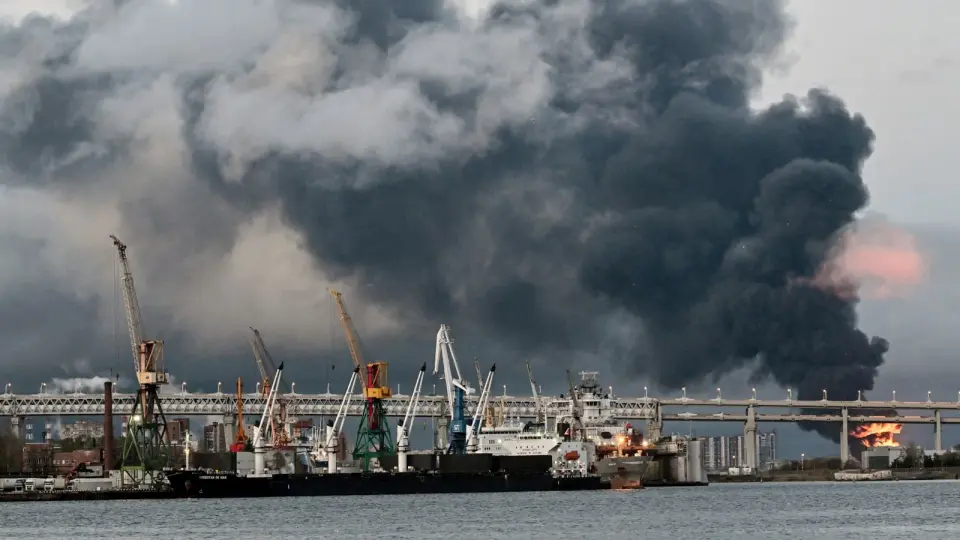
Ukrainian Foreign Minister Andrii Sybiha told Russian President Vladimir Putin to 'stop complaining' about attacks on Russian oil refineries, stating that Kyiv would halt the strikes only if Moscow ended its nearly five-year war. Putin warned that retaliatory action was 'inevitable' after Ukrainian strikes cut Russian crude processing by 45% since late October, despite US President Donald Trump's appeal to cease the attacks. Ukraine's strikes have disabled over 55% of Russia's oil-refining capacity, causing fuel shortages and price spikes, while Russia has implemented export restrictions and subsidies to stabilize its domestic fuel market.
Key points
- Ukrainian Foreign Minister Andrii Sybiha stated that Putin could end Kyiv's strikes on Russian oil refineries by ending the war, adding that Russia had lost 432,000 soldiers this year without achieving its invasion goals (CNBC).
- Putin told government officials and oil executives on November 24 that Ukraine continues to attack refining facilities despite Trump's appeal, warning that retaliatory measures are 'inevitable' (Al Jazeera, CNBC).
- Ukrainian strikes have cut Russian crude processing volumes by 45% since late October, with Zelenskyy claiming over 55% of Russia's oil-refining capacity has been disabled (Al Jazeera, CNBC).
- Russia has implemented fuel export restrictions, import subsidies, and adjustments to exchange trading requirements to stabilize its domestic fuel market, with Putin describing the situation as 'challenging' (ISW, CNBC).
- Ukraine has also targeted Russian military vessels, including sinking a Russian naval corvette in a Libyan port and striking a cargo ship in the Baltic Sea (CNBC, Al Jazeera).
Background
Ukraine's strikes on Russian oil refineries began in late October 2026, hitting all five of Russia's largest refineries by mid-November. Trump called on Zelenskyy to stop the strikes in September 2026, citing global fuel price spikes, but Kyiv insisted on a reciprocal energy ceasefire. Russia's territorial gains in Ukraine have slowed to near zero, and Ukraine has reclaimed 73 square kilometers of territory in the last three months. CSIS estimated in July 2026 that Russia suffered approximately 1.4 million battlefield casualties between February 2022 and June 2026, with monthly casualty rates exceeding 30,000 in 2026.
How outlets are covering it
CNBC and Al Jazeera emphasize the diplomatic confrontation between Sybiha and Putin, with Sybiha demanding an end to the war and Putin threatening retaliation. ISW highlights the financial burden on Russia's budget and the strategic implications of the strikes, noting that Putin's measures to shield the populace from the effects of Ukrainian strikes are costly. Bloomberg focuses on the global oil market, noting that Russia's elevated crude exports are stoking a supply surplus despite the refinery strikes. The sources differ on the extent of the damage: Al Jazeera cites a 45% reduction in crude processing, while CNBC and Zelenskyy claim over 55% of refining capacity has been disabled.
Why it matters
The strikes on Russian oil refineries are a critical escalation in the Ukraine-Russia war, affecting global energy markets and fuel prices. They highlight the strategic importance of energy infrastructure in modern warfare and the potential for further retaliation, which could lead to broader conflict. The situation also underscores the limitations of US diplomatic efforts to de-escalate the conflict and the growing financial strain on Russia's economy.
What to watch
Putin has warned that retaliatory action is 'inevitable,' which could lead to further strikes on Ukrainian energy infrastructure or other targets. Ukraine's allies have warned of another winter of blackouts and freezing temperatures amid escalating Russian energy strikes. The US has delayed the delivery of Patriot interceptor missiles to Ukraine, constraining its air defense capabilities. NATO is expected to deploy an AWACS aircraft in response to Russian drone incursions into Polish airspace.
- Ukraine tells Putin to ‘stop complaining’ over oil refinery attacks as Russia promises retaliation CNBC
- Russian Offensive Campaign Assessment, November 24, 2026 Institute for the Study of War
- Russia’s Elevated Crude Shipments Stoke Global Supply Surplus Bloomberg.com
- Putin says retaliation ‘inevitable’ after Ukraine hit Russian oil plants Al Jazeera
- Ukraine War, Day 1,735: Kyiv Strikes 2 Russian Refineries as Putin Fumes EA WorldView
Want the full story? Read the original reporting
Read on CNBC