
US-led AI supply chain pact faces EU resistance over China-focused security terms
The United States and several allies have signed a new declaration to protect artificial intelligence supply chains from Chinese influence, but European nations are resisting specific terms that could allow Washington to impose unilateral restrictions on technology access.
Key points
- The US, Japan, Australia, Israel, the UK, South Korea, India, Qatar, and the UAE signed the San Francisco Declaration on the Secure Foundations of Enduring Prosperity.
- Germany, Sweden, the Netherlands, and the European Commission are expected to sign the accord next week.
- The pact is part of Pax Silica, a US-led initiative aimed at securing supply chains for semiconductors, critical minerals, and energy infrastructure.
- The declaration states that economic security is fundamental to national security and calls for diversifying supply chains to counter economic coercion.
- EU member states are demanding objective criteria for defining sensitive technologies, fearing the current wording gives Washington too much discretion to restrict access.
Background
In 2025, the Biden administration introduced export controls under the AI Diffusion Framework that would have limited access to advanced AI chips for several EU countries. The Trump administration scrapped these measures shortly before they took effect, but the episode highlighted tensions regarding the free movement of goods within the EU single market. The EU joined the Pax Silica initiative in June 2026, despite reservations from France, after several member states had signed up individually.
How outlets are covering it
Euronews reports that the EU is facing significant resistance from Washington's latest proposals, with Brussels arguing that the broad definition of sensitive technologies lacks legal certainty. The European Commission has proposed an explanatory note clarifying that the EU understands 'superintelligence' to mean artificial intelligence, a distinction Washington opposes. In contrast, Yahoo and TipRanks emphasize the broad coalition of signatories, including major Asian and Middle Eastern partners, and frame the accord as a strategic move to reduce dependence on China for critical materials. The Financial Times, whose full text is behind a paywall, is cited by other outlets as the primary source for the list of signatories and the specific language of the declaration.
Why it matters
The outcome of these negotiations will determine the extent to which the US can coordinate technology restrictions with its allies. If the EU successfully negotiates objective criteria, it may limit Washington's ability to impose unilateral controls that could disrupt the European single market. Conversely, if the US prevails, it could strengthen its leverage over global AI supply chains but risk deepening transatlantic divisions. The accord also sets the stage for working groups to address vulnerabilities in AI supply chains and develop economic hubs to attract investment, potentially reshaping global trade dynamics in the semiconductor and rare earth sectors.
What to watch
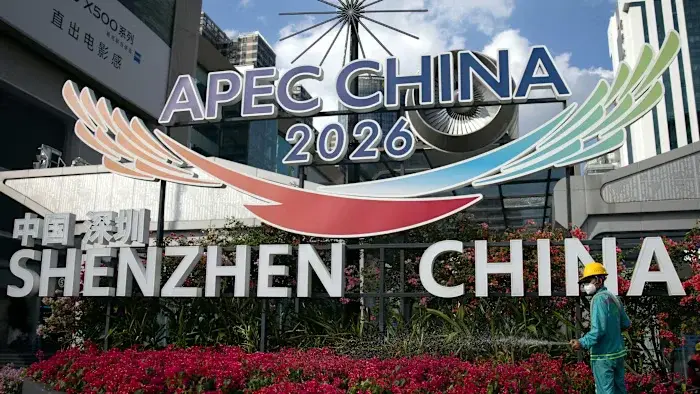
The European Commission has been given a mandate to negotiate the content of the declaration with the US, but it may not receive a mandate to sign it in time for the San Francisco ceremony. The US is preparing to meet Chinese President Xi Jinping at the Asia-Pacific Economic Cooperation summit in Shenzhen, where Washington has accused Beijing of failing to meet commitments under a trade truce reached in late 2025. The outcome of these negotiations will likely influence the pace and scope of future US-led initiatives to secure AI supply chains.
- US and allies sign accord to protect AI supply chains from China Financial Times
- US, Allies Agree to Guard AI Supply Chains From China, FT Says Bloomberg.com
- Trump's upgrade of US-led AI alliance runs into European resistance Euronews.com
- Report: US, Allies Sign Accord to Protect AI Supply Lines From China Yahoo
- US, allies agree to protect AI supply chains from China, FT says TipRanks
Want the full story? Read the original reporting
Read on Financial Times