
US and Philippines clash with China over Scarborough Reef 'nature reserve' and new maritime charts
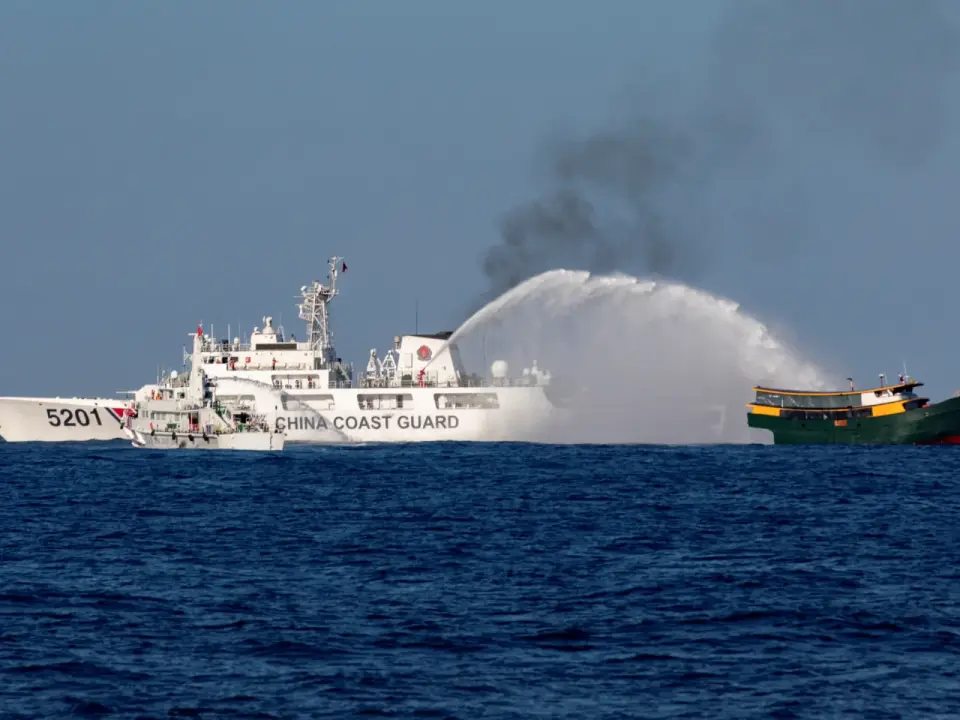
The US State Department condemned China’s designation of Scarborough Reef as a 'national nature reserve,' labeling it a coercive tactic to block Filipino fishermen from traditional grounds. Simultaneously, the Philippines rejected China’s claim that its new UN maritime charts for the area are 'illegal,' asserting its rights under international law. These moves follow recent incidents where Chinese vessels used water cannons against Philippine boats, escalating tensions in the South China Sea.
Key points
- US State Department spokesperson Tommy Pigott stated that China’s 'nature reserve' claim is a dubious pretext to advance territorial ambitions and deny access to fishing grounds recognized by the 2016 Arbitral Award.
- The Philippines’ Department of National Defense (DND) rejected China’s declaration that Manila’s updated nautical charts for Panatag (Scarborough) Shoal are 'illegal, null and void,' calling the submission a lawful exercise of rights.
- China warned it would take 'firm and effective countermeasures' against what it described as provocations, while the US reaffirmed its support for the Philippines as a treaty ally.
- Recent tensions include Chinese ships firing water cannons on Filipino vessels near the shoal, an incident condemned by US Secretary of State Marco Rubio in July.
Background
This dispute occurs against the backdrop of a 2016 Permanent Court of Arbitration ruling that largely dismissed China’s sweeping 'nine-dash line' claims as unlawful. In July 2026, a coalition of 14 nations and the EU reaffirmed support for this ruling. The South China Sea is a critical strategic zone with over $3 trillion in annual goods transit, leading to increased US military cooperation with regional allies to counter Beijing’s assertiveness.
How outlets are covering it
Al Jazeera and The Times of India focus on the US diplomatic response, highlighting the State Department’s rejection of China’s environmental pretexts and its stance in support of the Philippines. AP News provides context on the military dimension, noting recent Chinese drills near the shoal. Inquirer.net offers the Philippine perspective, emphasizing the DND’s defense of its new maritime charts and its refusal to yield to Chinese pressure. While all sources agree on the escalation, they differ in emphasis: Western outlets frame it as a US-led defense of international law, while the Philippine outlet frames it as a sovereign right to delineate maritime zones.
Why it matters
The conflict highlights the deepening friction between the US and China in the Indo-Pacific, where maritime sovereignty disputes are increasingly used as proxies for broader geopolitical competition. The US involvement signals a continued commitment to the 'free and open Indo-Pacific' strategy, potentially influencing regional security dynamics and trade routes. For the Philippines, the standoff tests the limits of its alliance with Washington and its ability to enforce its maritime claims against a more powerful neighbor.
What to watch
Watch for potential Chinese 'countermeasures' as threatened, which could involve further naval patrols or restrictions on Philippine vessels. Monitor the US for any new diplomatic or military support for Manila, such as joint exercises or formal protests at the UN. The situation may also see increased international attention as other nations, including those in the recent 14-nation coalition, may issue statements supporting the 2016 arbitration ruling.
- US slams Chinese ‘nature reserve’ as effort to claim South China Sea Al Jazeera
- US Says China’s Scarborough Shoal Claim ‘Destabilizing’ Region Bloomberg.com
- US rejects China’s Scarborough Reef measures, backs Philippines in South China Sea dispute timesofindia.indiatimes.com
- China holds military drills near disputed shoal in the South China Sea AP News
- DND rejects China’s ‘illegal’ label on PH chart of Panatag Shoal Inquirer.net
Want the full story? Read the original reporting
Read on Al Jazeera