
US-South Korea drills end early after Trump cuts, amid North Korean missile tests
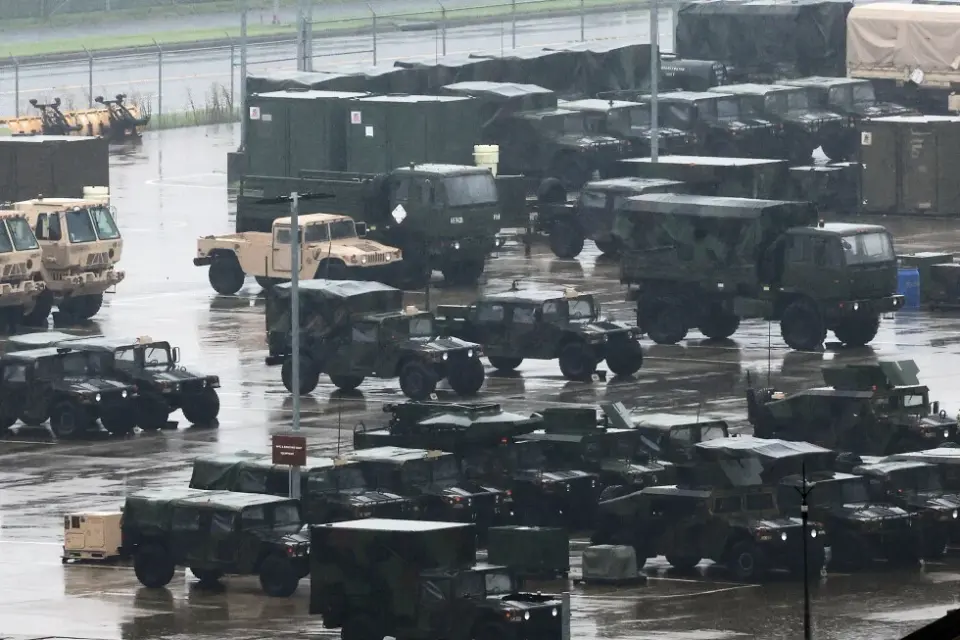
The US and South Korea ended the Ulchi Freedom Shield joint military exercises six days early, following President Trump's order to scale back participation. The decision came amid North Korean missile tests and raised concerns about alliance credibility and regional stability.
Key points
- The US and South Korea concluded the Ulchi Freedom Shield exercises on August 21, six days ahead of the original August 27 schedule, after President Trump ordered a substantial reduction in US participation.
- North Korea launched approximately 10 short-range ballistic missiles toward the eastern sea from the Pyongyang region during the shortened drills, breaching UN resolutions.
- Trump cited cost concerns and his 'very good relationship' with North Korean leader Kim Jong Un as reasons for scaling back the exercises, while also expressing frustration with South Korean President Lee Jae Myung's response to the Iran conflict.
- South Korean President Lee Jae Myung's approval rating dropped to 43 percent in an August 17 poll, reflecting domestic discontent over the US-Iran conflict and perceived US overextension.
- The US moved six Terminal High Altitude Area Defense (THAAD) launchers from South Korea in March, potentially to support the Iran conflict, though they were returned to their base in June.
Background
The Ulchi Freedom Shield exercises are annual joint military drills between the US and South Korea, designed to enhance interoperability and deterrence against North Korea. Previous coverage indicated that Seoul was not informed in advance of the drill reductions and expressed concerns about the impact on combat readiness. The broader context includes ongoing tensions in the region, with North Korea's missile tests and a new defense treaty with Russia, as well as economic and political strain on US allies in Asia due to the Iran conflict.
How outlets are covering it
AP News reported the early conclusion of the drills as a direct result of Trump's order, emphasizing the logistical adjustments. The Council on Foreign Relations (CFR) analyzed the move as a potential risk to US alliance credibility and regional stability, warning that undermining the US-South Korea alliance could push Seoul toward nuclear weapons or closer ties with China. The Atlantic framed the decision as Trump punishing South Korea for perceived failures in the Iran conflict, highlighting the irrationality of the policy choice. While all sources agree on the drill reduction, CFR and The Atlantic emphasize the strategic risks, whereas AP News focuses on the operational outcome.
Why it matters
The early conclusion of the Ulchi Freedom Shield drills signals a shift in US military posture in East Asia, potentially weakening deterrence against North Korea and China. It raises questions about the reliability of US security commitments to allies, which could influence South Korea's and Japan's defense strategies and regional alliances. The move also reflects the broader impact of the Iran conflict on US resources and global strategic priorities.
What to watch
The US and South Korea will continue coordinating on military readiness, though the reduced drills may affect long-term interoperability. North Korea's missile tests and diplomatic signals suggest a cautious approach to negotiations with the US. The US may pursue talks with Kim Jong Un later in the year, but the impact on regional security and alliance credibility remains uncertain. South Korea and Japan may reassess their defense strategies in response to the perceived US overextension.
- US, South Korean militaries wrap up drill early, a day after North Korea’s missile barrage AP News
- Trump’s South Korea Social Post Poses Risks for the United States Council on Foreign Relations
- Trump’s Order to Cut Military Exercises With South Korea Carries Risks, Experts Say The New York Times
- South Korea presidential office urges North Korea to stop 'unnecessary slander', media reports Reuters
- Trump Will Make South Korea Pay for His Iran Humiliation The Atlantic
Want the full story? Read the original reporting
Read on AP News