
U.S. cancels Ssangyong amphibious drill with South Korea over Iran war strain
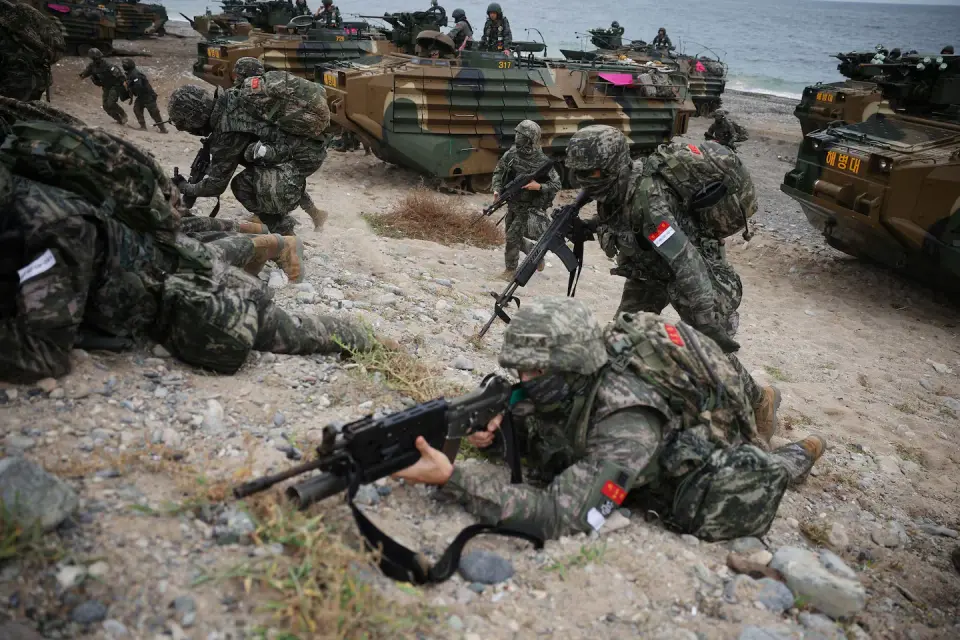
The United States has canceled its participation in the Ssangyong amphibious landing exercise with South Korea, scheduled for next month. The decision, announced by the South Korean military, cites resource constraints driven by the ongoing war in Iran. This marks the second major joint drill to be scaled back or canceled during President Trump's second term, raising concerns about U.S. commitment to deterrence in Asia.
Key points
- The U.S. Marine Corps notified South Korean counterparts in June that Middle East operational demands would prevent deployment for the biennial Ssangyong exercise.
- The cancellation is attributed to the strain on U.S. military resources caused by the Iran war.
- This is the second joint military drill with South Korea to be canceled or downsized under President Trump, following the reduction of the Ulchi Freedom Shield exercises.
- The move has intensified doubts regarding Washington's capacity to manage concurrent global conflicts and maintain credible deterrence on the Korean Peninsula.
Background
In August 2026, President Trump ordered a substantial reduction of the annual Ulchi Freedom Shield drills, shortening the schedule from 11 days to five and converting some live events to simulations. Seoul expressed concern about not being informed in advance, while North Korea condemned the drills as a threat. These reductions occurred alongside diplomatic signals from Trump regarding potential meetings with Kim Jong Un.
How outlets are covering it
The Washington Post and The New York Times both report the cancellation of the Ssangyong exercise due to Iran war demands. The New York Times emphasizes that the U.S. Marine Corps notified South Korea in June, highlighting the early communication of the decision. Both outlets frame this as the second major drill reduction under President Trump, linking it to broader concerns about U.S. military resource allocation and deterrence in Asia. The Washington Post notes the move raises questions about the sustainability of U.S. commitments, while The New York Times points to falling U.S. weapons stockpiles as a contributing factor to these doubts.
Why it matters
The cancellation of the Ssangyong exercise signals a potential shift in U.S. military priorities, prioritizing the Middle East over Asia. This could weaken deterrence against North Korea and raise concerns among allies about the reliability of U.S. security guarantees in the region.
What to watch
South Korea and the United States are reportedly in talks to resume the exercise, though no specific timeline has been announced. The Pentagon has not commented on the cancellation. Observers will watch for further adjustments to U.S.-South Korea military cooperation and any diplomatic developments between Washington and Pyongyang.
- U.S. withdraws from military exercises with South Korea set for next month The Washington Post
- U.S. Cancels Marines Drills With South Korea WSJ
- Trump's Kim gambit deepens doubts over US reliability at a key moment for Asia Reuters
- U.S. Marines Cancel Drill With South Korea, Citing Iran War Demands The New York Times
- Trump’s favorite dictators can do no wrong The Seattle Times
Want the full story? Read the original reporting
Read on The Washington Post