
Modi and Xi Agree to Border Resolution Framework at BRICS Summit
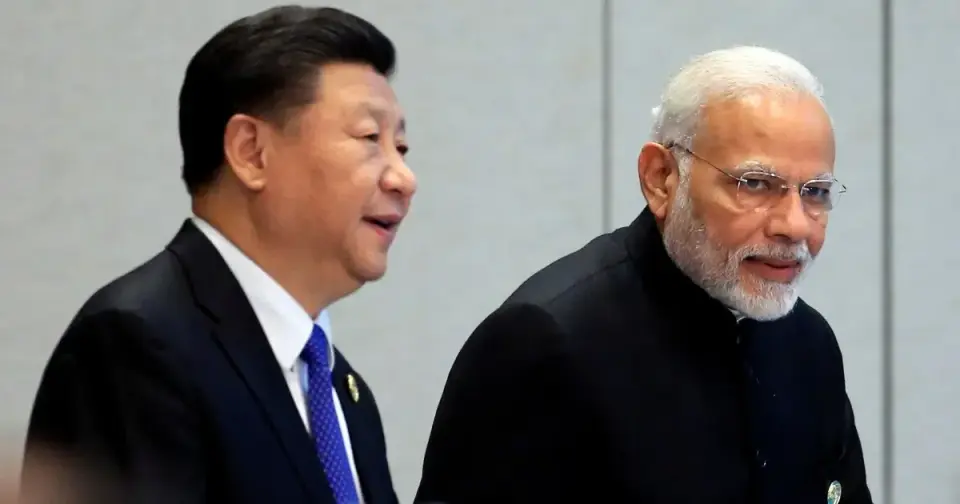
Prime Minister Narendra Modi and President Xi Jinping met in New Delhi on the sidelines of the BRICS summit, marking Xi’s first visit to India in seven years. The leaders pledged to resolve the long-standing border dispute through a 'fair, reasonable and mutually acceptable' process, while acknowledging the need to address structural trade imbalances. Despite the diplomatic thaw, significant military deployments remain along the 3,500km border, and deep mistrust persists due to unresolved territorial issues and economic disparities.
Key points
- Modi and Xi committed to resolving the boundary question, with Modi emphasizing the need to observe existing border agreements.
- The leaders agreed to address structural trade imbalances, supply chain issues, and market access concerns, noting that bilateral trade reached a record $151.1 billion in the year ending March 2026.
- Xi’s visit follows a gradual thaw in relations, including resumed flights and high-level contacts, but heavy military deployments remain along the disputed Himalayan frontier.
- The BRICS summit produced a joint declaration calling for calm in the Middle East and global trade stability, though internal divisions among member states remain evident.
Background
This meeting follows a series of diplomatic engagements in 2026, including a Tri-Power Summit in Bishkek and previous BRICS-related discussions, which highlighted India’s strategy of 'strategic hedging' between Western and non-Western powers. The 2020 border clash, which resulted in 24 soldier deaths, had severely damaged ties, but recent years have seen a cautious restoration of institutional exchanges and trade routes.
How outlets are covering it
Al Jazeera and The Guardian emphasize the symbolic nature of the 'thaw' and the red-carpet welcome, framing it as a major step in reconciliation. CNBC focuses on the economic dimensions, highlighting the record trade volume and the specific commitment to address the $112.16 billion trade deficit. The Guardian notes internal BRICS fractures, such as the lack of consensus among foreign ministers in May, contrasting with the unanimous joint declaration issued during this summit. All sources agree that while diplomatic gestures are positive, deep mistrust and military posturing remain significant barriers.
Why it matters
The resolution of the India-China border dispute is critical for regional stability in Asia, given the heavy military presence and historical tensions. The agreement to address trade imbalances could reshape economic dependencies, as India seeks to reduce its reliance on Chinese imports. Furthermore, the coordination within BRICS signals a shift in global power dynamics, challenging US-dominated institutions, though internal disagreements among members limit the bloc’s immediate effectiveness.
What to watch
Diplomats will monitor the implementation of the 25th round of border talks, which yielded eight points of consensus last month. India and China are expected to continue negotiating supply chain issues and market access, while BRICS members will test their ability to maintain unity amidst ongoing conflicts in the Middle East and Ukraine.
- Modi and Xi seek to reset India-China ties on BRICS sidelines Al Jazeera
- Xi urges BRICS peace role in Middle East, courts Modi on India visit Reuters
- Xi Jinping gets red carpet at Brics summit amid thaw in India-China relations The Guardian
- At BRICS Summit, China and India Vie for Influence The New York Times
- Indian Prime Minister Modi says border peace is key to India-China ties CNBC
Want the full story? Read the original reporting
Read on Al Jazeera