
Hormuz shipping crisis peaks as Iran targets US-backed oil shuttle
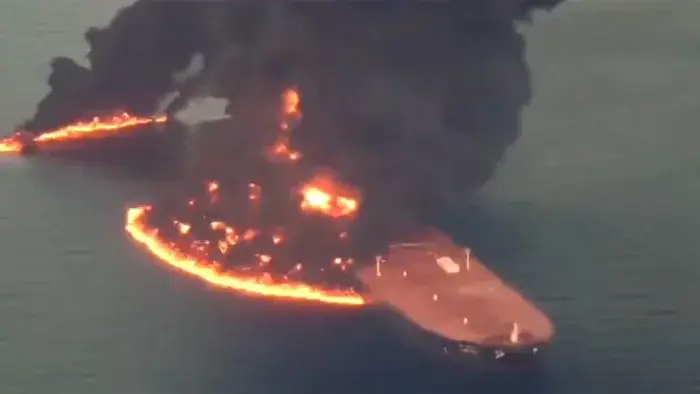
Iranian attacks on vessels in the Strait of Hormuz have reached their highest intensity since the war began in February, with 24 ships struck in the past two weeks. On Sunday alone, six vessels were hit, including tankers owned by Chinese and South Korean firms and an Indian container ship. This surge coincides with Tehran’s explicit threat to disrupt a US-assisted 'shuttle' system that allows Gulf states to export oil via the Gulf of Oman. Consequently, oil flows through the strait have plummeted to 2.9 million barrels per day, while global supertanker rates hit a record $805,000 per day as owners avoid the conflict zone.
Key points
- UK Maritime Trade Operations reported six attacks on Sunday, the deadliest day for shipping since the conflict started in February.
- Twenty-four vessels were targeted in the two weeks leading up to October 11, a sharp increase from the 13 hits recorded in March.
- Iran’s security chief Mohsen Rezaei declared the US-assisted oil shuttle system a military target, claiming Tehran strikes five to six vessels nightly.
- Oil exports through Hormuz dropped to 2.9 million barrels per day on October 11, down 43% from pre-conflict levels.
- Global supertanker earnings reached a record $805,000 per day on October 9 due to rerouting and ship-to-ship transfers.
Background
The current escalation follows a period of fluctuating tensions since the US-Israeli strikes on Iran began in late February. Earlier in October, weekly attack counts had already hit wartime peaks, with 11 vessels struck in the week ending October 4. While crude flows briefly rebounded to 15.5 million barrels per day in September due to US naval escorts, recent Iranian strikes have reversed this trend. The conflict has also seen broader regional impacts, including Houthi missile strikes on Saudi Arabia and diplomatic efforts to reopen the strait that have stalled due to Iran’s seven conditions for peace.
How outlets are covering it
The Financial Times emphasizes the economic impact, noting that shipowners are avoiding the region despite high freight rates, leading to a global tanker shortage. Al Jazeera highlights the geopolitical dimension, focusing on Iran’s threat to target US-assisted 'shuttle' routes and digital infrastructure in the UAE. The Maritime Executive provides granular operational details, confirming specific strike locations and noting that vessels are turning away from Fujairah to avoid risk. TradeWinds focuses on specific vessel claims, such as the IRGC’s assertion that it struck the UAE-owned VLCC Al Maqam, which the shipowner declined to comment on. While all sources agree on the surge in attacks, they differ in emphasis: FT on market rates, Al Jazeera on diplomatic threats, and The Maritime Executive on operational logistics.
Why it matters
The escalation threatens global energy supply chains, as the Strait of Hormuz handles roughly a fifth of global oil and gas. The sharp drop in transit volumes and record-high freight rates indicate a severe disruption to global trade. If the US-backed shuttle system is successfully disrupted, Gulf states may face an energy crisis, while Iran aims to leverage its control of the strait to force concessions from Washington. The situation also raises concerns about civilian safety, with two Indian seafarers reported missing and multiple injuries reported in recent strikes.
What to watch
Analysts suggest that the sustainability of Iran’s pressure campaign is uncertain due to its own economic costs. The US may increase naval escorts or impose further sanctions, while Iran could expand attacks beyond the strait to target digital infrastructure in the UAE. Diplomatic talks may resume if the economic pressure on both sides becomes untenable, but for now, the risk of further strikes remains high. Shipowners are likely to continue avoiding the region, driving up global freight rates and potentially causing supply shortages in Asia and Europe.
- Ships in Hormuz strait hit by worst spate of attacks since start of war Financial Times
- Iran sets crosshairs on ‘US-UAE’ oil shuttle out of Strait of Hormuz Al Jazeera
- UKMTO Reports Six Strikes in One Day on Tankers in the Mideast The Maritime Executive
- Iran claims strike on Adnoc L&S VLCC in the Strait of Hormuz TradeWinds News
- After oil increasingly left the Gulf, Iran is trying to regain its stranglehold on shipping CNN
Want the full story? Read the original reporting
Read on Financial Times