
Berlin’s Trade Pivot Marks a Late but Significant Shift in EU-China Relations
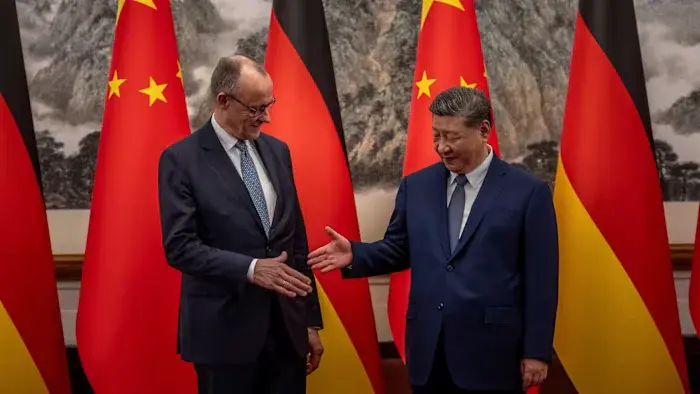
Germany has officially shifted its trade policy toward China, joining France in demanding new EU tools to restrict imports. This marks a significant change from Berlin's previous reluctance to impose tariffs, driven by a growing trade deficit and industrial pressure. While other EU members welcomed the move, they noted it came too late. Simultaneously, Moldova is pushing for accelerated EU accession, claiming it has already met several reform criteria.
Key points
- German Chancellor Friedrich Merz and French President Emmanuel Macron sent a joint letter to EU Commission President Ursula von der Leyen, demanding tougher trade measures against China.
- The letter proposes a new instrument to quickly close the EU market to countries violating trade rules, targeting sectors like automotive, aerospace, and chemicals.
- EU Trade Commissioner Maroš Šefčovič described the EU’s trade deficit with China, roughly €1 billion daily, as unsustainable and a threat to the European social model.
- Germany’s shift follows two years of opposing anti-subsidy duties on Chinese electric vehicles, with EU diplomats noting Berlin’s change was driven by economic damage rather than principle.
- Moldova’s Prime Minister Vasile Tofan stated the country is ready to close seven to 10 EU accession chapters, urging Brussels to maintain a 'window' for membership within two years.
Background
Germany had long resisted tougher EU action against China, prioritizing export markets over trade balance. This stance shifted as German manufacturers faced declining exports and rising Chinese imports, mirroring earlier dependencies on Russian gas. The current move follows months of stalled EU-China negotiations and Chinese retaliatory probes into European chemical exports. Meanwhile, Moldova, a frontrunner for EU membership alongside Ukraine, Montenegro, and Albania, is leveraging its reform progress to counter Russian influence and secure energy supplies from Romania and Azerbaijan.
Why it matters
Germany’s policy reversal signals a potential end to the EU’s fragmented approach to China, as member states align on stronger trade defenses. This could reshape global supply chains and industrial competitiveness, particularly in sectors facing systemic shocks. Additionally, Moldova’s push for accelerated accession highlights the geopolitical stakes of EU enlargement, where membership is seen as a buffer against Russian influence and a driver of economic integration.
What to watch
EU Trade Commissioner Maroš Šefčovič is set to meet Chinese officials in Beijing on October 8, with a deadline of October 15 for concrete results. The European Commission is expected to present enlargement policy review proposals, including assessments of Moldova’s progress. If talks fail, the EU may implement the proposed rapid trade restrictions, potentially escalating tensions with China.
- Germany’s pivot on China trade is a long time coming for other EU capitals Financial Times
- Germany and France Are Proposing a New Weapon to Counter Flood of Chinese Goods WSJ
- Germany and France want EU storm gates for China’s trade surge The Economist
- France, Germany seek new EU weapon to instantly cut off market access for China South China Morning Post
- Merz, Macron seek tougher EU measures against unfair trade DW.com
Want the full story? Read the original reporting
Read on Financial Times