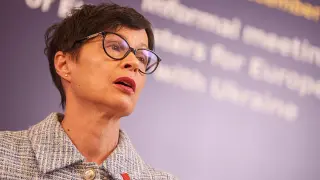
In a July 17 COELA meeting, Hungary blocked opening Ukraine’s EU accession negotiation clusters 2 and 3, while Moldova’s cluster 3 was advanced; no decision was reached due to lack of consensus, and the working group will revisit the screening results at its July 22 session before the summer break.
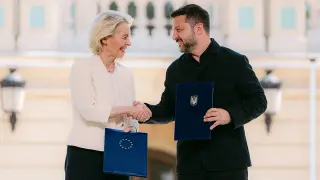
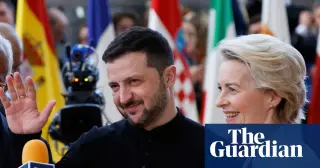
Von der Leyen visits Kyiv again, declaring "the tide is turning" as Ukraine steps up long-range drone strikes and signs a first EU-Ukraine defence industrial partnership to co-develop and store drones on EU soil. The deal supports Kyiv's war effort and future missile tech, while EU accession talks show momentum after Hungary's veto eased and Zelenskyy shifts from a fixed 2027 target to a pragmatic, step-by-step path toward membership, amid ongoing Russian strikes and domestic political turbulence.
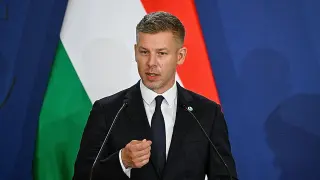
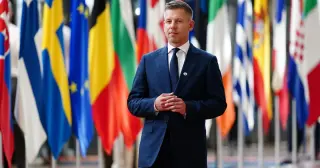
Brussels will open only two clusters in July (Cluster 6 externals relations and Cluster 2 internal market) instead of all six, due to Hungary’s opposition under PM Péter Magyar. Ukraine and Moldova have opened Cluster 1, with the rest to be tackled gradually. While Kyiv pushes for a rapid path, unanimity among member states and Budapest’s stance mean a slower, merit-based process, potentially opening the next cluster around July 14 if consensus allows.
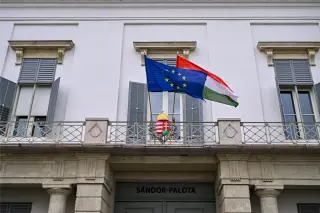
Hungary blocked a key procedural step to advance Ukraine and Moldova’s EU membership bids by opposing a joint EU letter, making it the sole dissent in a move previously approved to begin formal negotiations; Prime Minister Péter Magyar argues against opening all six negotiating clusters at once, potentially delaying Kyiv and Chisinau’s path to EU membership.
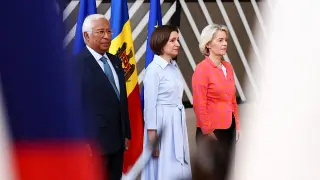
The EU signaled Moldova could proceed on its accession path independently after opening the first cluster, effectively hinting at decoupling Moldova’s bid from Ukraine’s, while Moldova’s reform pace is praised and Brussels urges rapid progress on the remaining five clusters.
Ukraine and Moldova have begun the first phase of EU membership negotiations, launching cluster one on rule of law and democracy after Hungary's veto was overcome; EU leaders call enlargement strategic, while Kyiv's reform efforts—especially anti-corruption and judiciary reforms—are still assessed as incomplete, and experts caution the process could take years with security considerations shaping the path.
EU ambassadors approved starting the first phase of accession talks with Ukraine and Moldova, opening negotiations on the initial cluster of reforms needed to meet EU standards; the move follows Hungary lifting its block after a minority-rights agreement, and the process will begin with the Fundamentals cluster at Monday’s intergovernmental conference.
The European Union will officially reopen accession negotiations with Ukraine and Moldova next week after Hungary’s new government lifted its veto. Talks will begin in Luxembourg with the fundamentals cluster, covering core issues like the rule of law. Kyiv and Chisinau view EU membership as security against Russian aggression; Hungary’s PM Peter Magyar has signaled no fast-track and even warned of a referendum if 33 accession chapters are closed within the next 10–15 years.
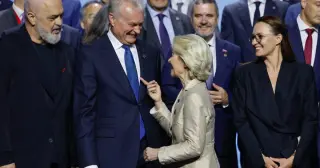
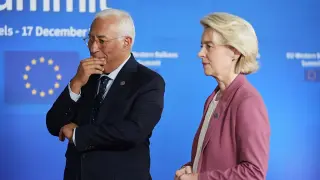
Balkan leaders gathered in Montenegro for the EU‑Western Balkans summit as enlargement urgency grows, signaling a push to accelerate accession talks and deepen EU ties with the region.
France and Germany floated a structured, gradual path to EU membership for Western Balkan aspirants, offering perks such as partial access to the single market and observer status at key meetings to keep reforms on track while full accession remains distant. The plan shifts toward focusing on reform substance rather than rigid formal steps and would give the European Commission more discretion over opening negotiating clusters. It aims to ease Western Balkans fatigue amid Ukraine/Moldova momentum, with Montenegro closest to closure and Albania, Serbia, North Macedonia, and Kosovo at various stages.
EU leaders insist on enlarging the bloc to secure borders and capitalize on vast trade with the Western Balkans, arguing that billions in two-way trade and security concerns justify the move amid competing influence from Russia, China, and the US; Albania and Serbia propose a phased entry to avoid gridlock, reflecting a shift from idealism to strategic calculation.
Cyprus brokered a breakthrough that ends two years of deadlock as Hungary lifts its veto on Ukraine’s EU accession; a preliminary deal on minority rights and language use clears the way to open the first accession cluster on fundamentals (rule of law, human rights, judiciary) in June, effectively resuming Ukraine’s path toward EU membership.
Finnish President Alexander Stubb argues the EU should enlarge to around 40 members to project greater global power, naming Canada, the United Kingdom, Turkey, Norway and Iceland as possible candidates amid geopolitical shifts and US policy changes.
Hungary says it has reached a deal with Ukraine to expand the rights of the Hungarian minority in Ukraine’s Zakarpattia region, a move it says could clear the way for the EU to begin accession talks with Kyiv. Kyiv has not publicly confirmed the agreement. If translated into Ukrainian law soon, Hungary would back opening the first negotiating cluster in Kyiv’s EU accession talks, though PM Peter Magyar warned that Ukraine would need to complete all 33 negotiation chapters, potentially taking 10–15 years and possibly prompting a Hungarian referendum. Meanwhile, EU ambassadors moved forward with the process to launch accession talks for Ukraine and Moldova, signaling continued momentum on enlargement.
Hungary has lifted its two-year veto on Ukraine’s EU bid, clearing the path for the next phase of negotiations and the opening of the first accession cluster, possibly on June 15 in Luxembourg; the move followed new Hungarian leadership’s pledge to improve rights for the Hungarian minority in Transcarpathia, with EU Enlargement Commissioner Marta Kos welcoming the development and Kyiv awaiting formal steps as Moldova also advances its position.