
China and Egypt agree to expand local currency trade to reduce dollar reliance
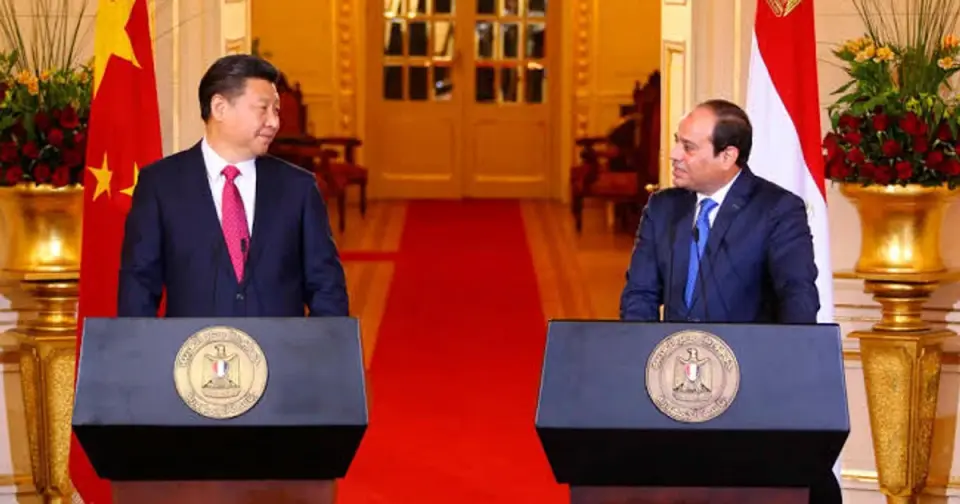
Chinese President Xi Jinping and Egyptian President Abdel Fattah al-Sisi agreed to increase trade settlements in their national currencies and expand local currency swap agreements during a historic visit to Cairo. This move aims to reduce dependence on the US dollar, aligning with broader BRICS de-dollarization efforts. The visit also marked the 70th anniversary of diplomatic ties, featuring new investments in the Suez Canal Economic Zone and highlighting Chinese investment in Egypt exceeding $10 billion.
Key points
- Xi Jinping and al-Sisi signed a joint statement advocating for increased trade and investment settlements in yuan and Egyptian pounds rather than US dollars.
- The two nations agreed to expand their local currency swap agreement to facilitate smoother financial transactions.
- This initiative supports the BRICS group's long-standing goal of reducing global reliance on the US dollar and promoting a multipolar financial system.
- The visit coincided with the 70th anniversary of diplomatic relations between China and Egypt, featuring memorandums of understanding in construction, energy, and agriculture.
- Egyptian Prime Minister Mostafa Madbouly noted that Chinese investment in Egypt has surpassed $10 billion, reflecting growing confidence in the country's economic ecosystem.
- The leaders announced the third phase of expansion for the Egyptian-Chinese industrial zone in the Suez Canal Economic Zone, targeting renewable energy, automotive manufacturing, and textiles.
Background
This development follows earlier US sanctions targeting Iran's trade partners, which highlighted the vulnerabilities of dollar-dependent economies and spurred discussions about alternative financial systems. The move also builds on the June 2026 authorization by the People’s Bank of China for the Renminbi Clearing Bank of Africa, which processed approximately $500 million in transactions in its first four months, providing African institutions direct access to China's onshore financial system.
Why it matters
The agreement signals a significant step toward de-dollarization in Africa, potentially reshaping trade dynamics between the world's second-largest economy and a key African partner. It could reduce transaction costs and exchange rate risks for both nations while strengthening China's financial influence on the continent. For Egypt, it diversifies its economic partnerships and supports development goals through increased Chinese investment in strategic industrial zones.
What to watch
Monitor the implementation of the expanded currency swap agreement and the volume of yuan-denominated trade between China and Egypt. Watch for further announcements regarding the Suez Canal Economic Zone expansion and potential new BRICS initiatives aimed at reducing dollar dependence in international trade.
- The world’s second-largest economy just decided, with one of its top African partners, to do away with the use of the US dollar Business Insider Africa
- Xi visits Egypt as China seeks deeper influence across the Mideast NPR
- Xi Jinping visits Egypt in rare foreign travel flurry ahead of Donald Trump summit Financial Times
- China's Xi urges new Middle East security framework during Egypt visit Reuters
- In Egypt, Xi Challenges America’s Influence in the Middle East The New York Times
Want the full story? Read the original reporting
Read on Business Insider Africa