
Chennai’s Harbor Workers: Enduring Poverty and Love for the Sea
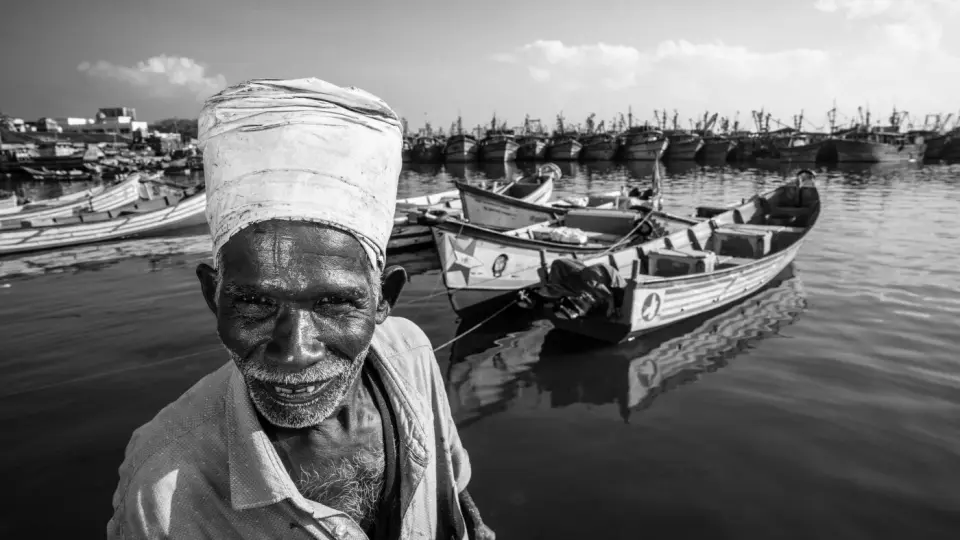
At Chennai’s overcrowded Kasimedu Fishing Harbour, workers endure grueling conditions for minimal pay, yet many remain bound to the sea by a deep emotional connection despite the lack of safety nets.
Key points
- Pavadairayan, a 60-year-old 'basket man,' carries 35-pound fish baskets in pitch darkness from 2 a.m. to 7 a.m., making 40-50 trips daily for roughly $5.
- The harbor, built for 600 boats, now serves over 1,000, supporting around 30,000 people including fishermen, auctioneers, and laborers.
- Nandu Kumar, 65, transitioned from fishing to selling fish after his son-in-law drowned and his daughter died by suicide in 2010, seeking stable income for his grandchildren.
- Fishermen earn approximately $200 monthly during good catches, but face high risks with no government support or safety nets, pushing younger generations toward other jobs.
- Despite hardships, many workers return to fishing later in life, citing the sea’s unique allure and the independence it offers compared to corporate employment.
Background
This story highlights the precarious livelihoods in India’s fishing communities, contrasting with broader global discussions on maritime heritage and economic stability. While previous coverage noted Norway’s royal connection to sailing and geopolitical tensions in the Red Sea, this report focuses on the human cost of traditional marine labor in Chennai.
Why it matters
The lack of safety nets and low wages in India’s fishing sector expose vulnerable workers to extreme poverty, highlighting the need for policy reforms to protect traditional livelihoods against economic instability and corporate displacement.
What to watch
Younger workers may continue to leave fishing for stable jobs, but many are expected to return later in life, maintaining the cycle of dependency on the sea despite its risks.
Want the full story? Read the original reporting
Read on NPR