
East Asia Dominates 2026 PISA Rankings as US Falls to 16th
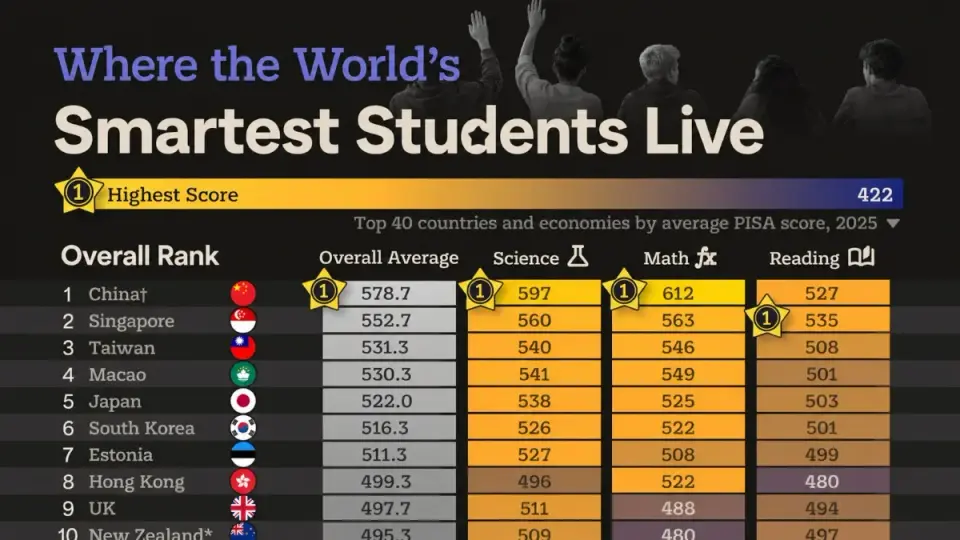
China’s participating regions lead the 2026 PISA rankings with an average score of 578.7, followed by Singapore and Taiwan. East Asian systems occupy the top six spots, while the US ranks 16th overall. The US performs better in science and reading but lags significantly in mathematics, highlighting a widening gap with top-performing Asian economies.
Key points
- China’s Beijing, Shanghai, Jiangsu, and Zhejiang regions lead with a three-subject average of 578.7, followed by Singapore (552.7) and Taiwan (531.3).
- The US ranks 16th overall with a score of 485, scoring 502 in science and 490 in reading but only 463 in mathematics.
- Canada ranks 11th with 495 points, while the UK and New Zealand place 9th and 10th respectively.
- No African education system appears in the top 40, attributed to infrastructure gaps and unequal access.
- The assessment covers 15-year-olds across 91 participating education systems, measuring mathematics, science, and reading.
Background
Previous coverage of global education metrics, such as computing skills rankings, also showed East Asian dominance, with Macao and Singapore leading in computational problem-solving. These trends align with broader concerns about North American academic performance declining since the 2010s, exacerbated by pandemic disruptions and socioeconomic disparities.
Why it matters
The rankings highlight significant disparities in global education outcomes, with East Asian systems consistently outperforming North American and European counterparts. The US’s lower mathematics score, despite decent science and reading results, suggests specific curriculum or pedagogical challenges. These results raise questions about the effectiveness of current education policies in supporting struggling students and closing the gap with high-performing economies.
What to watch
Educators and policymakers in the US and Canada may review these results to identify areas for improvement, particularly in mathematics. Further analysis of the impact of socioeconomic factors and teacher shortages on student performance is expected. International comparisons may also influence future education funding and curriculum reforms.
Want the full story? Read the original reporting
Read on Visual Capitalist