
European Wildfires Ignite WWII Ordnance, Exposing Climate-Driven War Legacy
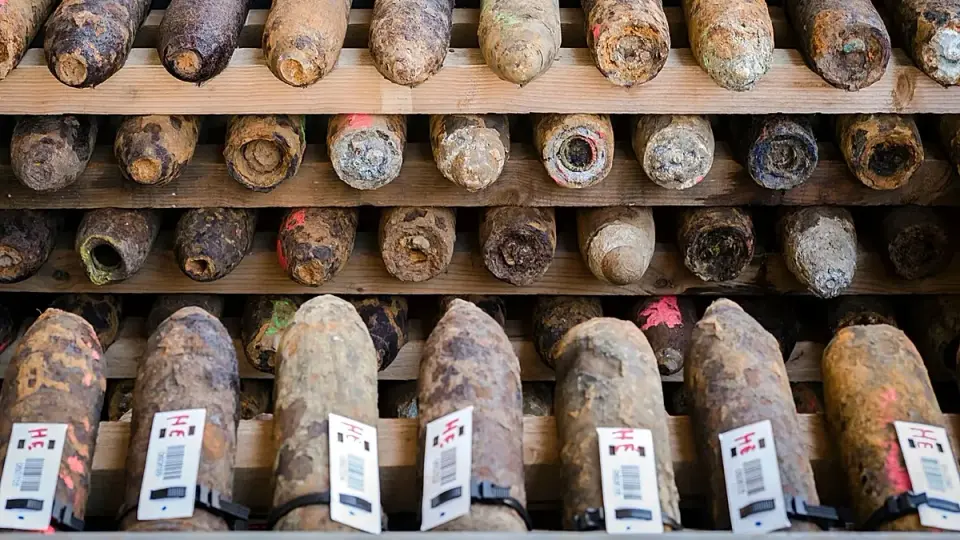
Severe 2026 European wildfires have triggered explosions of unexploded World War I and II munitions in France, Belgium, Germany, and the Netherlands. Droughts have also exposed submerged war debris in rivers. Experts warn that climate change is destabilizing historical safety, forcing emergency services to adapt to active detonation risks during fire response.
Key points
- Blasts from buried shells were reported in France, Belgium, Germany, and the Netherlands during the 2026 wildfire season.
- In Belgium’s Liège province, Governor Hervé Jamar confirmed sporadic detonations in the High Fens area, a site of the 1944 Battle of the Bulge.
- A fire near Bordeaux, France, uncovered a cache of approximately 400 WWII-era shells, including mortar and anti-tank rounds.
- Drought conditions have lowered river levels, revealing WWII-era bombs and naval mines in the Danube and Rhine rivers.
- Belgium’s Explosive Ordnance Disposal service handles over 3,000 calls annually, but wildfire heat introduces uncontrollable detonation risks.
Background
Europe has faced recurring issues with unexploded ordnance, such as the 2025 discovery of Nazi bombs in a German bay and evacuations in Dresden and Paris. The 2026 events mark a shift from passive discovery to active, heat-triggered explosions during major wildfires, a trend linked to broader climate instability.
How outlets are covering it
Euronews emphasizes the broader climate narrative, quoting scholars on how changing weather 'reactivates' stable threats. CBS News and KCRA provide granular operational details, noting that January rains created kindling for summer fires. While all sources agree on the danger, CBS highlights specific casualties in the past, such as six civilian deaths in Belgium post-1945, whereas Euronews focuses on the geopolitical implication of 'climatic luck' running out.
Why it matters
The intersection of climate change and historical conflict zones creates a new security paradigm. Wildfires are no longer just environmental hazards but active triggers for dormant military explosives, complicating emergency response and threatening civilian infrastructure in regions with dense WWII history.
What to watch
Emergency services in Europe are adapting protocols to account for buried munitions during fire suppression. Authorities expect continued discoveries as droughts expose riverbeds and fires burn through former battlefields, potentially leading to more controlled demolitions and evacuations.
- Europe's devastating wildfires unveil deadly new threat - buried bombs from WWI and WWII Euronews.com
- European wildfires expose, detonate buried bombs and mines from past wars CBS News
- Wildfires expose and detonate buried bombs and mines from WWI and WWII KCRA
- How to Put Out Wildfires Fueled by World War II Ammo? Try Driverless Tanks. WSJ
- Wildfires in Europe Expose Unexploded WWII Ordnance Amid Climate Change - News and Statistics IndexBox
Want the full story? Read the original reporting
Read on Euronews.com