
Kenya Ebola Cases Reach Seven as Health Workers and Relatives Test Positive
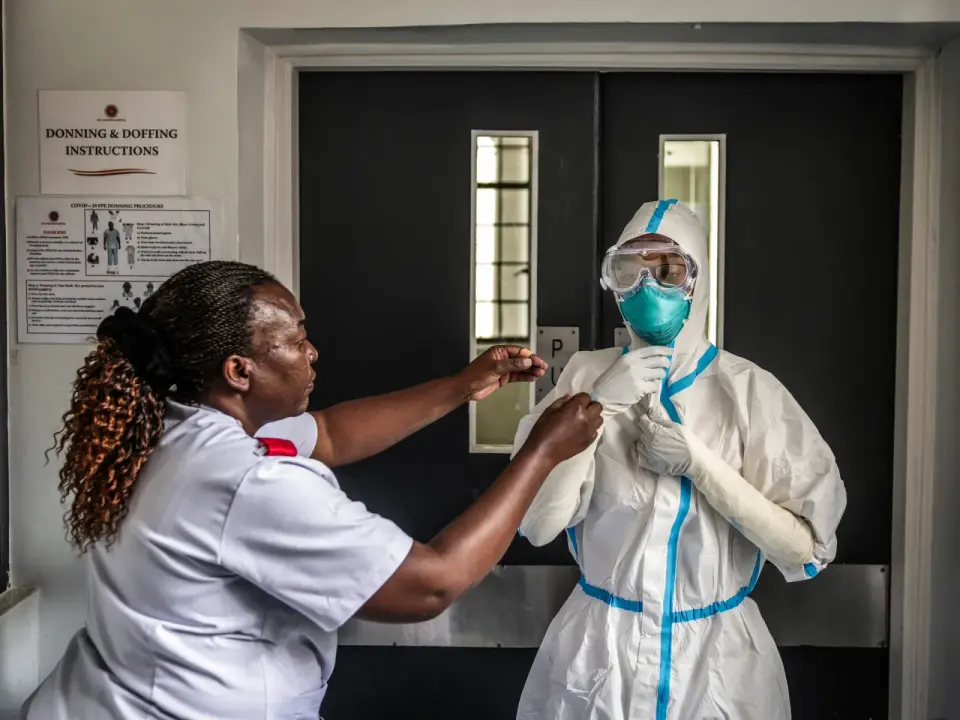
Kenya has confirmed seven Ebola cases, including three healthcare workers and relatives of the initial patient, linked to the Democratic Republic of Congo outbreak. While contact tracing has reached 98.5%, officials note no evidence of community spread, though questions remain about how the index patient bypassed initial screenings.
Key points
- Kenya's Ministry of Health confirmed four new Ebola cases on October 17, bringing the national total to seven.
- Three of the new cases are health workers who treated the first patient, while the fourth is a relative of the index case.
- The index patient, who died on October 5, had traveled from the DRC to Nairobi on October 3 after being ill for a month.
- Health officials report that 128 of 130 contacts of the first patient have been quarantined, exceeding the global benchmark of 85%.
- The outbreak is caused by the Bundibugyo strain, for which no approved vaccines or treatments currently exist.
Background
This development follows Kenya's first confirmed Ebola death on October 6 and a second case reported on October 14. The current surge is linked to the ongoing Bundibugyo outbreak in the Democratic Republic of Congo, which has recorded over 9,000 cases and 4,300 deaths since May. Earlier reports highlighted concerns about cross-border screening gaps that allowed the index patient to enter Kenya despite being symptomatic.
How outlets are covering it
Al Jazeera emphasizes the success of contact tracing, noting that 98.5% of the index patient's contacts were quarantined, and highlights that there is no evidence of community spread. However, it also notes observer concerns regarding how the index patient bypassed health screenings upon arrival. CIDRAP provides broader context on the DRC outbreak, noting it has spread to an eighth province, North Ubangi, and details the lack of specific treatments for the Bundibugyo strain. CIDRAP also highlights ongoing vaccine trials in Uganda, including a phase 1 trial for an Oxford-based candidate, while noting that Merck's Ervebo vaccine shows some T-cell cross-reactivity but its protective efficacy remains unproven for this strain.
Why it matters
The confirmation of cases among healthcare workers and close relatives underscores the risk of nosocomial transmission and the challenges of containing the Bundibugyo strain without specific vaccines. The high rate of contact tracing in Kenya offers a model for rapid response, but the initial breach of border screening raises concerns about regional containment efforts against a virus with a high mortality rate.
What to watch
Health authorities will continue monitoring the isolated patients, including the three healthcare workers and the relative, for symptom progression. Researchers in Uganda are expected to enroll 110 participants in a phase 1 vaccine trial by November to assess safety and immune response. In the DRC, officials will continue efforts to contain the spread in newly affected provinces, including North Ubangi, while managing the high death toll among children and adults.
- Kenya confirms four more Ebola cases, bringing total to seven Al Jazeera
- Kenya confirms four new Ebola cases, bringing total number to seven Reuters
- Kenya’s Ebola cases rise to 7, including health workers who cared for the first patient ABC News - Breaking News, Latest News and Videos
- 3rd person in Kenya tests positive for Ebola as DR Congo outbreak spreads to 8th province CIDRAP
- Second Ebola Infection Announced in Kenya The New York Times
Want the full story? Read the original reporting
Read on Al Jazeera