
Nigeria Confirms First Ebola Case as Bundibugyo Strain Reaches West Africa
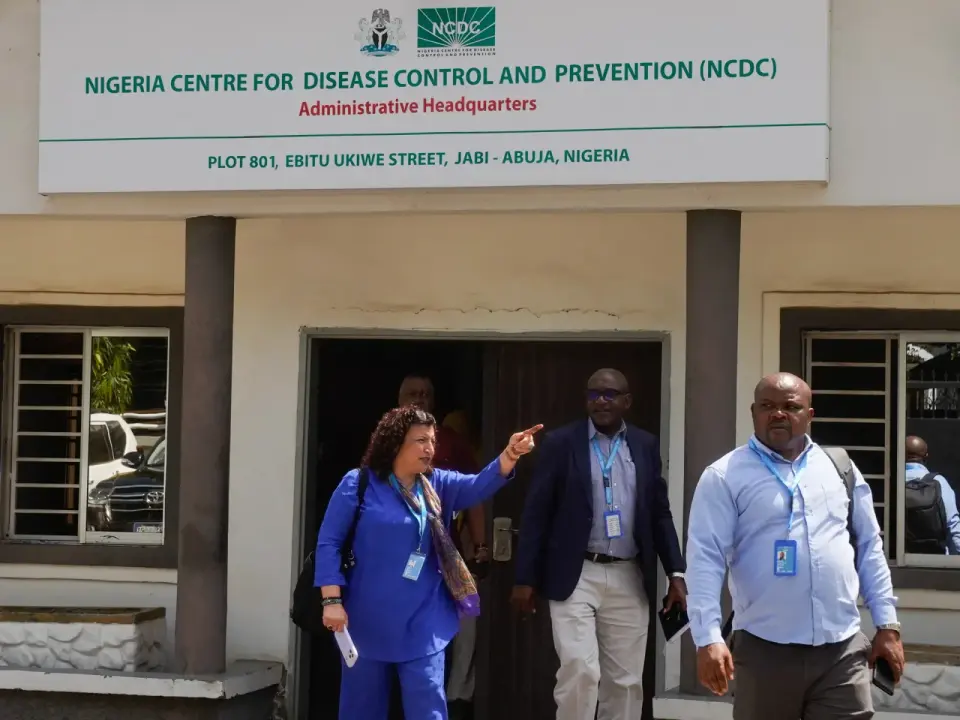
Nigeria has confirmed its first case of the Bundibugyo strain of Ebola, marking the virus's first spread to West Africa in the current outbreak. The patient is a 42-year-old diplomat who traveled from Uganda to Abuja in early October. Health officials identified 44 contacts, most of whom are healthcare workers, and the patient is currently in isolation. The case highlights the rapid continental spread of the outbreak, which has now affected five countries.
Key points
- Nigeria's Centre for Disease Control confirmed a positive test for the Bundibugyo strain on October 21, 2026.
- The patient, a diplomat, arrived in Abuja from Uganda on October 3 and was tested on October 19 after health officials learned of her travel history.
- The patient's condition has deteriorated to multi-organ failure, according to an unnamed official cited by AFP.
- Nigerian authorities identified 44 contacts, including the patient's Swiss husband and healthcare workers, all of whom are in isolation.
- The Bundibugyo strain, which is driving the outbreak in the Democratic Republic of the Congo, has no approved vaccine or specific treatment.
- The outbreak has now affected five African nations, with the DRC recording over 9,000 cases and 4,000 deaths since mid-May.
Background
The current Ebola outbreak, driven by the rare Bundibugyo strain, began in the Democratic Republic of the Congo in May 2026. It has since spread to Uganda, Kenya, and now Nigeria, marking the first time the virus has reached West Africa in this outbreak. Previous outbreaks in Nigeria, such as the 2014 incident in Lagos, were contained within three months, but the current strain lacks an approved vaccine, complicating response efforts.
How outlets are covering it
Al Jazeera and BBC report that the patient is a diplomat who traveled from Uganda to Abuja, while the Ugandan Ministry of Health claims she was a Nigerian national who traveled to eastern DR Congo for business, only transiting through Uganda. Nigerian Health Minister Muhammad Ali Pate and Africa CDC Director Jean Kaseya have sought to downplay tensions, emphasizing collaboration. CNN and Yahoo highlight the late detection of the case, with Nigerian physician Ayoade Alakija noting that it took 12 days for the patient to be tested, potentially exposing many others. The WHO and Africa CDC emphasize the need for cross-border cooperation and warn against travel restrictions.
Why it matters
The confirmation of the Bundibugyo strain in Nigeria marks a significant escalation in the Ebola outbreak, as it is the first time the virus has spread to West Africa in this outbreak. The lack of an approved vaccine or treatment for this strain, combined with the rapid continental spread, raises concerns about a broader epidemic. The late detection of the case in Nigeria also highlights the challenges in monitoring and containing the virus, particularly in countries with high malaria prevalence, where Ebola symptoms can be easily confused with malaria.
What to watch
Nigerian authorities are tracing contacts and monitoring the patient's condition. The Africa CDC is planning a meeting of African health ministers to strengthen the cross-border response and review hospital capacity. The WHO and other international bodies are urging collaboration and against travel restrictions to prevent the outbreak from spreading further. Clinical trials for a Bundibugyo vaccine are underway, but no approved treatment is currently available.
- Nigeria’s first Ebola case matches DR Congo strain, health officials say Al Jazeera
- Ebola has spread from Congo to 4 other countries. A look at where things stand CNN
- Late detection in Nigeria raises alarm as Ebola spreads across Africa Yahoo
- Nigeria's first Ebola patient holidayed in Uganda, officials say BBC
- Nigeria reports Ebola case as outbreak reaches West Africa Reuters
Want the full story? Read the original reporting
Read on Al Jazeera