
Archaeologists Clear 3,000 Tons of Debris to Reveal Roman Tunnels Beneath Istanbul's Hagia Sophia
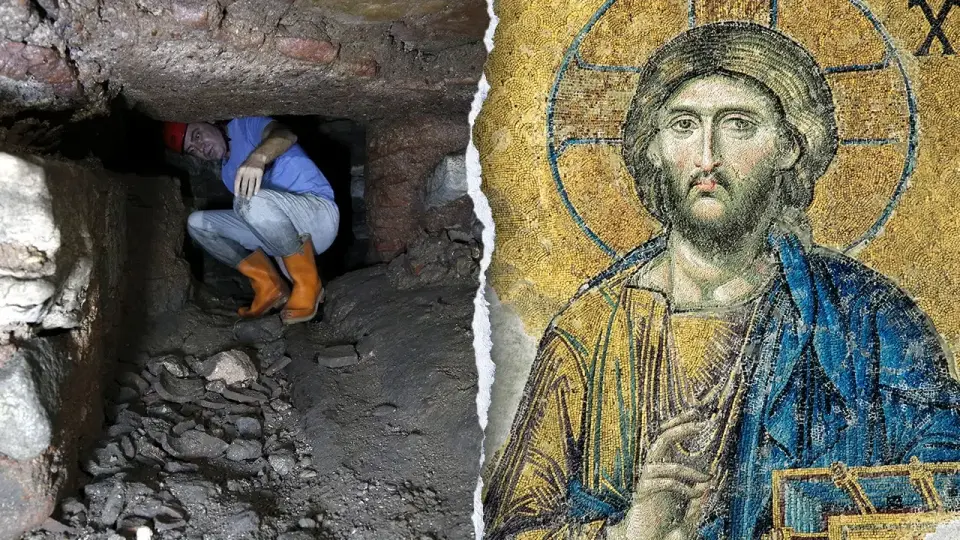
Archaeologists have removed approximately 3,000 tons of debris from underground tunnels beneath Istanbul's Hagia Sophia, revealing previously inaccessible passages dating back 1,600 years. The excavation, which began in February 2025, has uncovered parts of a Roman-era water drainage and distribution network that predate the current landmark, completed in 537 A.D. Researchers have cleared nearly 558 feet of a route connected to a fifth-century street and excavated additional sections of a burial complex discovered in 1946. Plans are underway to open parts of this network to the public through a new exhibition.
Key points
- Debris removal began in February 2025, with findings announced in October 2025.
- The tunnels are approximately 1,600 years old and were built by Romans for water drainage and protection.
- Some underground structures predate the current Hagia Sophia, which was completed in 537 A.D. under Justinian I.
- Researchers have cleared nearly 558 feet of an underground route extending from Sarayburnu toward Little Hagia Sophia.
- An ancient burial complex discovered in 1946 was further excavated, with five additional feet of depth uncovered.
- Future plans include opening more sections of the network to visitors and creating an archaeological exhibition.
Background
This discovery adds to a recent wave of archaeological interest in underground infrastructure, following the resolution of mysteries surrounding the 19th-century tunnels in Liverpool. While those tunnels were built for employment purposes, the Hagia Sophia tunnels are much older, dating to the Roman era and serving critical urban functions like drainage. The site itself has a complex history, transitioning from a Christian church to a mosque in 1453, then a museum in 1935, and back to a mosque in 2020.
Why it matters
The excavation provides new insights into the urban infrastructure of Byzantine and Roman-era Istanbul, revealing how the city managed water and space long before the current landmark was built. It also highlights the potential for new public engagement with the site's history, offering tourists and scholars a deeper understanding of the layers of history beneath one of the world's most iconic religious structures.
What to watch
Researchers aim to open more sections of the underground network to the public and develop an exhibition showcasing the archaeological remains. Continued excavation may reveal further details about the Roman drainage system and its connection to the city's broader infrastructure.
Want the full story? Read the original reporting
Read on Fox News