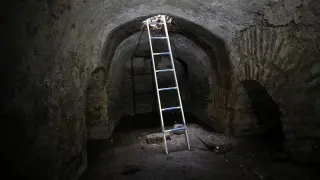
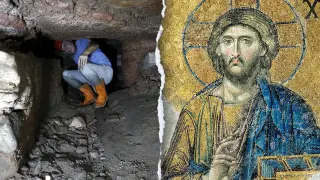
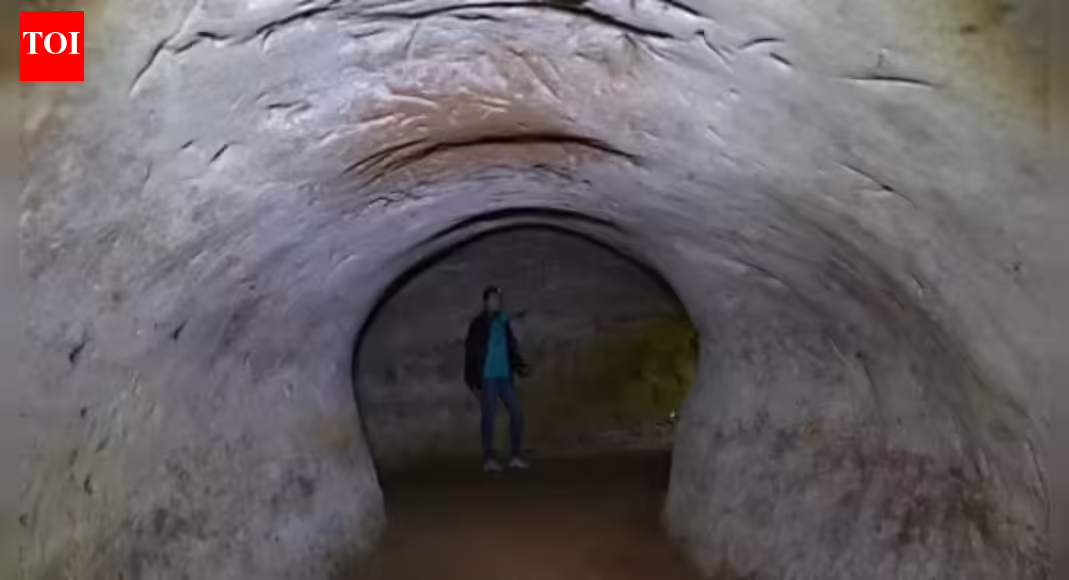
Turkish authorities have uncovered a vast network of tunnels and chambers beneath the Hagia Sophia in Istanbul, confirming centuries-old rumors. The excavation, part of a major conservation project, has revealed 420 meters of tunnels, six chambers, and a Roman burial structure, with plans to eventually open parts of the underground to the public.
Archaeologists have removed approximately 3,000 tons of debris from underground tunnels beneath Istanbul's Hagia Sophia, revealing previously inaccessible passages dating back 1,600 years. The excavation, which began in February 2025, has uncovered parts of a Roman-era water drainage and distribution network that predate the current landmark, completed in 537 A.D. Researchers have cleared nearly 558 feet of a route connected to a fifth-century street and excavated additional sections of a burial complex discovered in 1946. Plans are underway to open parts of this network to the public through a new exhibition.
Volunteer excavators in Liverpool have concluded that the massive underground network beneath Edge Hill, built by tobacco merchant Joseph Williamson in the early 19th century, was primarily a philanthropic effort to provide employment for unemployed men during a period of economic hardship. The tunnels, which stretch approximately a square mile and lie 60 feet below the surface, were rediscovered in 1999 after being filled with rubble and forgotten for over a century. Previous theories suggesting the network was used for smuggling or by an apocalyptic cult have been dismissed. The excavation, led by groups including The Friends of Williamson Tunnels, has uncovered a multi-level labyrinth of sandstone chambers, including a 27-foot-high 'Banqueting Hall.' Williamson, who died in 1840, kept the project secret, leaving no written records. The current consensus is that the construction served to keep men busy and skilled, preventing them from turning to crime, a conclusion supported by local baptismal records showing families naming children after Williamson.
Volunteer excavators in Liverpool have resolved a 200-year-old mystery regarding a massive underground network beneath Edge Hill. After decades of digging, they concluded that tobacco merchant Joseph Williamson built the tunnels primarily to provide employment for unemployed men during the early 19th century, rather than for smuggling or cult activities.
Large underground tunnels in South America, initially thought to be human-made, are now believed to be the work of extinct giant ground sloths, based on footprints and tunnel characteristics, revealing new insights into Pleistocene ecosystems and animal behavior.
Scientists have discovered massive underground tunnels in southern Brazil and northern Argentina, carved into solid rock by giant ground sloths, not humans, suggesting these ancient animals created extensive burrow networks for shelter or protection, with evidence including claw marks and tunnel dimensions matching the size of Megatherium.
Scientists have discovered massive underground lava-carved tunnels on Venus, which are much larger than expected and challenge existing understanding of lava tube formation, potentially offering insights into Venus's volcanic history and future exploration opportunities.
Scientists have confirmed the existence of massive underground lava tubes on Venus, which are similar to those on the Moon but larger, potentially due to Venus' unique geological conditions. These findings could enhance understanding of Venus' geological history and support future exploration missions, such as the European Space Agency's EnVision mission set for 2031.
Hamas has rebuilt its tunnel network in Gaza City, prompting the IDF to halt some underground operations due to concerns about hostages being held in the tunnels. The situation complicates military efforts amid fears for the safety of 20 hostages and ongoing urban warfare challenges.
Scientists have discovered massive underground tunnels in South America, attributed to extinct megafauna like giant ground sloths, challenging previous assumptions about prehistoric environments and suggesting complex interactions between humans and these ancient creatures.
The IDF uncovered a 10 km underground tunnel network connecting the north and south of the Gaza Strip, passing under a hospital and a university, which was used for inter-divisional communication between different terror divisions. The military gained operational control, examined the network, and destroyed large portions of it, finding rooms, storage areas, weapons, military equipment, and the bodies of terrorists inside.
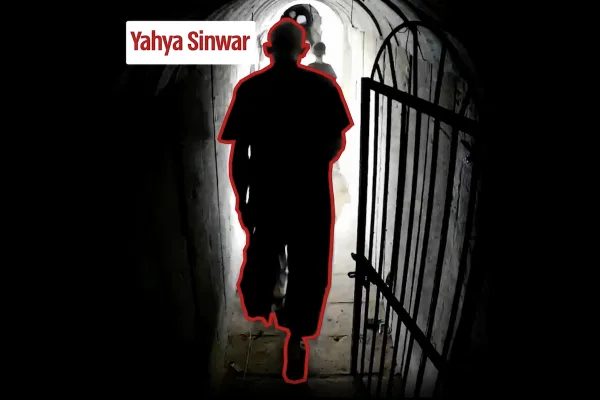
After a video of Hamas leader Yahya Sinwar hiding underground with his family surfaced, Gaza residents have turned against him, criticizing him for prioritizing his own safety while leaving the people above ground to struggle. Some residents expressed anger and disappointment, calling Sinwar a cowardly leader who sacrifices his people for himself. However, there are also supporters who view Sinwar as a strong figure standing up to the Israeli occupation. The IDF continues to tighten the noose around Sinwar's location.
The IDF released footage of Hamas military leader Yahya Sinwar fleeing tunnels under Khan Younis with his family, identified through artificial intelligence image analysis, and revealed the discovery of underground compounds and the capture of relatives of senior Hamas officials. The IDF spokesman stated that they are determined to catch Sinwar alive or dead, and that recent intelligence suggests he has been out of contact with other Hamas leaders for at least two weeks, casting doubt on his involvement in hostage release negotiations.
NewsNation correspondent Robert Sherman provides an inside look at the extensive and intricate network of Hamas tunnels known as the "Gaza Metro," which is being used for hiding fighters and holding hostages. The tunnels, some wide enough for cars, are equipped with infrastructure and ventilation, and the IDF has found the largest tunnel to date, just a quarter of a mile from the Israeli border. The conditions in the tunnels have caused serious health issues for hostages, and the IDF estimates there are about 1,500 underground tunnels in Gaza, with more yet to be discovered.
Israeli forces have discovered a large underground weapons production site in Gaza, capable of manufacturing long-range missiles and other munitions. The workshops were connected to a tunnel network used for transporting weapons throughout the Gaza Strip. Israeli officials claim that Hamas deliberately places military infrastructure in civilian areas, while Hamas denies this and accuses Israel of indiscriminately attacking civilians. The discovery comes amid ongoing conflict between Israel and Hamas, with thousands of Palestinians killed and many forced to flee their homes.