
Bronze leg from Scottish bog rewrites Roman history in the Borders
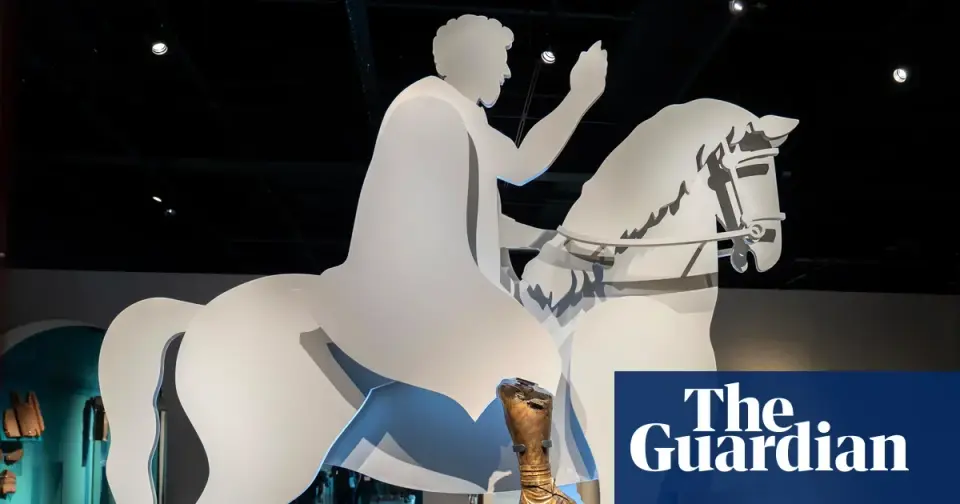
A gilded bronze leg discovered in a Scottish bog in 1820 is now identified as part of a giant statue of Emperor Antoninus Pius, erected near Hawick around AD 140. This finding, central to a new exhibition at the National Museum of Scotland, challenges the long-held belief that the artifact was looted from York. Instead, it suggests the Romans maintained a significant cultural and military presence in southern Scotland, leaving behind monumental art that influenced local Celtic and Pictish cultures long after their withdrawal.
Key points
- The Milsington leg, found in 1820 and stored at Dalkeith House for a century, is now believed to be from an equestrian statue of Antoninus Pius in the Scottish Borders, not a looted piece from York.
- Analysis shows the leg was carefully removed and buried, not hacked off, indicating a deliberate dismantling by Romans during their retreat from Scotland in the mid-2nd century AD.
- The National Museum of Scotland’s new exhibition, 'Roman Scotland: Life on the Edge of Empire,' features the leg alongside other finds, including Inveresk Mithras altars and a reconstructed earthenware bowl, to illustrate Rome’s deep impact on Scottish history.
- Curators argue that Roman presence in Scotland was more extensive than previously thought, with approximately 10,000 troops and 10,000 camp followers stationed in the region, fostering new artistic and political traditions among indigenous peoples.
Background
This development follows recent archaeological discoveries in Scotland, including the digital reconstruction of a headless Roman-era man buried at Inveresk and debates over the gender of Verica, the Atrebates ruler who allegedly prompted the Roman invasion of Britain. These findings collectively highlight the complex interactions between Roman occupiers and indigenous Celtic populations in Britain.
How outlets are covering it
The Guardian and BBC emphasize the shift in understanding Roman occupation in Scotland, with the BBC noting the careful removal of the leg as evidence of a deliberate Roman withdrawal rather than local destruction. The Yahoo article focuses on the mystery of the missing statue and the significance of Antoninus Pius’s victory in Scotland. The Telegraph source was inaccessible due to a security block, so no perspective could be extracted. All accessible sources agree on the new interpretation of the Milsington leg but differ in emphasis: The Guardian highlights the cultural impact on iron-age communities, while the BBC and Yahoo focus on the logistical and political implications of the Roman retreat.
Why it matters
This discovery reshapes the narrative of Roman Britain by demonstrating that the empire’s influence extended deeper into Scotland than previously acknowledged. It reveals that Roman withdrawal was not a simple retreat but a calculated dismantling of monuments, leaving behind cultural artifacts that influenced local traditions for centuries. This challenges the notion of a sharp divide between Roman and post-Roman Scotland and highlights the enduring impact of imperial presence on indigenous cultures.
What to watch
The exhibition 'Roman Scotland: Life on the Edge of Empire' will run at the National Museum of Scotland from November 14, 2026, to April 18, 2027. Researchers continue to investigate the fate of the rest of the Antoninus Pius statue and the broader implications of Roman cultural influence on Pictish and Celtic societies in Scotland.
- Bronze leg found in Scottish bog sheds new light on Roman occupation The Guardian
- Giant statue of Roman emperor once stood in southern Scotland BBC
- This superb exhibition about Roman Scotland is how history should be told The Telegraph
- 1,800-year-old bronze foot found in bog was carefully taken from a giant Roman emperor statue in Scotland Yahoo
- Impact of Romans in East Lothian to be explored in free talk East Lothian Courier
Want the full story? Read the original reporting
Read on The Guardian