Archaeologists in Constanța, Romania, opened a sealed 1,800-year-old sarcophagus containing a child’s wooden coffin, toys, and protective amulets, offering rare insight into Roman-era funerary practices.
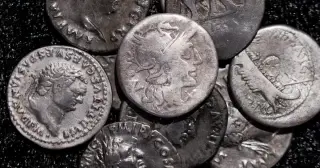
An amateur archaeologist in western Germany discovered a record-breaking hoard of 934 Roman silver denarii near Wesseling, south of Cologne. The find, weighing 3.1 kilograms, is the largest collection from the time of Emperor Hadrian ever located in Germany. Experts believe the coins were deliberately buried in the second century A.D. to protect the wealth, as banking institutions did not exist at the time. The oldest coin in the collection dates back to 148 B.C., predating the Roman Empire, while the majority originate from the Flavian dynasty (A.D. 69–96). The hoard is now on display at the LVR-LandesMuseum in Bonn.
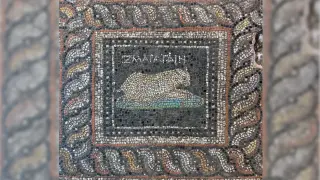
Archaeologists in Turkey uncovered a 1,800-year-old Roman villa mosaic featuring named household animals, including a cat called Emerald and a dog named Ocean, revealing insights into ancient domestic life.