
Archaeologists in Turkey Uncover Church Beneath Basilica, Likely Site of First Council of Nicaea
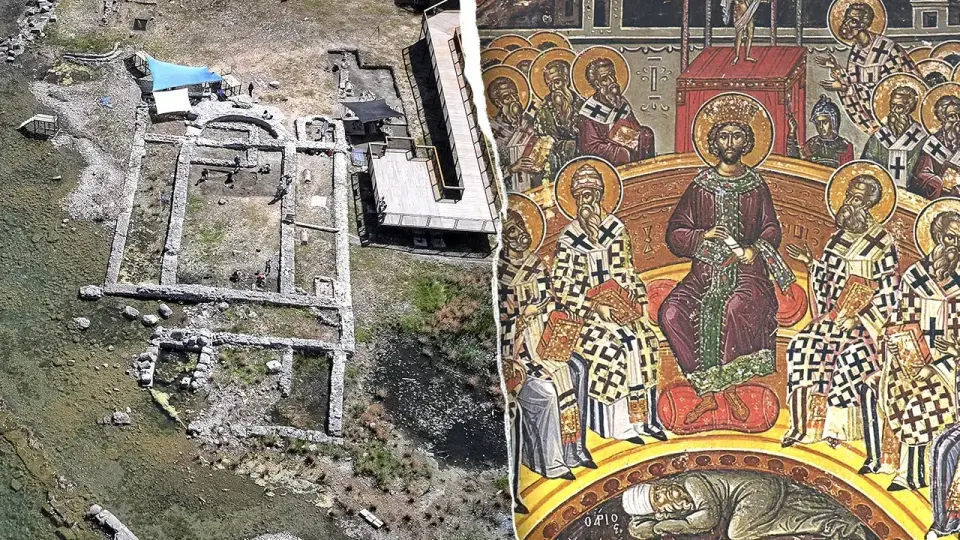
An international team of researchers in Turkey has uncovered the remains of a smaller church, identified as the Church of St. Neophytos, beneath the larger Church of the Holy Fathers in İznik. Excavation director Mustafa Şahin believes this earlier structure hosted the First Council of Nicaea in 325 A.D., a pivotal event in Christian history that produced the Nicene Creed. The discovery was prompted by floor paving extending beyond the walls of the later basilica, which was built around 380 A.D. after an earthquake destroyed the original site. Şahin noted that historical accounts by Eusebius of Caesarea described the council as taking place in a small church, supporting the hypothesis that the newly found ruins are the actual meeting place. Coins recovered from graves beneath the later basilica helped date its construction, reinforcing the timeline. This finding resolves long-standing debates about the exact location of the council, which rejected Arianism and affirmed the divinity of Jesus. The excavation took place along the shore of Lake İznik, where trenches exposed centuries-old walls and masonry. While the Church of the Holy Fathers was previously associated with the council, Şahin argues the smaller, underlying church is the more likely candidate. The discovery was announced by Turkish state media outlet Anadolu Agency in July 2026. Şahin expressed satisfaction that the hypothesis linking the site to the council has been confirmed through archaeological evidence. The findings highlight the significance of İznik in early Christian history and provide physical context for one of the most important doctrinal decisions in Christianity.
Key points
- Archaeologists in Turkey uncovered the Church of St. Neophytos beneath the Church of the Holy Fathers in İznik.
- Excavation director Mustafa Şahin believes the smaller church hosted the First Council of Nicaea in 325 A.D.
- The discovery was triggered by floor paving extending beyond the walls of the later basilica.
- The Church of the Holy Fathers was built around 380 A.D. after an earthquake destroyed the original site.
- Coins from graves beneath the later basilica helped date its construction and support the timeline.
- Historical accounts by Eusebius of Caesarea described the council as taking place in a small church.
Background
Turkey has been the site of numerous archaeological discoveries tied to early Christianity, including a fifth-century Christian church in Olympos and a Roman hospital converted into a Christian sanctuary in southwestern Turkey. The First Council of Nicaea in 325 A.D. was the first ecumenical council in Christian history, aimed at unifying doctrine across the Roman Empire. It famously produced the Nicene Creed, which affirmed that Jesus was 'begotten, not made' and fully divine, rejecting the beliefs of Arius who argued that Christ was a created being. The council was attended by Eusebius of Caesarea, who described the meeting as taking place in a small church. The Church of the Holy Fathers was previously associated with the council, but the new discovery suggests that the smaller Church of St. Neophytos was the actual meeting place. The excavation in İznik, the modern name for ancient Nicaea, provides physical evidence for one of the most pivotal events in Christian history.
Why it matters
The discovery of the Church of St. Neophytos beneath the Church of the Holy Fathers in İznik provides physical evidence for the location of the First Council of Nicaea, a pivotal event in Christian history. This finding resolves long-standing debates about the exact site of the council, which produced the Nicene Creed and rejected Arianism. The excavation confirms that the council took place in a smaller church, as described by Eusebius of Caesarea, and provides a tangible link to one of the most important doctrinal decisions in Christianity. The discovery enhances understanding of early Christian history and the significance of İznik in the development of Christian doctrine. It also highlights the ongoing importance of archaeological research in uncovering the past and providing context for historical events. The findings may attract further research and tourism to the site, contributing to the preservation and understanding of early Christian heritage in Turkey.
What to watch
Further excavation and analysis of the Church of St. Neophytos may provide additional details about the First Council of Nicaea and the early Christian community in İznik. Researchers may continue to investigate the site to uncover more artifacts and structural details that could shed light on the council and its participants. The discovery may also lead to increased tourism and interest in the site, contributing to the preservation and understanding of early Christian heritage in Turkey. Future research may explore the relationship between the Church of St. Neophytos and the Church of the Holy Fathers, as well as the broader context of early Christian architecture and doctrine in the region. The findings may also prompt further investigation into other sites associated with early Christianity in Turkey, potentially uncovering more evidence of the council and its impact on Christian history.
Want the full story? Read the original reporting
Read on Fox News