
Drought-exposed Danube reveals intact WWII motorbike and sunken fleet
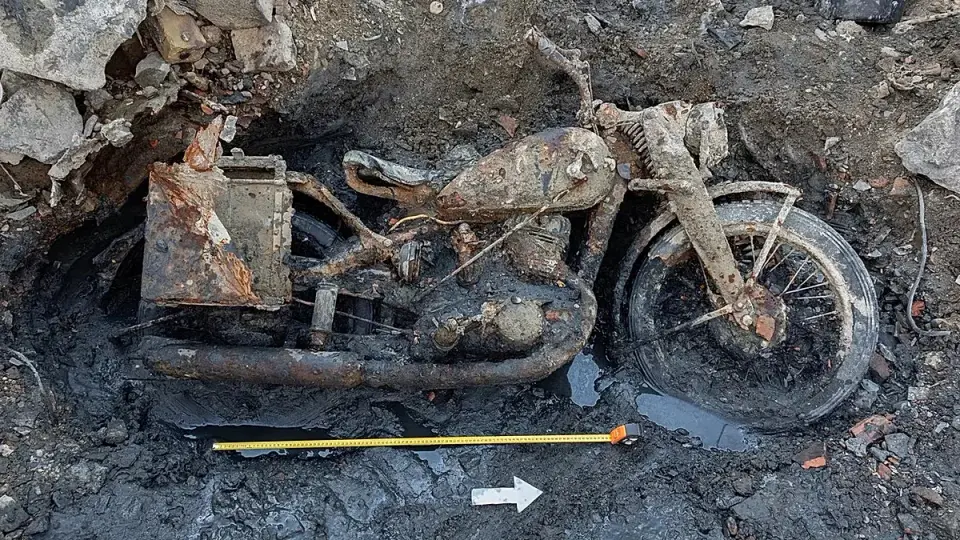
Record-low water levels in the Danube, driven by extreme heat, have exposed a near-intact Wehrmacht DKW NZ 350-1 motorbike in Budapest and dozens of sunken German warships in Serbia. The Budapest find, preserved in riverbed mud, is described as a once-in-a-century discovery by local historians. In Serbia, at least a dozen vessels from the 1944 Black Sea fleet have surfaced, impeding navigation. The drought has also revealed unexploded ordnance in Slovakia and disrupted river traffic across Europe.
Key points
- A DKW NZ 350-1 motorbike, produced from 1944, was found intact in the Danube riverbed in Budapest near the parliament building.
- The Hungarian Institute of Military History described the find as a 'once-in-a-century' discovery, noting the vehicle was preserved in mud.
- Serbia has begun removing at least a dozen sunken German warships near Prahovo, which were scuttled in 1944 to block Soviet advances.
- The low water levels are attributed to a severe European heatwave and drought, which has also exposed unexploded bombs in Slovakia.
- The DKW NZ 350-1 was manufactured by Auto Union AG, with approximately 12,000 units built by the end of World War II.
Background
This discovery follows a series of earlier reports in August 2026 detailing the impact of the Danube drought. Previous coverage noted that record-low water levels had already forced cruise detours on the Danube and Rhine, and exposed other WWII relics, including German soldiers' remains and anti-tank mines in Budapest. The current situation extends these impacts, with the drought now revealing larger-scale historical artifacts and disrupting navigation across multiple countries.
How outlets are covering it
Euronews emphasizes the historical significance of the Budapest motorbike find, highlighting its intact condition and the specific model details. The New York Times focuses on the practical and environmental consequences, noting that the exposed ships in Serbia are impeding navigation and that the event is a visible sign of increasingly brutal heat waves. The Guardian provides a broader regional context, linking the exposed wrecks to the 1944 scuttling of the Black Sea fleet and mentioning other discoveries, such as a 700kg unexploded British bomb in Slovakia, while also noting the energy crisis caused by low water levels affecting power plants.
Why it matters
The event illustrates the tangible historical and logistical consequences of extreme climate events. The exposure of WWII artifacts provides a direct physical link to the past, while the navigation hazards and energy shortages demonstrate the immediate economic and safety risks posed by prolonged droughts in Europe.
What to watch
Authorities in Serbia are actively working to remove the exposed warships, though many remain in place due to unexploded explosives. In Budapest, the motorbike is being studied by the Institute of Military History. Further discoveries may occur if water levels remain low, and the drought is expected to continue affecting river traffic and energy production across the Danube basin.
- Low Danube water reveals Wehrmacht motorbike on riverbed Euronews.com
- A Drying Danube River Reveals Nazi-Era Vessels, and Hazards of Heat The New York Times
- Nazi shipwrecks emerge from the depths as Europe’s Danube dries up The Guardian
- Europe's drought reveals medieval buildings, Nazi warships, mammoth remains and more Reuters
- Danube: Wehrmacht soldiers and WWII motorbike recovered after 80 years Euronews.com
Want the full story? Read the original reporting
Read on Euronews.com