
Roadwork in Tbilisi Uncovers 1,000-Year-Old Pottery Cache Beneath Main Boulevard
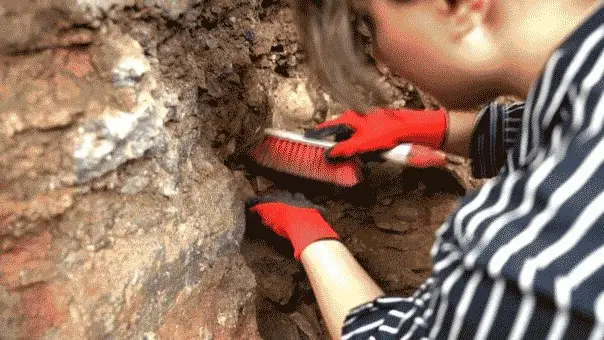
Construction crews renovating Rustaveli Avenue in Tbilisi, Georgia, discovered a cache of ancient pottery buried approximately 20 feet underground. The artifacts, believed to date from the 10th to 11th centuries, include intricately decorated fragments and jugs. Officials noted that such finds are common in Tbilisi due to its long history as a multicultural and economic hub along the Silk Road. Further analysis, including 3D scanning, is underway to determine the precise age and origin of the items.
Key points
- Workers renovating Rustaveli Avenue in Tbilisi uncovered a cache of pottery buried roughly 20 feet below the surface.
- The artifacts, including decorated fragments and jugs, are believed to date from the 10th to 11th centuries.
- The discovery occurred during a project to upgrade the avenue with new pedestrian crossings and signage.
- David Lordkipanidze, director of the Georgian National Museum, stated that such finds are logical given Tbilisi's rich archaeological history.
- Tbilisi served as a key economic and cultural center along the Silk Road during the period of the artifacts' creation.
- Researchers plan to use 3D scanning and other studies to more precisely determine the age and origin of the pottery.
Background
Tbilisi, founded in the fourth century, has a complex history involving control by various powers, including Arabs, Mongols, Persians, and Russians. The city's location in the Caucasus region, between Europe and Asia, has made it a significant crossroads for trade and culture. Recent archaeological discoveries in other parts of the world, such as an ancient sanctuary in Italy and pre-Incan tombs in Peru, highlight the frequency of unexpected historical finds during routine construction work.
Why it matters
The discovery provides tangible evidence of Tbilisi's role as a major economic and cultural hub during the 10th and 11th centuries, particularly under Arab rule and as a stop on the Silk Road. It underscores the importance of archaeological oversight during urban development projects in cities with deep historical roots. The findings may offer new insights into the daily life, trade, and cultural exchanges in the region during this period.
What to watch
Archaeologists will conduct further studies, including 3D scanning, to more precisely determine the age and origin of the pottery. The findings may lead to a better understanding of the historical and cultural significance of Tbilisi during the 10th and 11th centuries. The discovery may also prompt further archaeological investigations in other parts of the city.
Want the full story? Read the original reporting
Read on Fox News