
Budapest Danube Drought Uncovers WWII Soldiers and Motorcycle
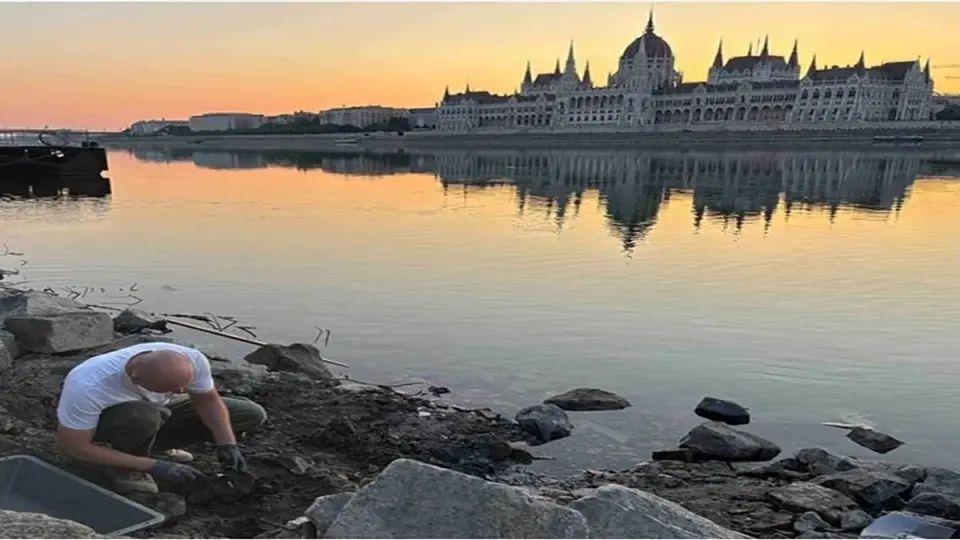
Record-low water levels in the Danube, driven by severe drought, have exposed the remains of two German soldiers and a well-preserved motorcycle in Budapest. The discovery, linked to the 1944-1945 Battle of Budapest, offers a chance to identify the men and provide closure to families after 80 years.
Key points
- The bodies of two German soldiers, one from the Wehrmacht and one from the Waffen-SS, were found in the Danube near Budapest.
- A DKW NZ 350-1 motorcycle, manufactured in 1944, was recovered alongside the remains, along with intact identity discs and a Kuban sleeve shield.
- The discovery was made possible by exceptionally low water levels caused by a severe European drought.
- Forensic teams are using bone analysis and dental records to confirm the identities of the soldiers.
- The remains are expected to be reburied at the Budaörs war cemetery near Budapest.
Background
This discovery is part of a broader trend of historical artifacts emerging from the Danube due to climate-driven drought. Previous archive coverage noted similar finds, including a mammoth skeleton in Bulgaria and sunken warships in Serbia. The current event is a specific instance of this phenomenon, focusing on human remains and military equipment in Hungary.
How outlets are covering it
Euronews and the BBC focus on the forensic and historical aspects of the discovery, emphasizing the potential for identifying the soldiers and providing closure to families. They highlight the condition of the artifacts and the role of the German War Graves Commission. CBC and The Jerusalem Post, however, frame the discovery within the context of climate change, using the exposed relics as evidence of the severe drought and its impact on Europe's waterways. While all sources agree on the facts of the discovery, their emphasis differs: some prioritize the human and historical narrative, while others prioritize the environmental and climatic implications.
Why it matters
This discovery serves as a tangible reminder of the lingering effects of World War II and the ongoing impact of climate change on Europe's infrastructure and history. It highlights the need for continued efforts to identify and honor the war dead, as well as the urgent need to address the environmental crisis that is exposing these hidden histories.
What to watch
Forensic teams will continue to analyze the remains and artifacts to confirm the identities of the soldiers. The German War Graves Commission will work to notify any surviving family members. The remains will be reburied at the Budaörs war cemetery. Additionally, the drought is expected to continue, potentially leading to more discoveries along the Danube.
- Remains of two Wehrmacht soldiers found in Danube: one served in Waffen-SS Euronews.com
- Danube river's low water levels reveal remains of WWII German soldiers in Hungary BBC
- A Drying Danube River Reveals Nazi-Era Vessels, and Hazards of Heat The New York Times
- Why are Nazi warships resurfacing in the Danube River? CBC
- Low Danube water levels in Bulgaria expose Roman-era bridge The Jerusalem Post
Want the full story? Read the original reporting
Read on Euronews.com