
IDF 'Guilt by Association' Policy Blamed for WCK Aid Worker Killings
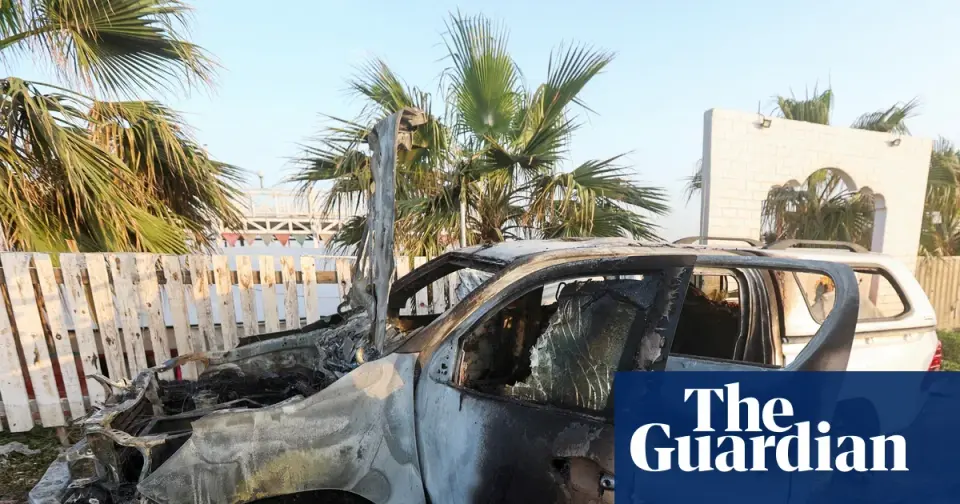
A Guardian investigation reveals that the April 2024 Israeli airstrike killing seven World Central Kitchen (WCK) aid workers was driven by the IDF's 'haflala' or incrimination policy, which designates targets based on proximity to armed individuals rather than direct evidence. Despite the deaths of nationals from the UK, Australia, Poland, Palestine, and the US-Canada, Israeli military prosecutors declined to pursue criminal charges, blaming individual officer errors. The strike occurred after WCK vehicles were escorted by armed guards, which the IDF interpreted as a Hamas takeover of aid, a claim WCK and international allies dispute. The incident highlights systemic issues in IDF targeting that prioritize destroying Hamas governance over civilian safety, contributing to high civilian casualty rates in Gaza.
Key points
- Seven aid workers from World Central Kitchen were killed in an Israeli airstrike on April 1, 2024, in Gaza.
- The victims included three British, one Australian, one Polish, one Palestinian, and one dual US-Canadian national.
- Israeli military prosecutors ruled out criminal proceedings, attributing the strike to individual officer mistakes rather than systemic policy.
- The Guardian investigation links the strike to the IDF's 'haflala' policy, which incriminates targets by association with armed individuals.
- Reserve Colonel Nochi Mendel, who ordered the strike, stated the workers were 'mixed' with Hamas and would have acted the same way again.
- WCK and governments of the UK, Australia, and Canada condemned the lack of accountability and called for an independent investigation.
Background
This incident follows a series of Israeli strikes in Gaza that have drawn international criticism, including recent attacks that killed civilians during ceasefire talks. In August 2026, the UK, Canada, and Australia formally protested Israel's decision not to prosecute those responsible for the WCK killings. The broader context includes ongoing disputes over humanitarian aid access and the high civilian casualty rate in Gaza, with over 73,000 killed since the war began in October 2023.
How outlets are covering it
The Guardian emphasizes the systemic nature of the IDF's 'haflala' policy, arguing that it endangers aid workers and civilians by allowing wide discretion in designating targets based on proximity to armed individuals. The outlet highlights that the strike was not based on an imminent threat to Israeli lives but on a mission to thwart Hamas control of aid. In contrast, the official IDF version, as reported by the Guardian, blames individual officer errors and the victims' decision to hire armed guards. UA.NEWS provides a detailed timeline, noting that the WCK convoy was coordinated with the Israeli military and that the guards' vehicle separated from the WCK vehicles before the strike. WCK, through José Andrés, strongly rejects the IDF's narrative, stating that the organization is a neutral humanitarian entity and that the strike was a deliberate act, not a mistake. The Australian government's report, cited by UA.NEWS, concludes that the mission details were not properly communicated to the drone operators, contributing to the error. The perspectives diverge on whether the strike was a result of systemic policy or individual error, with the Guardian and WCK arguing for the former and the IDF for the latter.
Why it matters
The WCK killings highlight the risks faced by humanitarian workers in conflict zones and the potential for systemic policies to lead to civilian casualties. The lack of accountability for the strike raises concerns about the enforcement of international humanitarian law and the protection of aid workers. The incident also underscores the broader impact of the Gaza war on civilian populations and the ongoing challenges in ensuring safe access for humanitarian aid.
What to watch
The UK has opened an inquest into the deaths of the three British aid workers, which is pending the outcome of the Israeli investigation. WCK and the governments of the UK, Australia, and Canada are expected to continue seeking answers and accountability for the killings. The incident may lead to further scrutiny of the IDF's targeting policies and their impact on civilian safety in Gaza.
- ‘Guilt by association’: why seven international aid workers were killed in Israeli airstrike The Guardian
- How Israel Smeared the World Central Kitchen Workers intpolicydigest.org
- The Guardian described the circumstances of the deaths of WCK workers in Gaza UA.NEWS
- José Andrés’ New Message on the IDF Strike That Killed Seven WCK Team Members wck.org
- Soft Labor fails the key test on combating extremism The Australian
Want the full story? Read the original reporting
Read on The Guardian